
Agencies often need more than one region and more than one stakeholder. Spaceproxy’s manual location controls, API and renewal tools can help organize a proxy pool around client markets, provided every use remains within target-platform rules and contract terms.
Spaceproxy combines selectable proxy endpoints with operational tools such as API access and renewal controls. That makes it better suited to repeatable, documented workflows than to one-off experimentation with random public proxy lists.
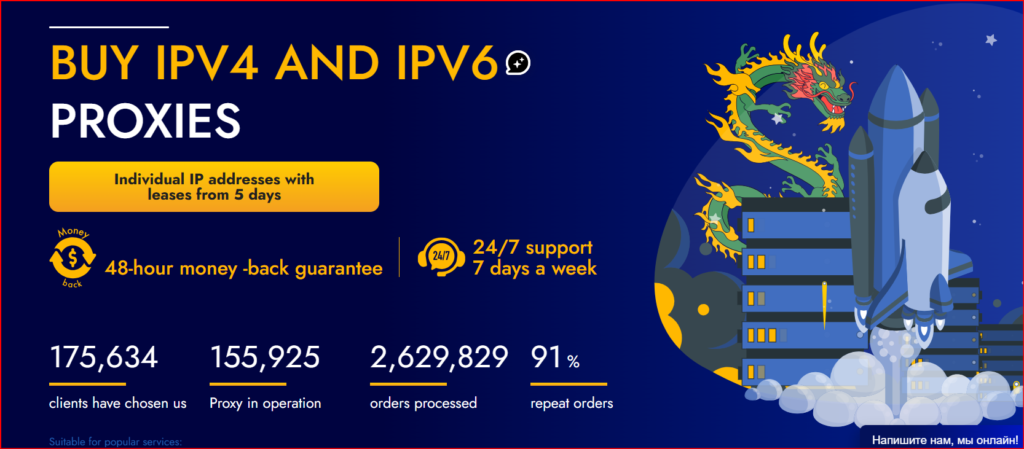
Quick facts
| Best for | agencies that need documented proxy pools for several client markets |
| Service type | Dedicated/shared IPv4, IPv6 and MTProto proxy service |
| Useful provider-published features | HTTP/SOCKS5, manual IP/subnet/city selection, API and personal account, automated activation, auto-renewal, unlimited traffic, and provider-published support. |
| Responsible-use note | Use the service only for lawful, authorized purposes and follow the rules of websites, networks, employers and platforms involved. |
Why Spaceproxy fits this use case
agency proxy operations The practical advantage is control: instead of treating the network path as an unknown variable, the user can define an endpoint or server environment, document it, and repeat the same process later. That makes troubleshooting and comparison more reliable.
A practical workflow
- Assign endpoints by client, market and approved use case.
- Use the API or account tools to keep inventory organized.
- Document renewal ownership so client projects do not lose required endpoints.
Start small and make the workflow observable. Record the configuration, date, endpoint or server, and expected result. If the first test is successful, scale gradually rather than assuming that a larger pool, longer term, or higher server tier will automatically produce better outcomes.
What to check before you rely on it
- Separate client credentials and proxy inventories.
- Keep a written acceptable-use policy for each project.
- Scale only after testing the exact target sites and regions.
Provider-published feature lists are useful for screening, but they are not a substitute for testing. Performance can vary by destination, region, local ISP, application, operating system and time of day. A short real-world pilot is usually the best way to decide whether the service fits the exact task.
Pricing & value note
| Spaceproxy publishes a live price table by type, quantity and duration. At the time checked, shared IPv4 was $0.67 for 5 days and individual IPv4 $0.96 for 5 days in the smallest quantity tier; the table also lists IPv6/32 and longer rental periods. Check current pricing |
Bottom line
Spaceproxy can be a sensible option for agencies that need documented proxy pools for several client markets when the service is matched to a clear requirement and tested against the real workflow. The strongest buying decision is based on repeatability, compatibility, support and total operational effort—not only the lowest advertised price.
