
The ocean contains enormous amounts of renewable energy, but capturing it economically has always been a difficult engineering challenge. Traditional tidal turbines generally work best where water moves quickly, leaving many slower currents and coastal locations without an affordable way to generate electricity.
A new approach is beginning to change that equation: underwater kites.
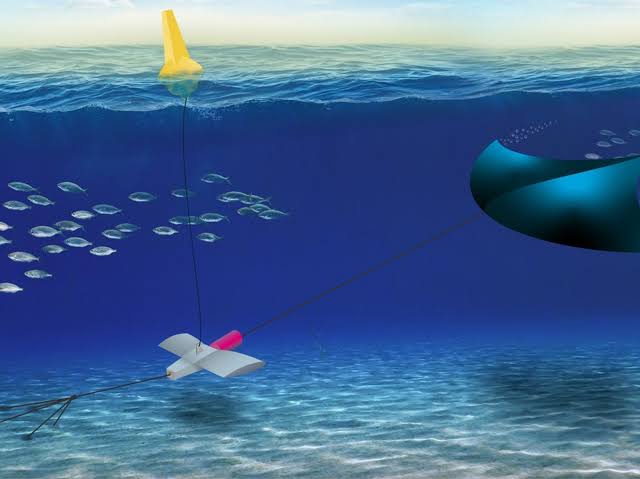
Instead of sitting stationary on the seabed, these devices move through the water in controlled flight paths, using the same basic aerodynamic principle that allows a kite to generate lift in the wind. By moving across an underwater current, the kite can make its turbine experience water flowing much faster than the surrounding current.
In 2026, underwater-kite technology is moving beyond laboratory demonstrations and toward increasingly practical renewable-energy projects. Companies and research groups are testing different designs for tidal power, remote communities, microgrids and other applications.
Swedish marine-energy company Minesto is developing its Dragon systems for tidal streams and ocean currents, while SRI International is testing its Manta underwater kite for coastal communities in Alaska. Meanwhile, academic research published in 2026 is examining the hydrodynamics and performance of tethered underwater kite turbines.
Together, these developments suggest that underwater kites could become an interesting new category of marine renewable energy.
How an Underwater Kite Generates Electricity
The concept is surprisingly similar to flying a kite in the air.
A conventional kite uses aerodynamic lift to move through the wind. An underwater kite uses hydrodynamic lift generated by moving water.
The kite is attached to the seabed or another fixed point using a tether. Instead of simply drifting with the current, an onboard control system guides the device through a programmed trajectory, often a figure-eight pattern.
As the kite moves across the current, the relative speed of water passing over the turbine increases.
That is the key to the technology.
Minesto explains that its Deep Green system uses a wing and control surfaces to steer an underwater turbine through a predetermined figure-eight path. The resulting relative water speed can be several times higher than the actual speed of the surrounding current.
Because the power available from moving water increases strongly with flow velocity, increasing the turbine’s relative speed can significantly improve energy generation.
The result is a system that can potentially extract energy from currents that would be too slow for conventional fixed turbines.
Why Slow Ocean Currents Matter
Traditional tidal turbines generally require strong water flows to operate economically.
That limits where they can be installed.
Many coastal areas experience tidal movement, but the currents may not be fast enough to justify large fixed turbines and their associated foundations, installation equipment and subsea infrastructure.
Underwater kites approach the problem differently.
Instead of waiting for the water itself to move rapidly through a stationary turbine, the kite actively moves the turbine through the water.
Minesto says its technology can operate in relatively low-flow conditions and has identified applications in tidal streams and ocean currents that may be inaccessible to conventional systems. Its current Dragon product line ranges from 100-kilowatt systems to a 1.2-megawatt Dragon 12.
This could expand the geographical area where marine energy becomes technically feasible.
Minesto’s Dragon Technology Shows the Idea Can Work at Grid Scale
One of the most advanced examples of underwater-kite technology comes from Minesto.
The company’s Dragon system is essentially an underwater aircraft carrying a turbine and generator. A tether connects the flying device to a seabed foundation while power and communications are routed through the tether system.
The Dragon 12 has a rated capacity of 1.2 megawatts, making it substantially larger than many experimental marine-energy devices.
Minesto has already connected Dragon systems to the electricity grid in the Faroe Islands. The company says its technology first delivered electricity to the grid in 2020, with the Dragon product line reaching grid-connected operation in 2022.
In March 2026, Minesto reported that its 100-kilowatt Dragon 4 had been installed and was producing electricity for the Faroese grid. The company also reported that its 1.2-megawatt Dragon 12 had completed a 10-month grid-connected period before being recovered for inspection and maintenance.
These deployments are important because they move the technology beyond theoretical modeling.
They also provide engineers with real-world information about maintenance, corrosion, control systems, underwater conditions and long-term reliability.
2026 Tests Are Focusing on Improving Energy Production
The technology continues to evolve.
In August 2026, Minesto reported that its Dragon 4 system in the Faroe Islands had achieved record electricity production during the summer following an upgraded power-take-off system.
The company said the new system improved energy production across the tidal cycle and that the Dragon 4 generated electricity continuously over several months.
Because this is a company-reported result, it should not be treated as an independent industry benchmark. However, it demonstrates the type of optimization currently taking place as underwater-kite systems move toward commercial deployment.
Engineers are now working not only on proving that the concept can generate electricity, but also on improving its efficiency, reliability and economics.
A Different Approach Is Emerging in Alaska
Minesto is not the only organization exploring underwater kites.
SRI International is developing a system called Manta, which is designed for slower tidal flows and smaller-scale applications.
According to SRI, Manta uses a buoyant underwater kite and a twisted-string tether. As the kite moves through the tidal current, the tether turns a generator and produces electricity.
The design is particularly interesting because it is aimed at remote coastal communities.
Many isolated communities rely heavily on diesel generators because connecting them to large electricity grids is difficult or expensive.
A small renewable-energy device that can operate in local tidal currents could potentially provide another source of predictable electricity.
SRI reports that an early prototype produced 100 watts at peak flow, while a current pilot being evaluated in Alaska is projected to average around 1 kilowatt over a complete tidal cycle. The organization says a full efficiency analysis is expected by the end of 2026.
That is a very different scale from Minesto’s megawatt-class systems, but the two approaches demonstrate how underwater kites could serve different energy markets.
Why Tidal Energy Has an Advantage Over Solar and Wind
One of the biggest attractions of tidal energy is predictability.
Solar power depends on sunlight and weather conditions. Wind power varies with atmospheric conditions.
Tides, by contrast, are governed primarily by gravitational interactions involving the Moon and Earth.
That makes tidal currents highly predictable.
Minesto describes tidal streams and ocean currents as predictable renewable resources and says its kite systems are designed to exploit these flows.
Predictability could make marine energy useful as a complement to intermittent renewable sources.
A future renewable grid could combine solar during daylight hours, wind when conditions are favorable, battery storage and predictable tidal generation.
Underwater kites would not eliminate the need for other energy technologies, but they could potentially add another reliable source to the mix.
New Research Is Exploring Underwater Kite Performance
The concept is also attracting academic interest.
A study published in the journal Renewable Energy in January 2026 examined a tethered undersea kite turbine as an alternative to fixed hydrokinetic turbines.
The researchers modeled the kite’s flight dynamics and the performance of a turbine operating as the kite moved through turbulent ocean currents. Their numerical design study reported an average modeled power output of 383 kilowatts under the simulated optimal trajectory.
It is important to distinguish this result from a real-world demonstration.
The 383-kilowatt figure comes from numerical modeling rather than an operational commercial installation. Real ocean environments introduce challenges involving turbulence, waves, biofouling, structural fatigue, control accuracy and maintenance.
Nevertheless, research like this helps engineers understand how kite trajectories, turbine design and underwater flow interact.
The Technology Could Use Less Material Than Fixed Turbines
One potential advantage of underwater kites is their relatively lightweight structure.
A conventional subsea turbine needs a foundation capable of keeping a large machine stationary against powerful underwater forces.
An underwater kite uses movement rather than resisting the flow completely.
That can potentially reduce the amount of structural material required.
The U.S. Department of Energy has previously highlighted underwater kite research as a way of generating energy from slow-moving currents with less material than some conventional marine-energy designs.
Minesto similarly describes its Dragon systems as lightweight and modular, with the company positioning the technology as easier to install and maintain than larger fixed marine-energy systems.
However, the overall economics still depend on manufacturing costs, installation, subsea cables, maintenance and the characteristics of individual sites.
Maintenance Will Be a Major Test
Operating machinery underwater is difficult.
Saltwater is highly corrosive, while waves, currents and marine organisms can place continuous stress on mechanical components.
Any commercial tidal-energy system must therefore be designed for long service intervals and affordable maintenance.
Underwater kites have one potential advantage: they can potentially be recovered from the water using relatively small support vessels.
Minesto says its operations and maintenance concept has been demonstrated, including transportation, installation, recovery and servicing.
In March 2026, the company reported recovering its Dragon 12 after 10 months in the water for inspection and maintenance. Initial conclusions, according to Minesto, showed expected wear and tear after operating in ocean conditions.
Long-term operational data will be critical in determining whether underwater kites can compete economically with other renewable-energy technologies.
Environmental Impact Is Another Important Question
Marine energy projects must also consider their impact on ocean ecosystems.
Underwater turbines can interact with marine animals, while seabed foundations and cables can affect local habitats.
Minesto says its environmental monitoring has found no observed negative impacts from its kite technology and reports no observed marine-mammal collision incidents since testing began.
Those findings are company-reported and should be considered alongside independent environmental assessments as deployments expand.
For underwater kites to become widely accepted, developers will need to demonstrate that the technology can generate meaningful amounts of electricity while minimizing effects on marine ecosystems.
Could Underwater Kites Become a Major Renewable-Energy Source?
It is too early to say.
Marine energy remains a much smaller industry than solar and wind, and underwater kites face substantial technical and economic challenges.
The technology must prove that it can operate reliably for years, survive harsh marine conditions, be maintained economically and produce electricity at competitive costs.
Grid connection is another challenge.
A tidal-energy device may work extremely well in a remote location but still require expensive subsea cables and infrastructure to deliver electricity to consumers.
This is why small island grids, remote communities and industrial sites may become important early markets.
In those locations, predictable local renewable power could have significant value even if the technology does not immediately compete with utility-scale solar or wind on a global cost basis.
The Future Could Combine Multiple Marine-Energy Technologies
Underwater kites are unlikely to replace conventional tidal turbines entirely.
Instead, different technologies may be suited to different water conditions.
Fast tidal channels could support conventional fixed turbines, while slower currents could potentially support flying-kite systems.
Floating offshore wind, wave energy and tidal technologies could also eventually operate alongside one another.
The broader opportunity is to make better use of the enormous amount of energy moving through the world’s oceans.
Underwater kites are particularly interesting because they attempt to solve one of the central problems of marine energy: how to extract useful power from currents that are too slow for conventional turbines.
Final Thoughts
Underwater kites offer a fascinating new approach to renewable energy.
Rather than placing a large turbine in a fast-moving current and waiting for the water to pass through it, these systems actively fly through the water, using hydrodynamic lift to increase the relative speed experienced by the turbine.
In 2026, the concept is moving closer to practical deployment.
Minesto has demonstrated grid-connected Dragon systems in the Faroe Islands, including its 100-kilowatt Dragon 4 and megawatt-scale Dragon 12. SRI is testing its smaller Manta underwater kite for remote communities in Alaska, while academic researchers continue developing and modeling new tethered kite designs.
The technology still has to overcome major challenges involving cost, durability, environmental monitoring, maintenance and large-scale deployment.
But if engineers can demonstrate reliable operation and competitive economics, underwater kites could open up a new category of marine renewable energy—particularly in places where ocean currents are plentiful but too slow for traditional tidal turbines.
The most important question is no longer whether an underwater kite can generate electricity.
Real-world projects have already demonstrated that it can.
The bigger question is whether these machines can generate enough electricity, reliably enough and cheaply enough to become a commercially important part of the global renewable-energy mix.
The next few years of deployments and operational data should provide a much clearer answer.
