
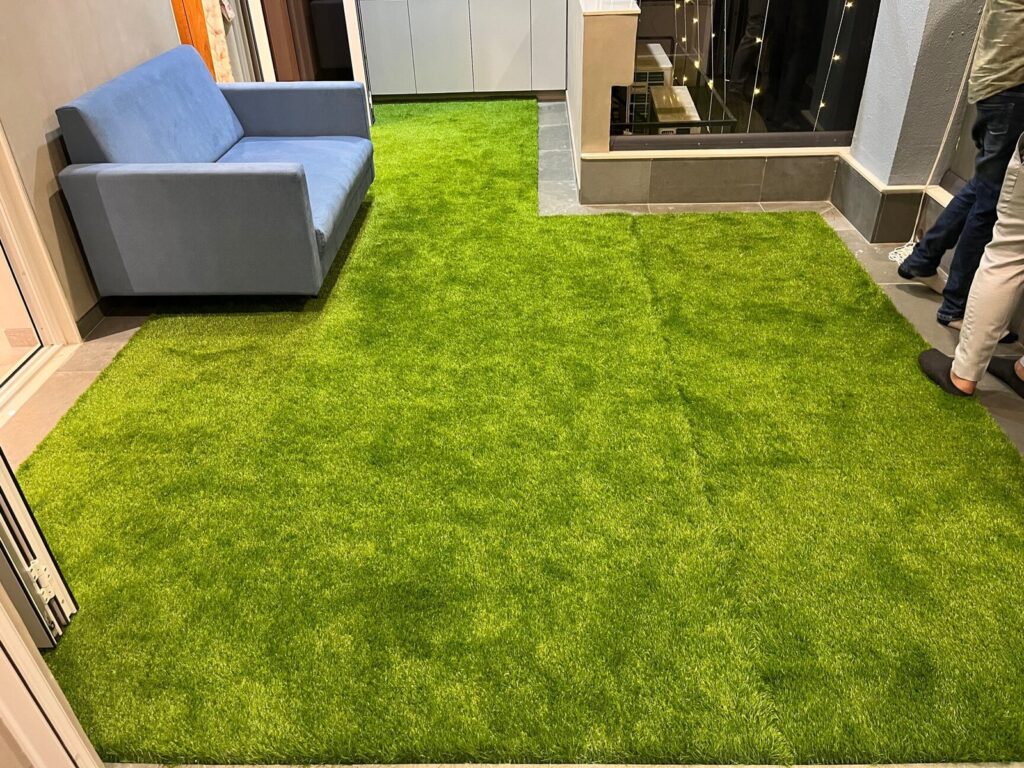
If you are pricing up a greener garden, balcony, or terrace, the first question is always the same: what will it actually cost? The honest answer is that an Artificial grass carpet project can be one of the most affordable outdoor upgrades or a premium landscaping investment, depending on the quality of turf you choose, the state of the ground beneath it, and whether you fit it yourself. This guide breaks down where the money goes, what drives the price up or down, the design trends shaping what people buy, and how to judge value so you spend on the things that genuinely matter and save on the things that do not.
Where the Money Goes
The turf itself is the largest single cost, and prices per square metre rise with pile height, density, and realism. Entry level products with short, sparse blades sit at the bottom of the range and suit low traffic or temporary use. Mid range turf, with a denser pile and a mixed tone finish, is where most homeowners land, because it balances looks, comfort, and lifespan. Premium products add softer yarns, taller piles, and more convincing thatch, and they are priced for people who want the surface to pass for real lawn at a glance. Beyond the grass, budget for the base materials if you are laying on soil: crushed stone, sharp sand, a weed membrane, joining tape, adhesive, and a sand infill. On concrete or tiles the list shrinks to little more than adhesive and edging, which is one reason balcony projects are comparatively cheap.
Labour is the other half of the bill. Professional fitting adds cost but buys you invisible joins, correct drainage falls, and a warranty on the workmanship. Doing it yourself on a small, square balcony is realistic for a confident DIYer; a large garden with curves, steps, and several joins is where professional fitting earns its fee.
What Pushes the Price Up or Down
Area size cuts both ways: bigger projects cost more overall but usually less per square metre, because the installer spreads fixed costs over more turf and suppliers discount full rolls. Awkward shapes cost more than simple rectangles, since curves and obstacles mean more cutting, more joins, and more waste. Access matters too; carrying materials up several floors or through a narrow side gate adds time. The existing surface is a hidden factor: a sound concrete slab is ready almost immediately, while a tired lawn needs stripping, levelling, and compacting before anything green appears. When you compare quotes for an Artificial grass carpet installation, insist on an itemised breakdown covering turf grade, base work, joining materials, and labour, so you can see exactly what a cheaper quote has left out.
Trends Shaping What People Buy
Realism is the dominant trend. Buyers increasingly choose multi tone blades with a beige thatch layer and varied blade shapes, because these read as natural grass in bright sunlight rather than a flat green mat. Softer, child friendly and pet friendly products are growing fast, with denser piles that cushion play and backings that drain quickly and rinse clean. Sustainability is starting to influence choices as well: households value the water saved in a dry climate, and manufacturers are responding with ranges that use recycled backing materials. Design wise, artificial grass is being combined with porcelain paving, decking, and stone borders rather than covering whole gardens edge to edge, which both looks smarter and controls cost by limiting turf to the areas where softness and greenery matter most.
Getting the Best Value
Value in Artificial grass carpet is cost per year, not cost per metre. A cheap surface that flattens and fades in three years is more expensive over a decade than a mid range product that still looks good after ten. Judge samples in person: rub the blades, bend the backing, and check how quickly the pile springs back after you press it flat. Ask about the UV warranty and the expected lifespan under your level of traffic, and be wary of any quote that seems too good, because the savings usually hide in a thinner backing or a missing base layer. Finally, keep the project proportionate: spend the most on the areas you see and use daily, choose simpler turf for side passages and utility corners, and your budget will land where it does the most good.
The Long Term Comparison With Real Grass
The fairest way to judge the price is against the alternative. A real lawn in a hot climate carries quiet, continuous costs: irrigation water every week of the year, mowing or a gardener's contract, fertiliser, reseeding of worn patches, and the occasional full re turfing when a section gives up. Spread over ten years, those running costs often rival or exceed the one off price of artificial turf, which asks only for water for rinsing and a few minutes of brushing. There is also the value of use: a synthetic surface is ready every day of the year, never muddy, never dusty, and never closed for reseeding. When buyers do the full sums rather than comparing day one prices, the artificial option frequently comes out ahead, especially for smaller spaces where installation is simple.
