
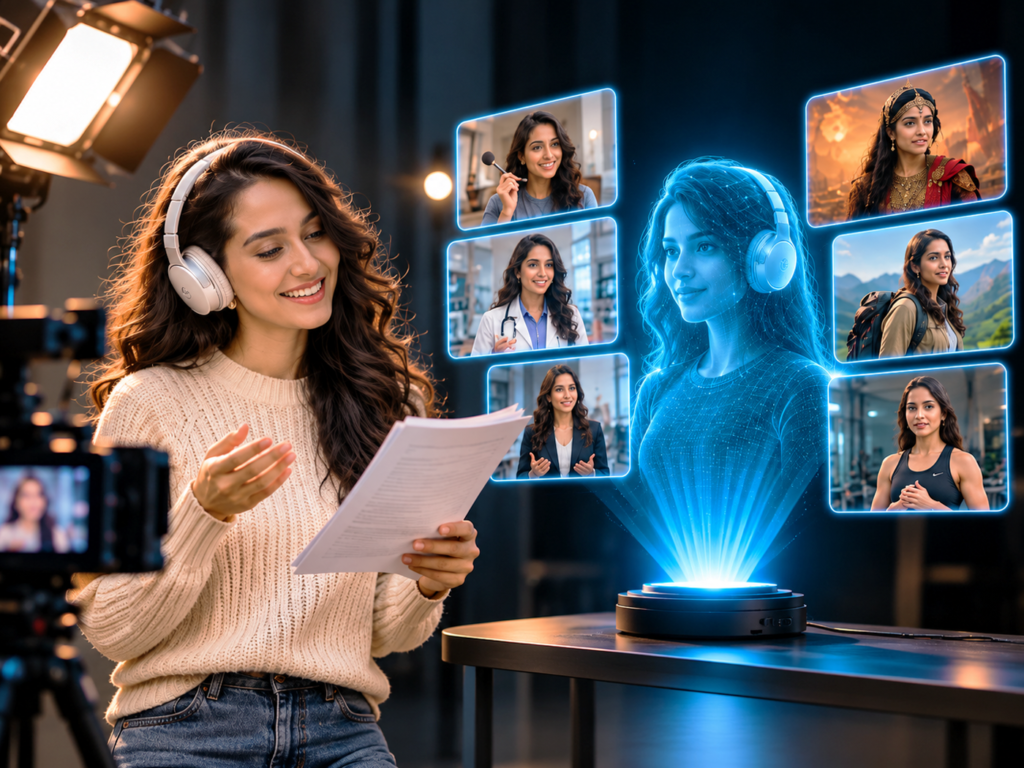
Advertising production has traditionally involved several decisions about casting, locations, schedules, creative teams and budgets. As brands explore new ways to develop campaign content, artificial intelligence is introducing additional options for creating and using digital performers. AI actors for advertising are part of this shift, raising questions about production costs, creative flexibility and the role of human performers.
The impact, however, is unlikely to be the same for every campaign. Understanding where AI-generated performers may fit requires looking beyond the technology and considering production requirements, audience expectations and usage permissions.
What Are AI Actors in Advertising?
AI actors in advertising can be fully digitally generated characters or AI-powered representations of real people used in video and visual advertising. Some are entirely fictional, while others are digital versions of real people who have given permission for their likeness to be used under specific conditions.
These two approaches should not be treated as interchangeable. While a fully synthetic character may not represent a real performer, a licensed digital representation is based on a person’s identity and must be used with clear consent and agreed terms.
AI-generated actors can be used in product explainers, digital ads, concept videos or selected social media content, depending on the technology and creative brief. Their suitability depends on the type of performance, level of realism and audience connection a campaign requires.
How AI Actors Could Affect Advertising Production Costs
There are several reasons why brands are considering AI actors in advertising, one of which is the potential to change how certain production resources are used. For suitable projects, digital performers can reduce the need to organise some aspects of a traditional shoot. They can also offer ways to create visual variations or adapt content for different audiences.
However, this is not a straightforward way to make advertising production more affordable. Creative development, software access, specialist production, revisions, quality control and licensing can all add to the cost. More complex outputs may require significant human involvement, while achieving consistent and realistic performances can also be challenging.
The economics depend on the production model. An explainer video involves different requirements from a brand film, and the two may not need the same level of production value. When comparing a digital performer with a traditional actor, companies need to consider the complete workflow and the quality of the final output, rather than looking at casting costs alone.
Where AI-Generated Actors May Be Useful
For certain types of content, AI-generated actors could offer practical options:
- Product Explainers: Digital presenters can be considered for videos that communicate product features, instructions or service information, particularly when the brief does not require a highly nuanced performance.
- Social Media Variations: Brands running campaigns across multiple formats or audience segments can consider digital performers for creating different versions. Each version still requires appropriate creative and cultural review.
- Concept Development: AI-generated characters can help teams visualise an early creative concept or present an idea before deciding whether to proceed with a traditional shoot.
- Digital-First Campaigns: Some campaigns are designed specifically for digital platforms, where virtual characters or stylised digital performances may be suitable.
These are potential applications rather than universal solutions. Emotion-led campaigns, celebrity endorsements, live interactions and content built around distinctive human performances can still benefit from real actors and creators.
The Importance of Consent, Rights and Transparency
Digital performers raise important questions about identity and permissions. When an AI character is based on a real person’s face, voice or likeness, brands must understand what has been authorised and under which conditions.
Agreements should specify the purpose, campaign duration, media platforms, geographical markets and permitted adaptations. A license should not be assumed to cover all future campaigns or formats. Brands should also check the rights associated with music, scripts, source images and other production assets.
Transparency may also matter to audiences, particularly when a digital representation could be mistaken for a real person or an authentic endorsement. The appropriate approach will depend on the campaign, platform and applicable requirements.
Will AI Actors Replace Traditional Performers?
AI actors are unlikely to replace human performers completely. Instead, they are expanding the range of options available to production teams. A digital character might be suitable for a repeatable explainer, whereas a campaign built around personal experiences, humour or emotional appeal may benefit from a live performer.
Brands need to evaluate the creative objective before choosing between a traditional performer, a synthetic character or a licensed digital representation.
Choosing the Right Production Approach
Businesses evaluating AI talent marketplace options or AI-enabled production providers should review available profiles, creative capabilities, licensing conditions and quality-control processes. They should also understand whether an offering involves a fully synthetic character or a licensed digital representation of a real person.
Talentrack helps brands and agencies explore AI actors for advertising requirements. The choice should ultimately depend on the campaign brief, intended audience, production needs and agreed usage scope.
AI may change how some advertising content is planned and produced, but its commercial value will depend on more than reduced production effort. A suitable balance of technology, creative judgement and clear permissions will remain central to effective campaigns.
Choosing the Right Production Approach
Businesses evaluating AI talent marketplace options or AI-enabled production providers should review available profiles, creative capabilities, licensing conditions and quality-control processes. They should also understand whether an offering involves a fully synthetic character or a real person’s licensed digital likeness.
Talentrack helps brands and agencies explore AI actors for advertising requirements. The choice should ultimately depend on the campaign brief, intended audience, production needs and agreed usage scope.
AI may change how some advertising content is planned and produced, but its commercial value will depend on more than reduced production effort. A suitable balance of technology, creative judgement and clear permissions will remain central to effective campaigns.
