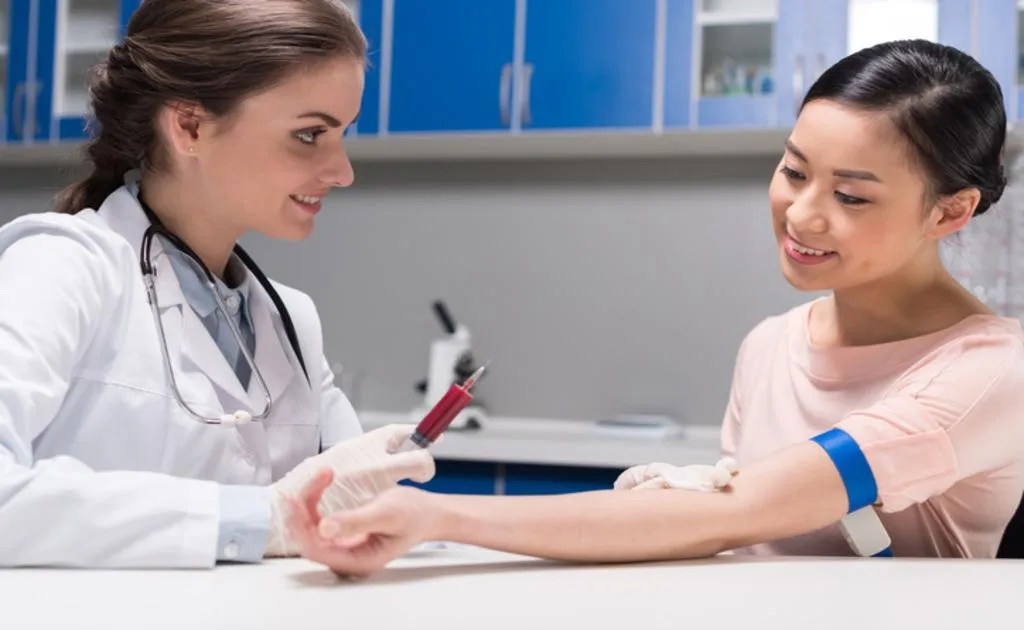
Most people know the feeling of a worry that sits quietly at the back of the mind. Maybe it began after a new relationship, a condom that slipped, or a partner who mentioned an old diagnosis a little too casually. The thought of calling a clinic, explaining yourself at a reception desk and sitting in a waiting room can turn a simple question into weeks of avoidance. This is exactly why a std test at home has become the preferred route for so many people who want answers without the awkwardness. A trained nurse arrives, collects what is needed in about fifteen minutes, and leaves you to get on with your day.
The idea is simple, but its impact is bigger than it sounds. When testing becomes easy, people test sooner, and testing sooner is what protects long-term health. Many sexually transmitted infections stay silent for weeks, months or even years, so feeling fine tells you surprisingly little. A short, private visit at a time that suits you removes most of the reasons people give for putting it off, and it replaces uncertainty with facts you can act on.
Why “No Symptoms” Doesn’t Mean “No Infection”
It is one of the most common misunderstandings in reproductive health. Chlamydia, gonorrhoea, HPV, hepatitis B and C, and HIV in its early stages can all produce mild symptoms or none at all. A person can feel completely well while an infection quietly affects their reproductive health, liver or immune system. In the meantime, it can be passed to a partner without either person realising anything is wrong.
The consequences of leaving infections undetected can be serious. Untreated chlamydia and gonorrhoea are linked to pelvic inflammatory disease and fertility problems in women, and to painful inflammation of the testicles in men. Syphilis can progress through stages that eventually affect the heart, brain and nerves. The encouraging part is that most of these outcomes are preventable, and many bacterial infections are cured with a short course of antibiotics when they are found early. The most common STD test Dubai patients book at home is a combined panel that screens for several of these infections at once, which makes catching problems early far more realistic.
Who Should Consider Getting Tested
Testing is sensible for anyone who is sexually active, but some situations make it especially worthwhile. These include starting a relationship with a new partner, having more than one partner, learning that a current or former partner has been diagnosed, or having had reproductive health without a condom. People planning a pregnancy, anyone who has shared needles, and anyone who notices unusual discharge, sores, itching or pain when passing urine should also think about screening. Even when none of these apply, many clinicians suggest a yearly check for sexually active adults as part of ordinary preventive care. Testing is not an accusation or a confession; it is simply a way of knowing where you stand.
What Happens During the 15-Minute Visit
The process usually starts with a quick online booking or a phone call, where you choose a time and place that suits you, whether that is your apartment, your office or a hotel room. Before the visit, a coordinator may ask a few discreet questions about symptoms and recent exposure so that the right tests are selected. A licensed nurse then arrives, confirms your details and explains each step before starting. Depending on the panel, the nurse may draw a small blood sample, ask for a urine sample, or hand you a swab to collect yourself in private. The samples are sealed, labelled and taken to an accredited laboratory, usually on the same day. Results are typically shared through a secure message or patient portal, so nobody else sees them before you do. If anything comes back positive or unclear, a doctor on call can talk you through what it means, arrange treatment and advise whether a partner should be tested too.
What a Typical Panel Checks For
Most home panels are built around a few simple samples rather than a long list of procedures. A blood test at home covers infections that circulate in the bloodstream, such as HIV, syphilis and hepatitis B and C, while a urine sample or self-collected swab is used to look for chlamydia, gonorrhoea and trichomoniasis. Herpes can be checked with a blood antibody test, although a swab from an active sore usually gives a clearer answer. The table below gives a general idea of how each infection is tested and when results tend to be most reliable after a possible exposure.
Infection
Sample
Most reliable from (approx.)
Chlamydia
Urine or swab
1–2 weeks after exposure
Gonorrhoea
Urine or swab
1–2 weeks after exposure
Trichomoniasis
Urine or swab
1–4 weeks after exposure
Syphilis
Blood
3–6 weeks after exposure
HIV (antigen/antibody)
Blood
4–6 weeks after exposure
Hepatitis B
Blood
3–6 weeks after exposure
Hepatitis C
Blood
8–12 weeks after exposure
Herpes (HSV-1 & HSV-2)
Swab of a sore, or blood
Swab during an outbreak; blood around 12 weeks
These timings are general guidance rather than fixed rules. Every test has a “window period”, the gap between exposure and the point at which an infection can be reliably detected, and testing too early can give false reassurance. If anxiety pushes you to test early, that is completely understandable; your clinician may simply suggest repeating certain tests a few weeks later to be sure.
How to Prepare for Your Appointment
Preparation is minimal, which is part of the appeal. For urine-based tests, try not to pass urine for at least an hour before the nurse arrives, as this gives the laboratory a better sample. If you have taken antibiotics recently, mention it, because they can affect some results. Keep your Emirates ID or passport handy, choose a quiet room where you feel comfortable, and jot down any questions you want to ask. The nurse will take care of everything else.
Why People Are Choosing Home Testing Over Clinic Visits
The clinical side of testing is the same whether it happens in a clinic or a living room: samples go to an accredited laboratory and are analysed with the same methods. What changes is everything around it. There is no commute through rush-hour traffic, no parking to hunt for, and no waiting room where you might bump into a colleague. For many people, their first lab test at home is something routine, like a vitamin D or cholesterol check, and once they see how smoothly it runs, reproductive health screening stops feeling like a separate, intimidating category.
Privacy is the other big reason. In a city as connected as Dubai, where professional and social circles overlap all the time, discretion genuinely matters. Nothing about a home visit needs to signal what is being tested, and results go straight to you rather than through a front desk. That sense of control is often what turns a postponed intention into an actual appointment, and it is why a yearly STD check up Dubai residents can fit in before work or after dinner is becoming part of everyday health routines rather than a crisis response.
There is a practical advantage, too, for people with demanding lives: parents of young children, shift workers, frequent travellers and anyone with limited mobility. Booking a morning slot, giving a sample in your own kitchen and being back at your laptop a quarter of an hour later feels close to having a lab at home. Convenience is not a luxury in healthcare; very often, it is the difference between testing and not testing at all.
Frequently Asked Questions
Is home testing as accurate as testing at a clinic?
Yes, provided the samples are collected by a trained professional and processed by an accredited laboratory. The tests themselves are the same ones a clinic would use. In practice, accuracy depends far more on timing, meaning whether you test after the window period, than on where the sample is collected.
Does the visit really take only fifteen minutes?
For most standard panels, yes. A blood draw takes a few minutes, a urine sample or self-swab takes a few more, and the rest of the time is spent confirming your details and answering questions. A larger panel or a nervous patient may take slightly longer, and that is perfectly fine.
How soon will I receive my results?
Many results are ready within one to three days, although this depends on the specific tests and the laboratory’s schedule. Some confirmatory tests take longer. You will usually be told the expected timeframe when you book, so you are not left wondering.
Should I get tested if I feel completely fine?
Absolutely. Several common infections cause no symptoms for long periods, and that is precisely when they can cause hidden damage or be passed on unknowingly. Routine screening is one of the simplest ways to protect both your own health and your partner’s.
What happens if one of my results is positive?
A positive result is a starting point, not a verdict. A clinician will explain what it means, whether any confirmatory testing is needed, and what treatment involves. Many bacterial infections clear completely with antibiotics, and viral infections such as HIV and hepatitis B can be managed effectively with modern care.
Will my results stay confidential?
Reputable providers treat reproductive health results as private medical information. Results are shared only with you through secure channels, and nothing is passed on to employers or family members. If confidentiality is a concern, it is always reasonable to ask the provider exactly how your data is stored and who can access it.
Checking your STD status does not have to be a big event or a source of dread. It can be as ordinary as a short knock at the door, a few quiet minutes with a nurse, and a message on your phone a day or two later. What matters most is that you take the step instead of carrying the question around. If you are ready to do that in privacy and comfort, Care24 Healthcare LLC can arrange a discreet home visit at a time that suits you, with results and follow-up support handled from start to finish.