
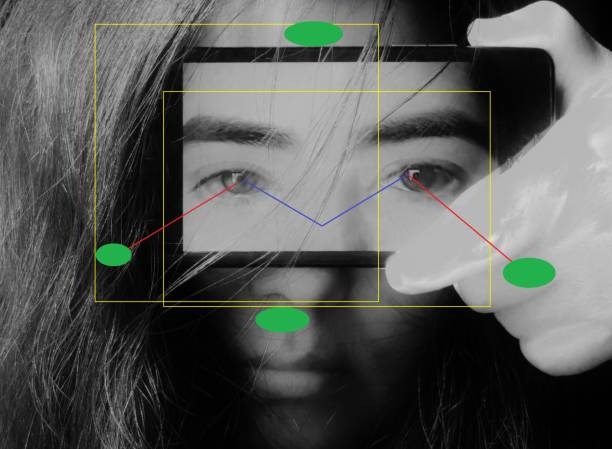
Photo ID matching compares a live selfie with the photo on an ID document, like a passport or driver’s license. If the two faces look the same, the system approves the account. That sounds simple enough, and for a long time it worked well. But this check was built to compare two real photos of a real person. It was never designed to ask whether the selfie itself is genuine; today, that gap is being exploited. Fake selfies, deepfakes, and other manufactured images are being used to slip past checks that only look for a visual match, not proof of a real, living person.
How the Photo ID Matching Process Compares
The process of photo ID matching involves comparing the photo on an ID document with a live video of the person’s face. The system is scored according to the similarity of the two faces. This score needs to be equal to or above a certain level for the match to be accepted. Before this, this was the highest possible score, and it was necessary to prove that there was a match. The scoring has improved, but it does not answer the question: Does the face on the ID match this one? It does not state whether the live capture depicts an actual, living human being in front of the camera.
Why Face Matching Alone Does not Solve the Problem
An algorithm that matches two flat images of a face gives a similarity score. It is possible for a fake face, created to mimic the appearance of a stolen identity, to score high just like a real one. This is because the system cannot determine whether the image is captured from a camera or a computer. Gartner’s study indicates that by 2026, almost one-third of enterprises will no longer use face biometrics as the sole method of identification. A photo ID-matching solution that only provides a similarity score does not answer the bigger question that compliance teams need to address.
How Document Quality Affects ID Matching
Before comparing faces, the system must first read the document. If the passport is damaged, the driver’s license has glare, or the document is taken at an angle, it becomes harder for the system to gather clear data. The system needs a good image to read the text and codes on the document. If the document is unclear, the face image it provides will be incorrect, making matching difficult from the start. The solution must work well on real documents, regardless of lighting, worn materials, and angles, not just on the clear sample photographs shown in the demo.
Why Independent Testing Builds Trust
Independent testing helps to measure a matching solution without depending on the vendor’s claims. Spoof detection is evaluated under ISO/IEC 30107-3, which tests a system’s reaction to masks, printed photographs, and screen replays in controlled environments. When someone from outside the industry reviews a solution by testing it against this standard, it provides proof that a marketing page cannot. Compliance teams simply have no way to verify claims beyond the vendor’s word if they have not gone through this testing with a photo ID matching solution.
Closing the Gaps in Photo ID Matching
Photo ID matching on its own leaves real gaps. It cannot confirm that a live person is in front of the camera, and it cannot catch document tampering that is hard to spot with the naked eye. Its claims cannot be trusted without independent testing by a third party outside the vendor’s lab. A process focused only on similarity scoring is outdated because the threats it now faces have changed.
Facia AI closes these gaps by combining checks into one process instead of treating them as separate steps. The application reads document data and runs a liveness check in under a second, without asking the user to blink or turn their head. A DeepLiveness layer then handles deepfake detection as part of the same flow, not as an extra add-on. Testing a photo ID matching system against a deepfake sample, rather than a clear demo photo, shows whether it still holds up or was built for threats that have since moved on. Book a demo to see how Facia AI performs against exactly that kind of test.
