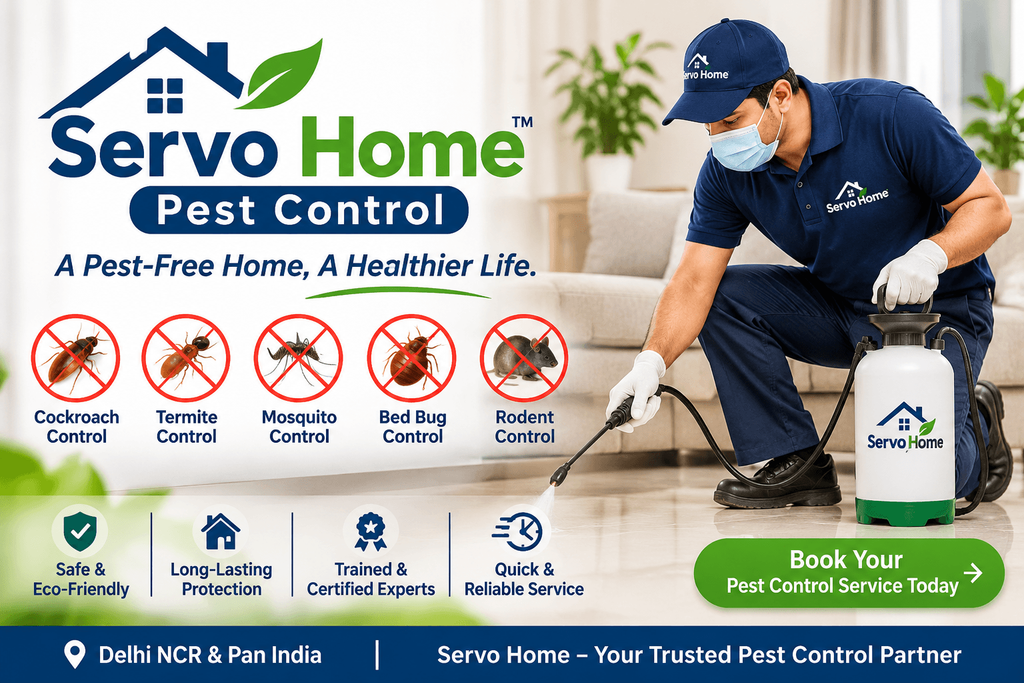
There are multiple facets to effective pest management. Servo Home’s pest control service incorporates inspections and prevention measures in addition to Pest Control treatments. Broad-spectrum spraying is rarely part of a well-executed pest management plan, as true pest management incorporates the principles of integrated pest management (IPM).
Few homeowners appreciate sharing their living spaces with pests, and many of the homes that have pest issues are sprayed with an aerosol can as a quick fix. This is an unreliable and reactive approach, and it can increase the amount of unrelated and sometimes hazardous chemicals in the living environment.
In order to effectively combat pests, you first need to understand why they have taken up residence there. This is the philosophy that Servo Home has adopted. Effective pest management must consist of a holistic approach towards the home environment of the consumer.
This post will cover what a sound pest management approach looks like, what questions you should be asking prospective pest management providers, and what you should be thinking about in terms of prevention.
What is a Sound Approach to Pest Management?
A credible pest management service incorporates the following four steps, as described by the U.S. Environmental Protection Agency (EPA):
The pest management service identifies what the appropriate levels of infestation are that warrant treatment (thresholds) to protect public health and/or safety.
Accurate identification of pests is essential. Not all organisms in and around the home warrant control. Unnecessary or misdirected pesticide applications can occur without proper identification.
Emphasis on prevention. Addressing conditions that attract pests is the best strategy. The use of pesticides should be the last line of defense.
Use the least dangerous effective option. A strategy of integrated Pest Control in Bangalore includes the least hazardous control option first. The last strategy should include broadcast spraying of pesticides.
This strategy focuses on the best control of pests rather than on the use of pesticides. When you consider pest control, think Servo Home.
What Should You Ask Before Hiring a Pest Control Service?
When considering pest control, you can evaluate potential pest control services by considering if they answer these questions to your satisfaction. Ask Servo Home:
How do you confirm the identity of a pest before treating? Evaluating the answer will help you understand if they put identification and treatment in the correct order.
Do you have prevention strategies? A good prevention strategy is to recommend removing the attractants rather than constantly treating.
What control strategy do you use? A good strategy is to start with the lower end of the risk spectrum. The last strategy should include a broad pesticide application.
What is your strategy for follow-up? Most pest issues require long-term control rather than a one-and-done visit.
Clearly outline your goals for you and your family’s health and wellness. Minimizing chemical exposure in your home is likely going to take longer than you expect. The answer to why pests return has to do with prevention and the long-term strategies employed by providers. It’s important to have pest control that keeps prevention strategies in mind. Focusing on prevention means you’ll need to address entry points and moisture. Also, pests are attracted to food sources, so you’ll need to clean up spills and food debris. The EPA takes this approach and emphasizes prevention before treatment. The pest control service is in a better position to give you long-term results if they prevent pest issues along with addressing treatment.
You’ll want to look for a service that takes an integrated approach to prevention, rather than primarily treatment. Go with a provider that focuses on prevention and has a multi-step process along the lines of EPA’s IPM strategy.
How do you approach each of the following steps in pest control? Ask your service provider. Answering this question will help you understand if the pest control service you are considering is built to deliver long-term results or if it is just a “quick-spray” service.
Frequently Asked Questions
Is pest control safe to use in homes with children and pets?
Not all methods of pest control are safe to use in homes with children and pets. A pest control service that follows Integrated Pest Management (IPM) precepts favors lower-risk control methods, such as traps or targeted treatments, and only utilizes wider-range control methods when the situation calls for it. This usually presents less of a risk to children and pets.
How long will it take to see results after treatment?
This all depends on the type of pest you have and the extent of the infestation you have. Often times in pest control, a provider will need to monitor the situation and follow up, meaning they may need to return to your home more than once to completely take care of the infestation.
Do I need pest control if I only see a few bugs?
Not always. According to the EPA’s IPM guidance, a single sighting doesn’t always warrant treatment. Establishing an action threshold can keep you from treating unnecessarily.
What is the difference between pest control and pest prevention?
Pest control is the treatment of an existing infestation, and pest prevention is the elimination of entry points and moisture that attracts pests. A quality pest control service will take care of both.
Can I handle minor pest issues myself?
Minor issues can be addressed with prevention by the elimination of food sources and sealing of entry points. If the issue is not minor and worsens, it can be best handled by a professional to correctly identify the pest in question to recommended the next best course of treatment.