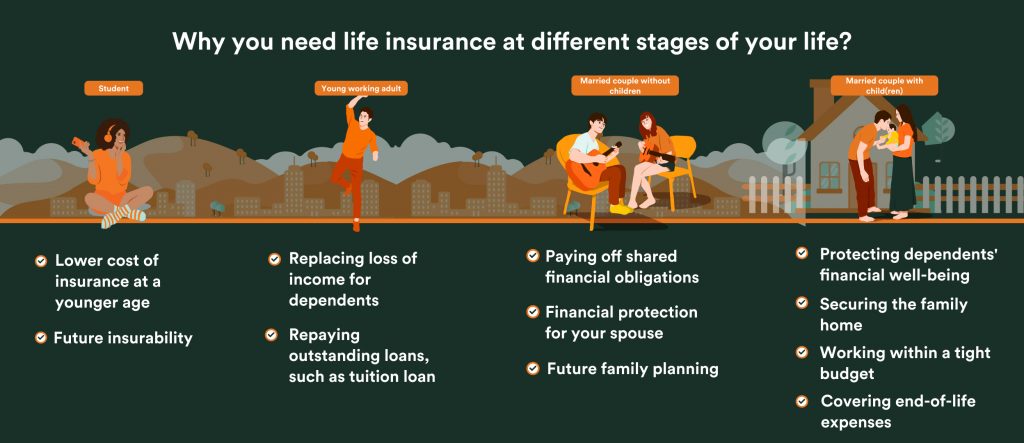
Young families don’t sit around thinking about insurance. Life moves fast when you’re married, working, raising kids. But here’s the thing. Your insurance needs completely change depending on where you are in life. Getting married looks nothing like having a baby. Having one kid is different from three. At 25, you need something totally different from what you need at 40.
Most young families either buy insurance they don’t really need or they skip the stuff that actually matters. This happens because nobody sits down and thinks about what their actual situation requires. They just do what someone suggested or copy what their friend did.
When You’re Just Married Without Kids
This is the time when things feel stable, but you’re actually vulnerable. If one of you dies, the other is in serious trouble financially. That’s why term life insurance matters right now.
Both of you should get coverage. Figure out what you actually owe. If there’s a home loan, that’s your minimum. Add what it would cost to survive for a couple of years without that income. That’s roughly what you need.
Health insurance doesn’t have to be huge at this stage. Young and healthy people can get by with ₹3 to ₹5 lakh coverage. Nothing fancy. Just something to cover regular medical stuff if it happens.
When searching for “what are the types of insurance”, most people find information about term insurance, health insurance, and general insurance. These are the basics that apply at every life stage. The key is understanding which ones matter most at your current point in life. You probably don’t need maternity coverage yet unless you’re planning to get pregnant soon. But once that becomes relevant, everything shifts. Different life stages create different requirements. Your financial responsibilities expand. Your health risks change. The protection you need today won’t be the protection you need in five years.
When A Baby Is On The Way
The moment you know a child is coming, the whole picture changes. Medical costs jump up immediately. Delivering a baby at a decent hospital costs ₹1 to ₹3 lakh even with insurance helping. Without it, you’re paying way more.
This is when you actually need to look at health insurance that specifically covers pregnancy and delivery. A lot of basic policies don’t include this. Some skip it entirely. You need the best health insurance for maternity that actually covers what you’ll face when delivery time comes. Make sure the policy covers hospital stays, delivery costs, and postnatal care. Read the fine print carefully because maternity benefits vary wildly between policies.
Life insurance becomes way more important now. A child means 18 years of expenses. School costs. Food costs. Healthcare. If something happens to the parent earning money, the other person is drowning. You need to jump insurance up to ₹1 to ₹1.5 crore for the person bringing in income.
Disability coverage also becomes important. If the earning parent gets sick or injured and can’t work, how does the family survive? You need protection for that scenario.
When You’ve Got Kids And A Home Loan
Now things get complicated because you’ve got multiple financial obligations at once. A home loan is a big one. If something happens to the person who borrowed, the bank doesn’t care about their death. They still want their money. If there’s no insurance, the family loses the house.
Life insurance needs to cover the loan amount plus everything else. A ₹50 lakh home loan means at least ₹50 lakh just for that. Add what the kids will need to survive and get educated. You’re probably looking at ₹2 to ₹3 crore total.
Health insurance gets more complicated with a bigger family. ₹5 lakh coverage that seemed okay for two people isn’t nearly enough for a family of four or five. You need ₹10 to ₹15 lakh coverage per person in the family.
When You Have Multiple Kids At Different Ages
Multiple children means expenses hitting from different directions. One kid in private school. Another in preschool. Maybe a third coming soon. Education costs multiply fast.
Life insurance isn’t something you can reduce. The family still completely depends on the earning parent’s income. If anything, you might need even more because obligations are higher.
Health insurance gets really important now. Teenagers sometimes need expensive treatments. Parents in their 40s start developing health issues. A family policy with ₹20 lakh sum assured makes actual sense at this point.
Disability coverage matters more than ever. If the parent can’t work due to serious illness or accident, the family can’t manage. Income replacement becomes critical.
When Kids Are Getting Independent
By the time children turn 18 or 20, the situation shifts again. Some are in college. Some are starting to earn. The parent isn’t supporting them entirely anymore.
Life insurance can potentially be reduced at this stage. Kids are less dependent. But college still costs money. Keep insurance until all kids finish education at minimum.
Health insurance doesn’t get less important. Parents are now in their 40s and 50s. Health risks go up. Good health insurance with solid coverage becomes more valuable, not less.
The Bottom Line For All Stages
No matter what stage someone is in, the basics stay the same. Term insurance for income protection. Health insurance for medical costs. You can’t ignore these. The amounts change. The specific coverage changes. But the foundation never does.
Disclaimer: This blog is for general information only and is not personalised insurance or financial advice. Insurance needs vary based on individual circumstances, income level, number of dependents, and location. Always read your policy documents completely before purchasing any insurance product. Consult with a qualified financial advisor about what insurance your specific family actually needs at your current life stage. For official insurance information and regulations, visit the Insurance Regulatory and Development Authority (IRDAI) at https://www.irdai.gov.in/.