
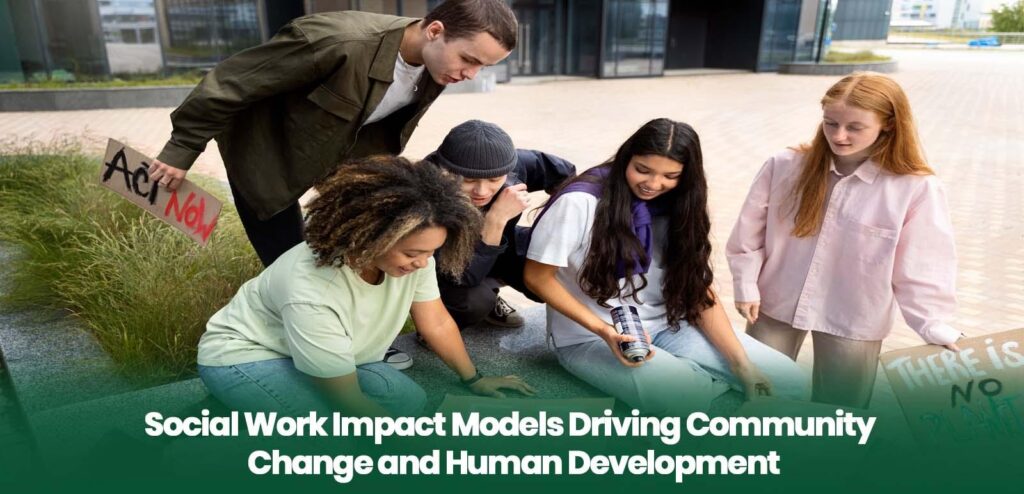
Change begins with a spark and social work is often that spark. In communities around the world, there are individuals who commit their lives to creating systems of care, empowerment, and resilience. At the heart of these efforts lies Social Work Impact, a concept that captures how structured models of practice drive transformation in both individuals and societies. The purpose of this blog is to examine the theories behind the development of humans and communities, thus providing the spark of social work.
Social Work Models Explained
Social work models serve as frameworks for addressing difficult social problems through systematic application. These models incorporate social theories, practices, and communities to address issues such as poverty, inequality, and mental health challenges. Through these models, social workers help people access opportunities that can improve their quality of life. For instance, using the strengths model, people are encouraged to use their resilience and creativity as tools for change.
Education as Empowerment
Education is vital to the success of social work models. Through educating people on literacy, job skills, and schooling, social workers equip them to escape poverty. Moreover, they push for educational policies that do not exclude disadvantaged groups. For students navigating academic challenges, services such as assignment help UK provide valuable support. These resources align with social work’s mission to reduce barriers and promote equal opportunities for success, reinforcing the importance of accessible education.
Community Development and Human Growth
The notion of community development is fundamental for the practice of social work. It implies mobilization of local resources, coordination and cooperation, as well as involvement in decision-making processes. Once a community takes the initiative in its development, it is able to create sustainable systems that ensure educational, health care, and economic development.
The concept of human development is equally important. Social work understands that development goes beyond physical achievements and touches such aspects as emotions, psychology and socialization.
Social Work Impact in Practice
The phrase Social Work Impact resonates strongly when examining real-world applications. Regardless of whether they are intervening in a crisis, advocating for someone, or organizing the community, social workers make an impact. Social workers develop interventions that deal with the pressing needs of individuals, groups, or communities and at the same time lay the groundwork for future development. During disasters, social workers are able not only to help but also build up stronger infrastructure for their clients.
Advocacy and Policy Change
Social work is more than just providing personal assistance as it affects other systems as well. Advocacy is a powerful process that helps bring about policy changes to create equity. Through advocacy, social workers make sure that the voice of the community is heard during policymaking. Policy changes can often take time and cooperation. Social workers work together with various organizations, the government, and community movements to ensure that their actions are effective.
Technology and Modern Approaches
Modern times require innovation, especially when it comes to the field of social work. Thanks to technology, the practitioner’s reach increases, remote service delivery becomes possible, and data analysis helps make the right decisions. Students and professionals alike benefit from specialized services such as social work assignment help, which provide guidance in mastering complex theories and applying them to practice. These tools enhance learning and ensure that future social workers are well-prepared to drive meaningful change.
Collaboration Across Sectors
Social work is best practiced when working together. Collaboration with health care professionals, teachers, and community leaders leads to systems that work holistically. Through intersectoral collaboration, social workers can address complex issues, including housing, employment, and health. Holistic intervention means that the problems are approached systematically rather than in an isolated manner. Collaboration results into strategies being developed that help solve problems at their very roots. Collaboration inspires innovation, bringing fresh ideas from different angles that help build resilience.
Empowering Participation
Participation is key in social work. Empowering people to participate in processes that affect their lives increases self-reliance. The role of social workers is to create spaces for discussion through forums, workshops, and community meetings.
This method helps to ensure that development is done by people through them. It makes the whole process participatory and representative of people’s aspirations and values.
Communities become more resilient when they come together through common values and collective actions. It is through participation and empowerment that social workers cultivate this strength within the communities. Through this, the communities realize that the most sustainable way to empower people is to act collectively.
Education and Professional Growth
Continued learning is essential for the social workers themselves. They need to keep themselves updated with all the new challenges that are arising. This can be done through various means like workshops, certification programs, and higher education. For students balancing multiple responsibilities, services like write my assignment provide essential support. This type of learning is highly consistent with the values of social work, as it helps lower their stress levels and enables them to focus on developing skills.
Challenges and Opportunities
Some of the problems facing social work include insufficient funds, bureaucracy, and cultural barriers. On the other hand, these very difficulties create opportunities for creative solutions. Through alliances, technology, and advocacy, social work continues to grow and develop. Resilience is important. Both communities and social workers exhibit exceptional resilience when faced with problems. The power of social work becomes evident in such resilience and continues to grow.
Conclusion
The essence of social work lies in creating a path towards dignity, equality, and empowerment. The models of practice form the framework, but it is the dedication of the individual and community that makes change a reality. The final mention of Social Work Impact underscores how these efforts ripple outward, shaping societies and fostering human development. Social work is not merely a career; it is a revolution that allows individuals to overcome obstacles.
Communities realize that when they embrace social work, change does not just become possible; it becomes inevitable.
Meta Title: Tourism Development Approaches Enhancing Cultural Exchange and Sustainable Travel
Meta Description: Explore tourism development approaches that foster cultural exchange, promote sustainability, and enrich global travel experiences.
