
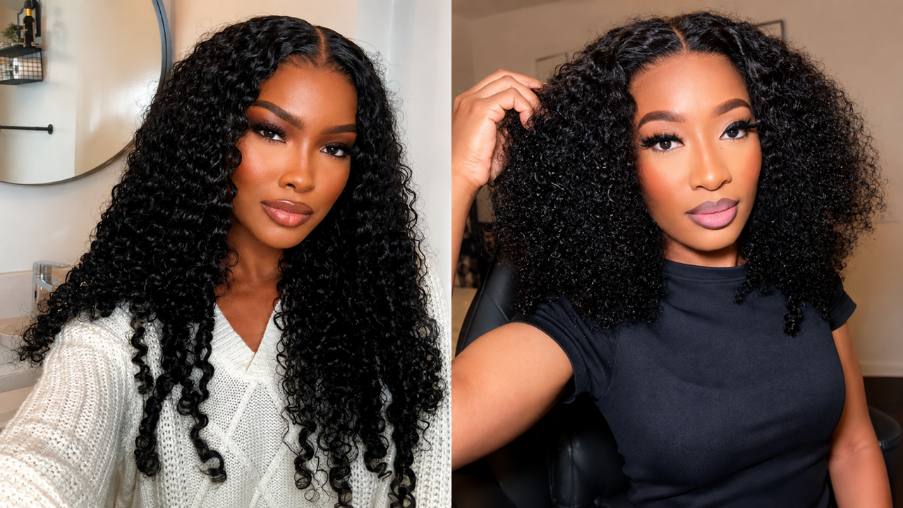
Not every curly hairstyle tells the same story. Some curls fall with a soft, flowing rhythm, while others create a denser pattern with a distinctly textured appearance. That difference is exactly why choosing between a Burmese curly wig and a kinky curly wig can be an interesting decision for anyone who enjoys textured hairstyles.
Both options can deliver volume and personality, but they approach texture from different directions. Understanding those differences can make it easier to choose a wig that matches your preferred appearance, styling habits, and expectations.
Burmese Curly Wig: Softness With Movement
Burmese curly wigs are generally recognized for its curly texture combined with a fluid, lively appearance. Depending on the particular wig, the curls can range from relatively loose formations to more defined patterns.
One of the noticeable characteristics of this texture is movement. The curls can create a flowing silhouette that changes as the wearer moves. Rather than producing a uniformly compact shape, the hair may have a softer relationship between individual curls.
This makes Burmese curly hair an appealing choice for someone who wants visible curls without necessarily creating the densest possible textured effect.
The final appearance will depend on several factors, including curl formation, density, length, and how the hair has been prepared. Two Burmese curly wigs can therefore look quite different from one another even though they share the same general texture category.
Kinky Curly Wig: Texture With Strong Definition
The kinky curly wigs move in another direction. Its texture is typically more compact and visibly textured, producing a fuller impression across the hairstyle.
The curls may appear smaller, denser, or more tightly grouped than those found in many softer curly patterns. This gives kinky curly hair a distinctive silhouette that can look particularly abundant.
For people who enjoy hairstyles with strong texture and noticeable volume, a kinky curly wig can be an appealing option. It can also create a more pronounced natural-texture effect, particularly when the curls are allowed to maintain their original formation.
Kinky curly hair should not be judged solely by curl size. Density, strand characteristics, length, and styling technique all influence the final result.
Two Textures, Two Different Visual Effects
The easiest way to understand the difference is to imagine the overall shape each texture creates.
Burmese curls can produce a more flowing and relaxed impression. Kinky curls can create a denser and more compact appearance.
Neither texture is automatically superior. They simply communicate different styling personalities.
Someone looking for movement may prefer Burmese curls. Someone seeking a stronger textured silhouette may prefer kinky curls. A person who enjoys switching between understated and dramatic looks might even appreciate having access to both.
Choosing Based on Your Natural Hair
Your existing hair can be an important reference point when selecting a curly wig.
If you want the wig to resemble your natural texture, compare the curl formation carefully rather than relying only on the product name. A Burmese curly wig may blend beautifully with certain curl patterns, while a kinky curly wig may be a closer visual match for naturally dense, tightly textured hair.
However, matching is not a requirement.
A wig can also be used to intentionally create a different texture. Someone with relatively loose curls may choose kinky curly hair specifically for a more dramatic transformation. Likewise, someone with tightly textured hair may choose Burmese curls for a softer change.
The best choice depends on whether your goal is continuity or contrast.
Length Can Change the Character of a Curl
Curl pattern and length work together.
A longer Burmese curly wig can allow the curls to stretch visually and create a cascading effect. A shorter version may appear fuller because the curls occupy less vertical space.
Kinky curly hair can behave similarly, although its dense texture may create substantial volume even at moderate lengths.
This is why comparing length numbers alone can be misleading. The same measured length can look completely different when applied to two distinct curl structures.
Think about the shape you want around your face and shoulders rather than choosing a length simply because it sounds impressive.
Density: The Hidden Part of the Decision
Density is one of the easiest specifications to overlook.
A wig with moderate density can produce a lighter, more relaxed appearance. Higher density can create a fuller silhouette and make the hairstyle more dramatic.
With Burmese curls, additional density can transform soft curls into a much bigger statement. With kinky curls, high density can produce an especially bold textured shape.
The right density depends on your comfort level as well as your aesthetic preference. More hair can look spectacular, but it can also require additional time for washing, drying, and detangling.
Styling a Burmese Curly Wig
Burmese curls can be styled according to the character you want to create. Keeping the curls separated can emphasize definition, while gently allowing them to expand can create a softer and larger shape.
Parting can also alter the entire appearance. A middle part may create symmetry, while a side part can introduce an asymmetrical frame around the face.
Accessories offer another simple way to change the style. Clips, scarves, headbands, or decorative pieces can turn the same curly wig into something that feels completely different.
The important point is to avoid treating curly hair as though it were straight. Excessive brushing can disturb the curl structure and create unnecessary frizz.
Styling a Kinky Curly Wig
Kinky curly wigs benefit from a similarly thoughtful approach, but their dense texture often makes gentle handling even more important.
Instead of aggressively combing through the entire hairstyle, work through sections gradually when detangling is necessary. Maintaining moisture can also help the curls remain flexible and easier to manage.
The goal is not always to make every curl perfectly identical. The natural irregularity of a textured hairstyle can actually be part of its appeal.
Allowing the curls to retain some of their original character can produce a more convincing and expressive finish.
Maintenance for Both Curl Types
Both Burmese curly and kinky curly wigs need regular attention if you want them to remain attractive over time.
A gentle cleansing routine can help remove accumulated products and everyday residue. After washing, the hair should be handled carefully rather than rubbed aggressively.
Detangling should be performed according to the texture. Curly hair generally responds better to patience than force.
Moisturizing products can help maintain softness, but excessive product application may cause buildup. Finding a balanced routine is more useful than constantly adding new products.
Heat should also be used cautiously. Repeated high temperatures can affect the condition and appearance of hair, especially when the original curl pattern is something you want to preserve.
Which One Should You Choose?
Choose a Burmese curly wig if you are drawn toward flowing curls, movement, and a softer textured silhouette.
Consider a kinky curly wig if you prefer compact curls, pronounced texture, and a fuller visual effect.
If you are still undecided, think beyond the first impression. Consider how much volume you enjoy, how often you want to style the hair, how closely you want it to resemble your natural texture, and how much maintenance fits comfortably into your routine.
Final Thoughts
Burmese curly wigs and kinky curly wigs belong to the same broad world of textured hair, but they offer distinctly different styling experiences. One can lean toward flowing movement and softer definition, while the other can deliver stronger texture and a denser appearance.
The real advantage of understanding both is freedom of choice. Instead of choosing a wig simply because it is labeled “curly,” you can select a texture based on the shape, volume, movement, and personality you want your hairstyle to express.
That is what makes the curl spectrum so interesting: there is no single definition of the perfect curl. There is only the texture that feels right for you.
