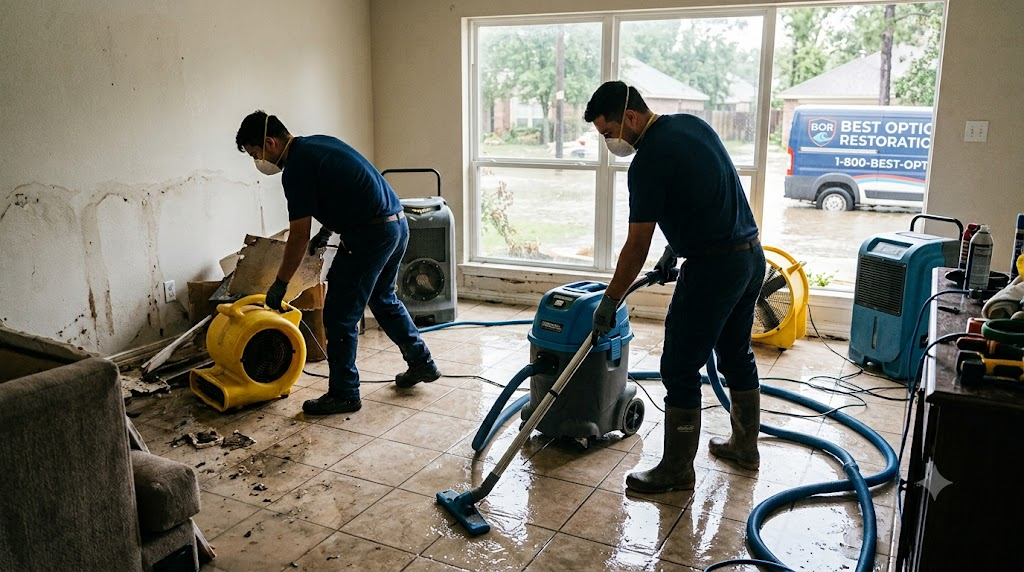
Flooding can leave a home or business with damaged floors, wet walls, ruined belongings, and hidden moisture that may cause further problems. Heavy rain, overflowing drainage systems, plumbing failures, and stormwater can all allow water to enter a property with little warning. In Conroe, TX, quick action after a flood can help limit damage and make cleanup more manageable. Water restoration services in Conroe TX provide professional support for removing standing water, drying affected areas, and repairing damaged parts of a building. Best Option Restoration helps property owners understand the steps involved in restoring their spaces, from the first inspection to the work needed to make the property safe and usable again.
Why Flood Damage Needs Prompt Attention
Floodwater can spread through a building faster than many property owners expect. It may move beneath flooring, soak into drywall, collect inside cabinets, and reach insulation or electrical systems. Even after the visible water has been removed, moisture can remain trapped in materials and create additional damage.
Delays can lead to several problems, including:
- Mold growth: Damp surfaces and enclosed spaces can encourage mold growth when they remain wet.
- Structural damage: Wooden floors, framing, and other building materials may weaken after prolonged exposure to water.
- Damaged belongings: Furniture, clothing, documents, and personal items may become difficult to salvage.
- Electrical hazards: Water near outlets, wiring, appliances, and electrical panels can create serious safety risks.
- Unpleasant odors: Moisture and contaminated materials can leave persistent smells inside a property.
Professional restoration teams assess the extent of the damage and determine which areas need immediate attention. Taking action early can reduce the amount of material that needs replacement and help prevent problems from spreading into unaffected rooms.
The First Steps After Flooding
The first priority after a flood is safety. Property owners should avoid entering areas with standing water if electrical hazards, structural damage, or contaminated floodwater may be present. If water has reached electrical equipment, a qualified professional should assess the situation before anyone enters the affected area. Once the property is safe to access, the restoration process can begin with an inspection.
Assessing the Damage
Restoration technicians examine the affected rooms, flooring, walls, ceilings, and belongings. They look for visible water damage and signs of moisture in areas that may not be easy to see. Moisture meters and other inspection tools can help identify damp materials behind surfaces or beneath flooring. The assessment also helps determine whether the water came from a clean supply, a damaged drain, or outdoor flooding. This distinction matters because contaminated water may require additional protective measures, cleaning, and removal of certain materials.
Removing Standing Water
Standing water needs to be removed before effective drying can take place. Depending on the amount of water and the affected area, restoration professionals may use pumps, wet vacuums, and other extraction equipment. Removing water promptly can help limit further absorption into floors, walls, and furniture. It also allows technicians to inspect surfaces more closely and identify materials that may need specialised cleaning or replacement.
How Professional Drying Protects the Property
Removing visible water is only one part of flood recovery. Moisture often remains inside porous materials, wall cavities, and other concealed spaces. Without proper drying, these damp areas may continue to cause damage after the property appears clean. Professional drying usually involves a combination of air movement, dehumidification, and moisture monitoring.
- Air movers: These devices circulate air across damp surfaces to support evaporation.
- Dehumidifiers: They remove moisture from the indoor air, helping wet materials dry more effectively.
- Moisture readings: Technicians check affected materials to track drying progress.
- Targeted drying: Equipment is positioned to reach areas such as corners, floor edges, and enclosed spaces where moisture may collect.
Drying methods depend on the building materials, the amount of water, and how long the property has been wet. Some materials may be dried and retained, while others, particularly those that are heavily contaminated or badly damaged, may need removal. Property owners working with water restoration services in Conroe TX can receive a more organised response to these problems, including an assessment of which areas require drying, cleaning, or repairs.
Preventing Mold and Indoor Air Problems
Mold can begin growing on damp materials within roughly 24 to 48 hours under suitable conditions. The actual timing depends on moisture, temperature, and the materials involved. This makes prompt drying an important part of flood recovery. Carpets, drywall, insulation, wood, and upholstered furniture may hold moisture long after surface water has disappeared. If these items remain damp, mold may develop and affect indoor air quality.
Restoration professionals help reduce this risk by locating moisture, drying affected areas, and identifying materials that cannot be safely retained. Where mold is already present, the response may require specialised remediation rather than ordinary cleaning.
Property owners can also take sensible steps while waiting for professional assistance:
- Keep people and pets away from contaminated floodwater.
- Avoid using household fans in areas where sewage or other contamination may be present.
- Do not paint or cover damp walls to hide water stains.
- Keep a record of visible damage and affected belongings for insurance purposes.
- Follow professional advice about ventilation, cleaning, and the safe removal of damaged materials.
These precautions support the restoration process and help prevent a small moisture problem from becoming a larger repair issue.
Cleaning and Repairing Flood-Damaged Areas
After water extraction and drying, the next stage focuses on cleaning, sanitising where necessary, and repairing damaged parts of the building. The exact work depends on the source of the water and the condition of the affected materials. For example, a clean-water plumbing leak may require a different cleaning process from outdoor floodwater that has entered through doors or windows. Floodwater can carry dirt, bacteria, chemicals, and other contaminants, so affected surfaces must be handled according to the level of contamination.
Restoration work may include:
- Cleaning and treating suitable hard surfaces.
- Removing damaged drywall, insulation, or flooring.
- Assessing timber, cabinets, and other building components.
- Cleaning salvageable furniture and personal belongings.
- Replacing materials that cannot be safely restored.
- Completing repairs after the building has dried sufficiently.
Floodwater can damage flooring, walls, furniture, and other parts of a property. Best Option Restoration helps property owners address flood damage by focusing on water removal, drying, and the repairs needed after a flood. Hiring water restoration services in Conroe TX can help homeowners identify hidden moisture, deal with damaged materials, and take the right steps towards restoring their property.
Why Local Flood Conditions Matter in Conroe
Conroe properties can face flooding risks associated with heavy rainfall, storms, drainage problems, and water entering low-lying areas. The effects vary by property, neighbourhood, building design, and the amount of rainfall involved. Water may enter through ground-level openings, garages, crawl spaces, or damaged roofing and windows. Even when flooding affects only one room, moisture can travel into adjoining spaces and remain hidden beneath surfaces.
Choosing water restoration services in Conroe TX can help property owners arrange an appropriate response for local conditions. A professional inspection can identify where water entered, which areas were affected, and whether additional checks are needed before repairs begin. It is also useful to address the source of the water whenever possible. Depending on the situation, this may involve repairing a plumbing problem, improving drainage, sealing an opening, or arranging repairs to damaged exterior components. Correcting the cause helps reduce the chance of similar damage occurring again.
Working Through the Insurance Process
Flood recovery can involve unexpected expenses, so keeping accurate records is helpful. Property owners should photograph or record visible damage before discarding affected belongings, provided it is safe to do so. Receipts, repair estimates, and records of restoration work may also support an insurance claim. Coverage depends on the policy and the source of the water. Standard homeowners insurance may cover certain sudden plumbing leaks but often excludes flooding caused by rising surface water. Separate flood insurance may be needed for some flood-related losses. Before authorising major repairs, property owners should review their policy and contact their insurer. They should also ask which inspections, estimates, and records are required. Emergency steps needed to protect people and prevent further damage should not be delayed while waiting for paperwork, provided those steps can be taken safely.
Getting the Property Ready for Normal Use
Restoration does not end when the floors look dry. Before rooms return to regular use, the affected areas should be checked to confirm that drying goals have been met and that necessary cleaning and repairs are complete. Depending on the damage, this may involve checking moisture levels, replacing removed materials, inspecting electrical systems through qualified professionals, and confirming that contaminated surfaces have been handled appropriately.
Keeping records of repairs and addressing the original cause of flooding can also help property owners plan future maintenance. Simple measures such as checking drainage, maintaining plumbing, and inspecting vulnerable openings may help reduce certain risks. Flood damage can leave your property needing urgent attention. Get in touch with Best Option Restoration today to discuss your restoration needs, arrange an assessment, and learn about the steps required to dry, clean, and repair your home or business after a flood.