
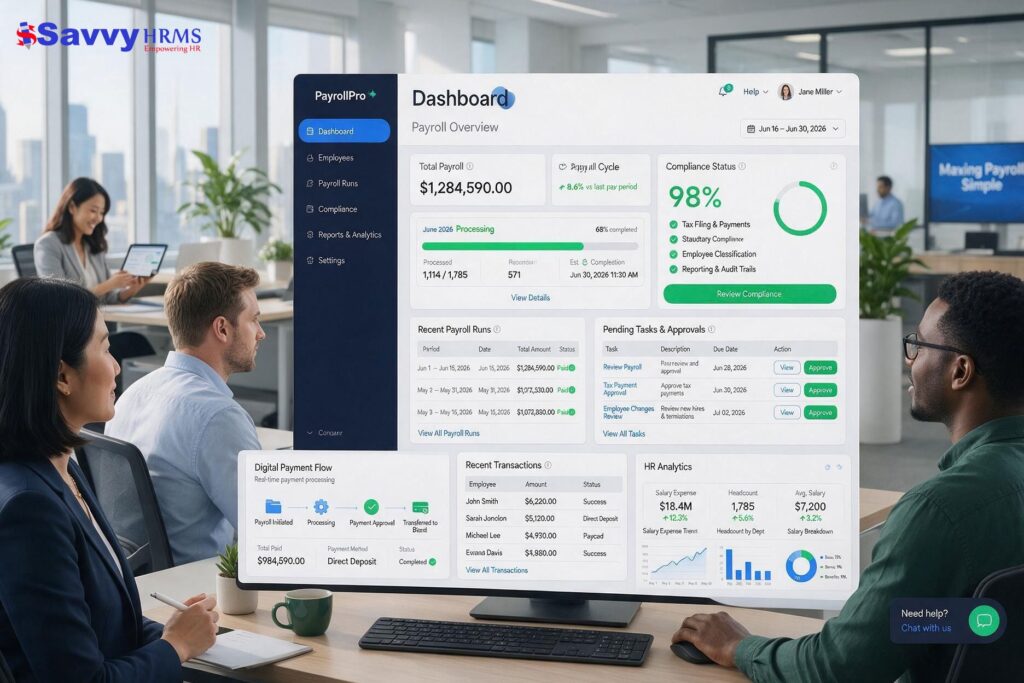
Imagine handling salaries for hundreds of employees every month using spreadsheets, attendance sheets, leave information, salary calculations, deduction forms and separate compliance documents. Even a small error can impact an employee’s pay. Cause extra work for the HR and payroll team.
In 2026, payroll processing is not about calculating basic salary and deductions anymore. Companies have to deal with attendance, leave, overtime, bonuses, reimbursements, taxes, legal deductions, payslips and payroll reports while keeping employee records.
This is where Payroll Software comes into play. It helps companies automate payroll tasks over and over again, link employee data with salary processing and make compliance tasks easier.
What Is Payroll Software?
Payroll Software is a system that helps an organization manage employee salaries and all payroll tasks. Payroll Software can carry out salary calculations, deductions, taxes, overtime, bonuses, reimbursements, payslips, payroll reports and other payroll records.
In a payroll setup, HR and finance teams may rely on spreadsheets and manually updated records. As the workforce grows, keeping these records can become time‑consuming and hard to manage.
With payroll automation, employee information, attendance, leave and salary components can be gathered in one system. Payroll teams can then use Payroll Software to process salaries and create payroll records.
Payroll Software is especially useful for businesses that manage employees, multiple locations, several departments, various shifts or different salary structures.
How Does Payroll Software Work?
Payroll Software links employee details with the steps needed to figure out and pay salaries. Depending on the system, it can pull information from employee management, attendance records, leave applications and other HR systems.
The payroll team can set up salary structures, decide on deductions, allowances, overtime rules, and any other parts that apply. When all the needed information is in place, the software uses the setup rules to calculate the payroll.
A standard payroll process could be:
Employee Data → Attendance & Leave → Salary Calculation → Tax Calculation → Statutory Deductions → Salary → Payslip → Compliance Reports
The payroll team can review the calculated information before processing salaries. Once payroll is finalized, employees can receive their payslips and the organization can maintain payroll records and reports.
Why Do Businesses Need Payroll Software in 2026?
Managing payroll manually can become increasingly difficult as organizations expand. HR and finance teams may have to collect attendance, leave, overtime, incentives, deductions, and other salary information from different sources before calculating salaries.
This creates more opportunities for calculation errors and repeated data entry.
Payroll Software in 2026 helps companies cut down on these tasks by making many parts of the payroll process automatic. It also offers a place for keeping payroll details.
For companies that have teams, several locations, factories or workers who work in shifts, payroll automation can help make the process of paying salaries every month more organized and easier to handle.
What Are the Key Features of Payroll Software?
The features can differ between software providers, but an effective payroll system may include:
- Employee salary management: Maintaining employee salary structures and payroll information.
- Automated salary calculation: Calculating salaries based on configured salary components and applicable inputs.
- Attendance and leave integration: Using attendance, working hours, and leave information during payroll processing.
- Overtime calculation: Managing overtime-related salary calculations where applicable.
- Tax calculation: Supporting applicable tax calculations based on employee payroll information.
- Statutory deductions: Handling the required payroll deductions and contributions as per laws and regulations.
- Bonus and incentive management: Including bonuses, incentives and other extra earnings in employee pay.
- Reimbursement management: Processing approved employee reimbursement claims within the payroll system.
- Payslip generation: Creating payslips for employees to view their pay details.
- Payroll reporting: Creating payroll summaries and other reports that show what is happening with payroll.
- Compliance support: Helping payroll teams with keeping records and getting payroll documents ready.
These features can help make the payroll process more organized and cut down on relying on spreadsheets and manual records.
How Does Payroll Software Simplify Salary Processing?
One of the advantages of Payroll Software is that it can bring salary-related inputs into a single process.
For example an employee’s salary may depend on attendance, leave, overtime, allowances, deductions, incentives and other applicable components. Instead of collecting each piece of information manually, an integrated payroll system can use data from connected HR processes.
The payroll team can review the information, make adjustments and process salaries using predefined payroll rules which can reduce calculations. Help HR teams spend less time preparing payroll data manually.
It can also make the payroll process easier to monitor because salary information and payroll processing activities are maintained within the system.
How Does Payroll Software Help With Compliance?
Payroll compliance means that organizations must calculate and keep track of payroll-related items. These include deductions, contributions, records and reports. They must follow the rules that apply to them.
When a company has employees or works in different places, handling all of this by hand can get complicated. Payroll Software can help by using set rules and keeping employee and salary information.
Some software can also handle calculations, generate payroll reports, manage deduction records and support tasks that keep the company compliant.
It’s important to make sure the software is up to date with laws and rules. HR and payroll teams should check the settings.
Make sure the system matches what the organization needs today. With automation, the responsibility for staying compliant stays with the organization. They must make sure their payroll practices follow the law.
What Are the Benefits of Payroll Software?
The main benefit of payroll automation is that it makes salary processing more organized and reduces repetitive manual work. Some key benefits include:
- Reduced manual work: Automates repetitive payroll calculations and processes.
- Fewer calculation errors: Reduces dependency on manual salary calculations.
- Faster payroll processing: Helps payroll teams process salaries more efficiently.
- Better data accuracy: Keeps employee and salary information organized in one system.
- Easy payslip access: Allows employees to access their salary information digitally.
- Improved transparency: Makes salary components, deductions, and payroll records easier to track.
- Compliance support: Helps manage applicable payroll deductions and compliance-related records.
- Better reporting: Provides structured payroll reports for HR and finance teams.
- Centralized information: Keeps payroll data within a single system.
- Scalability: Supports payroll processing as employee numbers and business operations grow.
These benefits can become especially valuable for organizations that are expanding their workforce or managing complex payroll processes.
How to Choose the Right Payroll Software in 2026?
Selecting Payroll Software depends on the organization’s workforce size, payroll structure, locations, industry, and existing HR processes.
Some important factors to consider include:
- Employee capacity: Can the software support your current and future workforce?
- Payroll features: Does it cover salary calculation, deductions, taxes, overtime, bonuses, and payslips?
- Compliance support: Does it support applicable payroll compliance requirements?
- Integration: Can it connect with your HRMS, attendance, and leave systems?
- Ease of use: Can HR, finance teams, and employees use the system easily?
- Reporting: Does it provide useful payroll and salary reports?
- Security: How does the platform protect employee and payroll information?
- Scalability: Can it support additional employees, locations, and payroll structures?
- Support: Does the provider offer implementation, training, and technical support?
Businesses should focus on selecting software that fits their actual payroll process rather than choosing a system based only on the number of features it offers.
Why is Payroll Automation Important for Growing Businesses?
The growing number of employees makes spreadsheet-based payroll management systems and unrelated systems harder to handle. Organizations need to handle five essential elements including salary structures, attendance records, deductions and leave information and payroll processing, when their employee count grows.
Automation enables businesses to create standardized payroll systems which decrease their need to perform duplicate administrative tasks.
The system enables HR and finance teams to get quick access to payroll information which they can use to generate reports and handle workforce management needs.
A structured payroll system enables growing organizations to handle their current salary processing needs while they prepare for their future staff expansion.
Conclusion:
Payroll Software will operate as a vital employee management system for businesses throughout the year 2026. The system links employee data with attendance and leave records and salary calculations, deduction processing, payslip distribution and reporting functions to achieve better-organized monthly salary processing through payroll automation.
Businesses need the right Payroll Software to decrease their manual tasks while they maintain accurate payroll operations, comply with regulations and allow staff members to check their salary details easily.
Organizations that implement digital HR systems need to connect their payroll operations with HRMS and other employee management systems to create a unified payroll system.
Looking to simplify your payroll process?
Explore how Savvy HRMS can help your organization manage payroll, employee information, attendance, leave, and other HR processes through an integrated platform.
Book your free demo today and discover how Savvy HRMS can support smarter payroll and employee management.
