
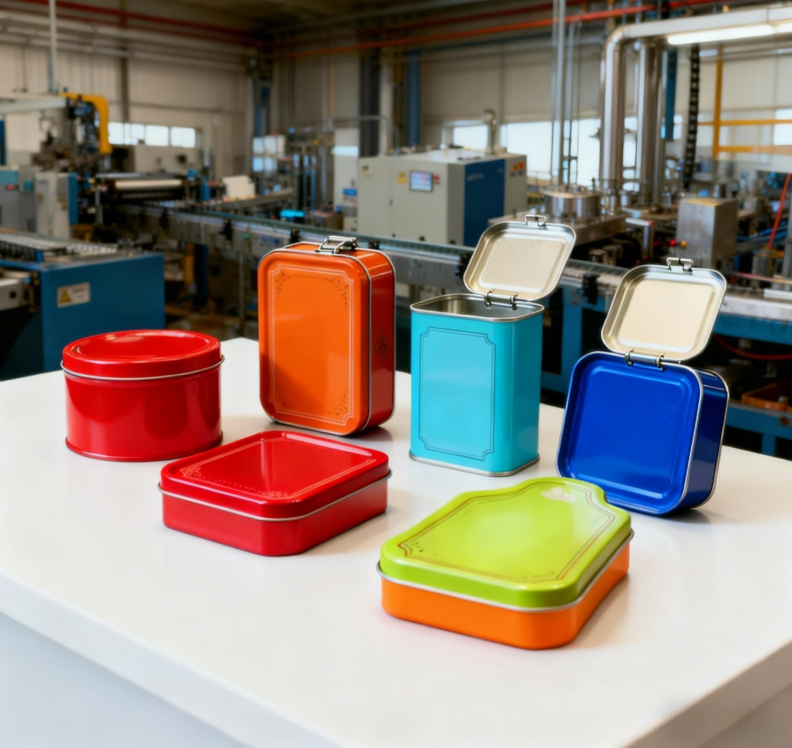
From high-end teas and gourmet foods to cosmetics and candles, brands across diverse industries are investing heavily in custom metal packaging to stand out amidst crowded retail shelves. Among the myriad solutions available, tinplate packaging is highly favored for its durability, recyclability, and premium aesthetic. However, developing custom tin packaging is no simple task. Many brands encounter challenges during the design process: structural limitations, printing constraints, issues regarding sealing performance, cost control, and production feasibility. What appears to be a simple metal box often requires complex engineering, precision tooling, and specialized manufacturing processes. This is where professional tin box manufacturers become indispensable. Experienced manufacturers offer services that go far beyond container production; they act as technical partners, helping brands turn creative packaging concepts into reliable, scalable solutions that meet market demands.
Tin Box Manufacturer Possesses the Expertise to Translate Creative Concepts into Viable Packaging
One of the most common challenges in custom packaging development is bridging the gap between creative design and manufacturing feasibility. Designers often envision intricate shapes, unique lid mechanisms, or elaborate decorative finishes. However, not every idea can be efficiently realized through standard metal stamping and tinplate forming processes. Professional tin box manufacturers bridge this gap by translating creative concepts into practical, production-ready designs.
During the early stages of development, engineers evaluate several critical factors: structural feasibility, tooling complexity, material thickness requirements, assembly tolerances, and production efficiency. Through this process, tin box manufacturers can propose structural adjustments that preserve the designer’s original vision while ensuring manufacturability.
For instance, a brand might request a tin container with a unique curved profile. While such curvature may be visually appealing, excessive curvature can lead to deformation during the stamping process. An experienced manufacturer would optimize the geometry to maintain the aesthetic appeal while simultaneously enhancing structural stability. By combining engineering expertise with creative design, professional tin box manufacturer ensure that custom packaging concepts transition smoothly from initial sketches to full-scale production.
Providing Support in Custom Structural Design Development
Another key area where a tin box manufacturer adds value is in structural packaging design. Tin containers come in a wide variety of forms, including hinged-lid, slide-lid, and double-lid tins. Each structural style requires precise tooling design and specialized forming techniques. Professional tin box manufacturers work closely with clients to select the most suitable structural design based on a range of criteria: product protection requirements, sealing performance, consumer convenience, packaging aesthetics, and production cost efficiency.
For instance, food products such as tea or coffee may require superior sealing capabilities. In such cases, a tin box manufacturer might recommend a double-lid structure to enhance airtightness. Conversely, promotional items benefit from a hinged lid to improve convenience and user interaction. By carefully evaluating product requirements, the tin box manufacturer ensures that the structural design not only fulfills functional needs but also effectively supports the brand’s positioning.
Tin Box Manufacturer’s Solutions for Printing and Decoration Challenges
Custom tin packaging often relies heavily on visual design to capture consumer attention. However, printing on metal presents its own unique technical challenges. Unlike paper packaging, tinplate surfaces require specialized printing processes—such as offset printing, UV coating, embossing, gravure printing, matte or gloss varnishing, and metallic finishes. Professional tin box manufacturers help clients optimize their designs to achieve the best possible visual impact.
For example, certain colors may appear differently when printed on a metal surface compared to paper. Experienced manufacturers can adjust color profiles to ensure brand consistency. Furthermore, advanced decorative techniques—such as embossing—can enhance the tactile appeal of packaging, making it more memorable for consumers. By combining technical printing expertise with creative design concepts, tin box manufacturers ensure that custom packaging achieves both visual impact and production reliability.
Expertise in Material Selection and Product Protection
Material selection plays a pivotal role in the performance of tin packaging. The thickness of the tinplate, the quality of its coating, and its surface finish all influence the final packaging performance. Professional tin box manufacturers carefully evaluate product requirements before selecting materials. Key considerations include moisture resistance, corrosion protection, structural strength, food safety compliance, and long-term durability. For instance, food-grade packaging requires specialized coatings to prevent chemical reactions between the tinplate and the contents of the product. Similarly, premium packaging may require thicker materials to create a sturdier, more luxurious feel. By selecting the appropriate materials, tin box manufacturers ensure that the packaging meets both regulatory requirements and consumer expectations.
Quality Control: Ensuring Reliability in Mass Production
Custom packaging designs must maintain consistent performance throughout the mass production process. Without rigorous quality control, even minor defects can compromise the final product. Professional tin box manufacturers implement comprehensive quality control systems across the entire production workflow.
Typical inspection stages include raw material verification, print quality checks, stamping precision validation, assembly inspections, and final packaging evaluations. These procedures ensure that every tin container meets strict quality standards before leaving the factory. Furthermore, experienced manufacturers typically adhere to international standards, such as ISO quality management systems, to ensure consistent production performance. Through rigorous quality control, tin box manufacturers ensure that custom packaging remains reliable from the initial prototype development stage through to full-scale production.
Transforming Packaging Challenges into Reliable Custom Solutions
Packaging must protect the product, convey brand values, and deliver a memorable user experience. However, as outlined in this guide, the entire journey—from initial concept to final production—can present numerous technical and design challenges. This is precisely where the expertise of professional tin box manufacturers comes into play. Exceptional tin box manufacturers do more than produce metal containers; they provide comprehensive solutions that blend creative vision with engineering precision. From assessing structural feasibility and optimizing print quality to selec
