
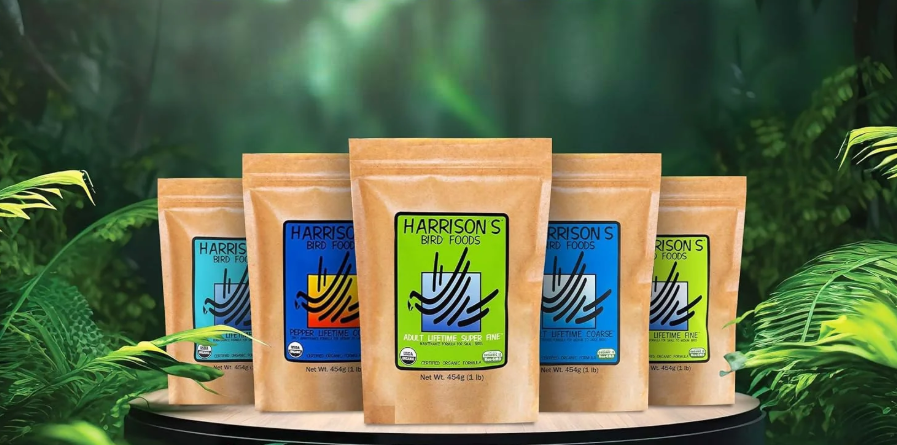
Pet bird owners will go to great lengths to procure the best cage and the most suitable toys for their pets, but often give no second thought to which bag of seeds to purchase. To close that gap, Harrison’s Bird Foods was established. The basic premise behind this organic, pelleted meal is that a bird’s health begins with what is in the bowl, not with additives added later. Before you go shopping, read on if your parrot has appeared flat or finicky about eating seeds.
Why Harrison’s Bird Foods Matter for Your Bird’s Health
Walk down any pet store aisle, and you’ll notice most bird foods lean on fillers, bright dyes, and added sugar to look good in the bag. This brand skips that. Every formula uses certified organic ingredients; nothing is chemically preserved, and the pellets undergo a low-temperature extrusion process rather than high-heat pelleting, which helps preserve nutrients that higher heat would otherwise destroy.
There’s real science behind this. Avian nutrition studies have shown that birds fed only seeds tend to develop fat buildup and vitamin A shortages over time. A properly balanced pellet closes that gap. That’s the whole idea behind Harrison’s Foods, and it’s why vets bring it up so often when new owners ask what to feed their birds.
What Actually Goes Into the Harrison’s Bird Foods Formula
The drawback of labeling ingredients is that it usually provides more information than advertisements do. The pellets, consisting of grains, nuts, and seeds, will help birds suffering from digestive issues, even though some blends do not include wheat, corn, or soy.
A few things to consider before making a purchase:
- No synthetic preservatives, dyes, or artificial flavoring
- Certified organic ingredients, tested for pesticide residue
- Cold-formed, so vitamins and enzymes stay intact
- Formulated with input from certified avian veterinarians
- Sold in different pellet sizes, from finches up to macaws
One thing owners often get wrong is rushing the switch. It’s smarter to mix a small amount into the usual food and slowly raise the ratio over two or three weeks. Birds are stubborn about routine, so give it time.
Matching the Formula to Your Bird’s Life Stage
A breeding hen burns through energy differently from an older cockatiel who mostly naps on a perch, so one formula won’t suit every bird. Harrison’s Foods covers that with separate lines for high energy needs, adult maintenance, and growing juveniles. Feeding the wrong one won’t cause harm right away, but matching it to your bird’s lifestyle pays off over months, not days.
Pairing Pellets With the Right Treats of Caitec Oven Fresh Bites
Diet isn’t only about the daily bowl. Treats do real work too, especially during training or when a bird needs mental stimulation. This is where Caitec Oven Fresh Bites earn their spot. They’re baked instead of fried, and skip the preservatives found in cheaper snacks. Most birds take to the texture fast, which makes them handy for hand-feeding during training.
Used together, pellets and treats cover different jobs. Pellets carry daily nutrition, and treats handle bonding and reward-based training. Neither replaces the other, but a routine built around both tends to hold up better in busy households.
Practical Feeding Tips for New Owners
Switching a stubborn bird to a new diet takes patience. A few habits genuinely help:
- Put out fresh pellets daily, and toss what’s left after a few hours
- Change the water at least once a day, since pellets are drier than fresh produce
- Feed at the same time each day so the bird settles into a rhythm
- Watch droppings for a week after any diet change, since it’s a decent sign of digestion
If a bird flatly refuses pellets at first, don’t panic. Some take a month or longer to accept a new texture. Vets often suggest warming the pellets slightly, or crushing a few over a favorite fruit to ease things along.
Where to Find These Products
Birdie Boutique carries the full pellet range online, alongside Caitec treats. It’s worth checking the product pages directly, since pellet size and formula vary by species.
FAQs
Is Harrison’s Bird Foods suitable for all parrot species?
Yes. It comes in different pellet sizes and formulas, from finches up to large macaws.
How much time does it take to turn a bird into pellets?
Most birds settle in within two to four weeks if the switch happens gradually.
Can Caitec Oven Fresh Bites replace regular meals?
No. They are not an alternative to a complete daily diet. They are just for training and enrichment.
Final Thoughts
It does not have to be difficult. When paired with the right treats, our organic pellet lineup provides pet bird owners with an easy way to accomplish this task through veterinary formulation. It is important to follow a set feeding schedule for your bird, as these creatures thrive on routine. You should consider starting out with Birdie Boutique, and small changes to your bird’s diet will usually make your bird much happier in just a few weeks.
