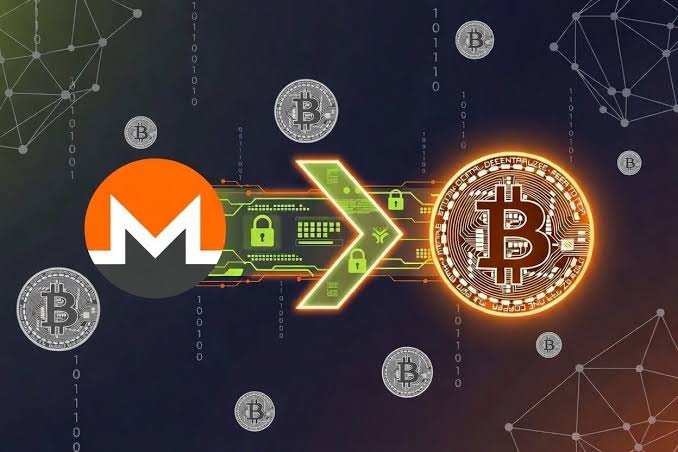
For crypto newbies, owning Bitcoin is the pinnacle of success. But in reality, one must constantly reassess one’s investment portfolio, as the digital asset market is constantly evolving, with yesterday’s leaders giving way to more flexible solutions.
In the digital asset ecosystem, Bitcoin (BTC) has long served as a basic settlement and investment instrument. Its liquidity, recognition, and institutional presence have made it an anchor asset in the market. However, as the blockchain infrastructure becomes more complex, users are increasingly evaluating not only profitability but also protocol properties: transparency, transaction observability, and resistance to analysis.
Monero (XMR) represents a functionally different class. While BTC is built on a public distributed ledger model, this cryptocurrency was originally designed with an emphasis on minimizing the disclosure of transaction metadata. Therefore, if anonymity and speed are important to you, it makes sense to use an aggregator to select a secure service and exchange BTC for XMR.
What are the benefits of converting BTC to XMR, and for whom is it relevant?
Such transactions are typically an element of portfolio or behavioral optimization, rather than trading. Users working with multiple digital assets view the Monero cryptocurrency as a tool for capital redistribution.
The main motivations for converting Bit Coin to XMR are:
- reducing dependence on Bitcoin’s fully transparent UTXO annotation model;
- portfolio segmentation by asset privacy and traceability;
- using Monero as a layer of “obfuscation of the economic history” of funds at the network level;
- reducing the correlation between news and regulatory pressure on BTC;
- redistributing risk between the public and private blockchain layers.
Overall, purchasing Monero should not be viewed as a change in focus, but rather as a redistribution of risk, transparency, and network observability parameters within a crypto portfolio.
Read MOre: claude code crypto mcp
The Optimal Time to Buy Monero with Bitcoin
If you decide to exchange one coin for another, you need to thoroughly prepare for the transaction. The first step is choosing the right moment. There are several options:
- Bitcoin’s phase of extended volatility. During sharp price fluctuations, some participants lock in their positions and transfer capital to assets with different dynamics, including Monero, reducing their exposure to short-term price noise.
- Periods of regulatory or news turbulence. Growing uncertainty surrounding the Bitcoin infrastructure (exchanges, regulation, compliance) increases demand for coins with increased transaction privacy.
- Sideways with low directional momentum. When BTC moves mostly within a range and there is no clear trend, you can reallocate funds to other assets to use capital more efficiently.
- Bitcoin’s phase of relative overheating. When an asset rises sharply in price and attracts too much attention, it makes sense to lock in positions and transfer funds to less crowded cryptocurrency markets, such as Monero.
Transferring from one cryptocurrency to another is primarily done through exchanges, which help reduce transaction execution times and ensure a high level of privacy.