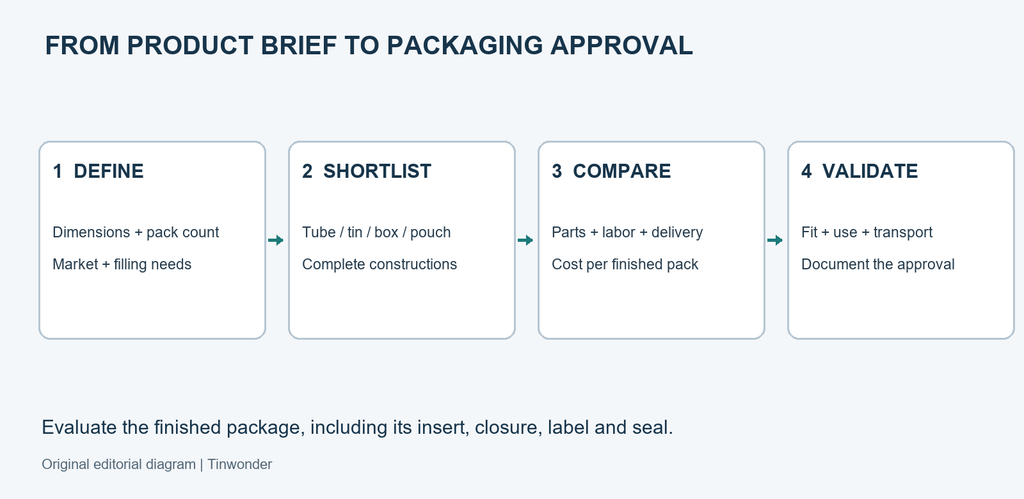
Choosing pre-roll packaging starts with three questions: how many pieces will you sell together, what could damage them, and what will the finished pack cost to deliver? Answer those before choosing colors or ordering printed samples.
A tube can be a practical starting point for a single pre-roll. A supported tin or box may suit a multipack. A pouch deserves consideration when weight and storage space matter, but its contents may need extra support. The right choice comes from testing the complete package against your own product and packing process.
Figure 1. A practical sequence for choosing pre-roll packaging. Original illustration by Tinwonder.
Write a packaging brief before comparing suppliers
Start with the longest and widest pre-roll you intend to pack. Include the filter and any variation in shape. Then record the number of pieces per pack and the space needed to remove them comfortably.
At Tinwonder, we recommend settling these details before developing artwork. A package that looks right in a photograph may have less usable room once its closure, insert and liner are included.
Your first brief should cover:
- Product length, widest diameter and expected size variation.
- Number of pre-rolls in each retail pack.
- Preferred product orientation and shelf presentation.
- Filling method, including any equipment limitations.
- Closure, seal and labeling needs for the intended market.
- Order quantity, delivery destination and required arrival date.
Ask suppliers to confirm usable internal dimensions. External measurements alone do not show whether your product and its supporting parts will fit.
Match the format to the job
Treat each format as a starting point for samples. Avoid choosing a material before you have defined what the package needs to do.
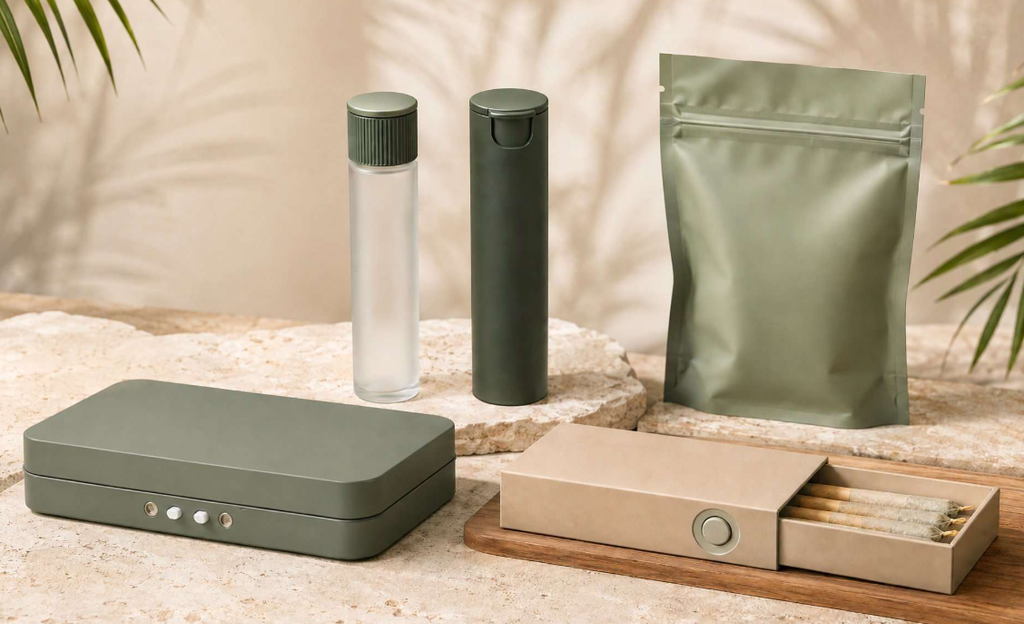
Single units: check access and cap clearance
A tube is worth sampling when each retail pack contains one pre-roll. Check that the product slides in without bending and comes out without repeated shaking. Leave enough clearance beneath the cap so closing the tube does not press against the tip.
Compare the full tube construction, including its cap and label. Plastic, glass and metal versions bring different handling needs. If glass is on your shortlist, include its protective shipping arrangement in the comparison.
Multipacks: check support and removal
For several pre-rolls sold together, consider a tin or paperboard box with an insert. The insert is an inner tray that separates and supports the pieces. Check both a full pack and a partly empty one, because movement can change after the first pieces are removed.
A useful example is a five-pack: each pre-roll should stay in its intended position, yet the final piece should remain easy to reach. A tight cavity may look tidy while making removal awkward.
For physical examples of sliding and hinged formats, Tinwonder’s pre-roll tin packaging range shows several layouts to consider. Compare the usable space, opening action and insert rather than selecting a tin from its appearance alone.
Flexible packs: plan support and sealing together
A pouch can suit a project where empty-pack storage and transport weight are priorities. However, flexible walls offer limited resistance to bending pressure. Sample the pouch with any tray or outer protection it will actually need.
Also check the usable filling area below the zipper or seal. An outer measurement can overstate the space available for your product. Ask the supplier to explain the film structure and how the proposed seal will be checked.
Separate protection, sealing and opening requirements
These are three different parts of a packaging brief. A rigid body can support the product, but that does not prove moisture or odor control. A barrier film does not prove that the finished pack will resist crushing.
Ask what evidence supports any proposed performance claim. For freshness testing, agree on the filled product, storage conditions, test period and acceptance criteria before starting. Do not assign a shelf life from the packaging material alone.
Child resistance also needs its own review. The U.S. Consumer Product Safety Commission’s packaging guidance explains the distinction between making a pack difficult for young children to open and keeping it usable for adults. That guidance does not by itself establish the requirements for every cannabis product or destination.
Confirm applicable requirements with the team responsible for your market. Where child resistance is needed, request documentation that matches the proposed size and construction. A supplier’s report for another model is not enough to settle the decision.
Tamper evidence serves a separate purpose: it helps show whether a pack has already been opened. A sticker or band that breaks on opening does not establish child resistance. Specify both features separately when your project requires them.
Compare cost per finished retail pack
The container price is only one part of the budget. One quote may include an insert and printing, while another excludes labels, assembly or freight. Bring every offer to the same scope before comparing totals.
Use this budgeting checklist:
- Container, closure and insert.
- Printing, labels, sleeves and seals.
- Tooling and sample charges, shown separately.
- Assembly and filling work.
- Shipping cartons and protective packing.
- Freight and any destination costs within your purchasing scope.
For example, a folding carton may arrive flat and need assembly. A rigid pack may arrive ready to fill but occupy more space. Neither arrangement is automatically better; ask your packing team to time the actual work and check warehouse capacity.
Divide comparable project costs by the number of usable retail packs you expect to receive. Record the assumptions beside the calculation so a change in quantity or shipping method is easy to review.
Run a sample trial before approving artwork
Shortlist two or three complete constructions and fill them with the same product. Use production-representative components wherever possible. A plain sample can check fit, but it will not settle printed color, finish or label adhesion.
Ask the people who will fill the packs to take part. Have them load, close, reopen and empty each option. Note awkward steps, loose pieces, trapped labels and closures that are difficult to operate consistently.
Then review the packed shipping carton. Check how retail units sit inside it and whether they can move against one another. Agree on transport testing that reflects the expected distribution route; a casual desk trial cannot validate shipping performance.
Keep a written approval record with dimensions, component details and photographs. Approve the finished print sample separately, and use the agreed specification when reviewing the bulk order.
Keep environmental claims specific
Evaluate the whole package, including inserts, liners, labels and closures. Ask which components can be separated and what disposal routes exist where customers will use the product.
The Federal Trade Commission’s Green Guides summary cautions against broad, unqualified claims such as “eco-friendly.” It also explains that recycling claims need to reflect access to suitable facilities. Use specific, supported statements rather than assuming one material makes the entire pack sustainable.
Send a brief that suppliers can quote clearly
Once you have sample feedback, update the brief with the preferred structure, insert, closure, artwork scope and delivery details. Ask suppliers to identify exclusions and describe any proposed changes before quoting.
For a wider comparison of materials, Tinwonder’s guide to pre-roll packaging options provides additional context on tins, tubes, boxes and pouches. Use it alongside physical samples and complete quotations. Choose the package that fits your product, works on your packing line and meets the requirements you have verified.