
Trading the British Pound against the US Dollar means stepping into one of the most historically significant arenas in the global foreign exchange market. For new and intermediate traders, this specific currency pair presents an interesting paradox: it provides massive liquidity while maintaining a notoriously aggressive personality. Understanding how its price swings develop and how its underlying math works is crucial before risking any live capital.
Why do seasoned traders refer to the GBP/USD as “The Cable”?
You will quickly notice that veteran market participants rarely call this pair by its literal currency names, opting instead for its famous nickname: The Cable. This term is a historic nod to the giant transatlantic telegraph cables laid under the ocean in the nineteenth century to synchronize price feeds between London and New York.
It is more than just a cool piece of history, though; it reflects a deep-rooted cultural rivalry between two massive financial capitals. This heavy institutional interaction means billions of dollars change hands within fractions of a second. Consequently, it creates an environment where price trends can develop with incredible speed and structural force.
What makes its volatility profile so unique compared to other major pairs?
If you compare the Euro’s steady pace to the Pound, you will instantly see that the GBP/USD behaves like an entirely different animal. Its average true range—the typical distance it travels in a single day—is frequently much wider than other major currency combinations.
This amplified movement happens because the UK and US economies respond to completely different geopolitical and interest rate drivers. Because speculative funds love trading the Pound, it is highly prone to aggressive false breakouts and sudden intraday reversals. Navigating these swings requires careful execution, making it a favorite for active day traders who want to capture significant daily price momentum.
How does the pip value calculation actually work for this pair?
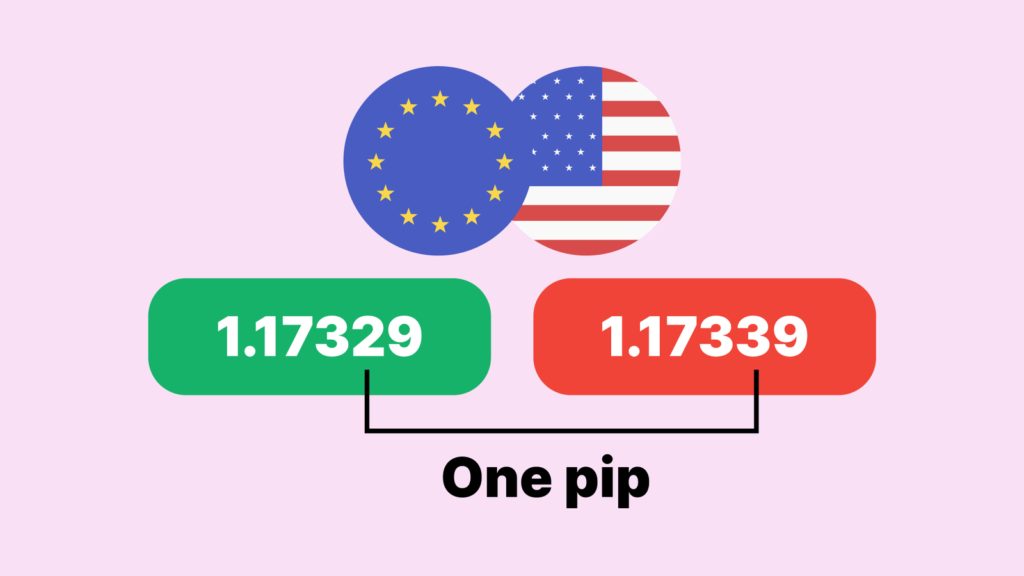
Calculating your potential risk on the GBP/USD is surprisingly straightforward because the US Dollar acts as the quote, or counter, currency. In any foreign exchange pair where the US Dollar is listed second, the baseline value of a standard pip is fixed.
For a standard lot of 100,000 units, a one-pip move is always worth exactly $10. If you scale down to a mini-lot of 10,000 units, that pip value drops to $1, while a micro-lot of 1,000 units makes each pip worth precisely $0.10. Having a fixed calculator amount makes planning your stop-loss parameters significantly easier because you do not have to continuously adjust for fluctuating exchange rates in the background.
Why can this fixed pip value be deceptive if I am used to calmer pairs?
While a $10 pip value is identical across both the Euro and the Pound, the way that value hits your account balance can catch you completely off guard. Because the Pound travels significantly more pips per day, those identical dollar values stack up much faster.
Think of it like driving two different vehicles at the exact same engine RPM, but one has a significantly higher gear ratio. A 70-pip stop-loss on a volatile Pound trade will cost you the exact same amount as a 70-pip stop on a Euro trade, but the Pound will hit that level much quicker if you get caught on the wrong side of a breakout. Managing this velocity requires utilizing a best cfd broker with institutional-grade pricing pipelines to prevent unexpected execution slippage from compounding your losses.
How does this high-octane environment impact my daily transaction costs?
Every time you execute a position, you automatically pay a tiny transaction premium known as the bid-ask spread. This acts exactly like a small service fee or cover charge that you pay to the market network to facilitate your trade.
Because the GBP/USD pair is highly liquid, competitive forces usually keep this transaction fee tightly compressed during standard market hours. However, during major macroeconomic announcements—like interest rate decisions from the Bank of England—the spread can widen dramatically in a flash. Working closely with highly liquid, low spread forex brokers helps shield your account balance from these brief pricing distortions, ensuring your entries and exits remain clean and affordable.
What is the safest protocol to protect my account from these intense swings?
The absolute best way to survive the natural turbulence of the Pound is to systematically scale down your position sizes. If your standard trading plan dictates risking 1% of your account capital on a calmer asset, you must expand your physical stop-loss distance and reduce your lot size here to compensate.
Many retail participants wipe out their balances early on because they do not fully comprehend how position sizing interacts with market velocity. This mechanical error is exactly why understanding risk boundaries matters far more than obsessing over complex charting indicators. Giving your trades plenty of physical breathing room ensures that a random price twitch won’t knock you out of the game prematurely.
Calibrating Your Risk for the Cable
Mastering the GBP/USD requires adjusting your mental approach to match its aggressive personality. Treat its fixed $10 per standard lot pip value as a structural boundary, but always respect its wide daily average true range by giving your protective stop-losses extra breathing room. Scale your position sizes down to prevent normal intraday volatility from triggering emotional panic, and closely monitor the economic calendar to avoid executing positions right before high-impact central bank announcements. By matching your risk parameters to the pair’s unique velocity, you transform its fierce volatility from a dangerous hazard into a clean, predictable trading edge.
