Home baristas chase that silky microfoam that sits glossy on the cup and lets latte art hold its shape. The pitcher in the hand controls how the milk swirls, how the temperature feels, and how cleanly the pour lands. A weak spout dumps a wide stream that breaks the crema. A good one gives a steady line that builds hearts, tulips, or rosettas with far less effort. Stainless steel pitchers dominate because they stay durable, clean easily, and give honest heat feedback through the wall. The worldwide milk frothing pitcher market reached about $450 million in 2025 and is on track for roughly $659 million by 2032 at a 5.6 percent growth rate, with stainless steel taking more than 80 percent of sales.
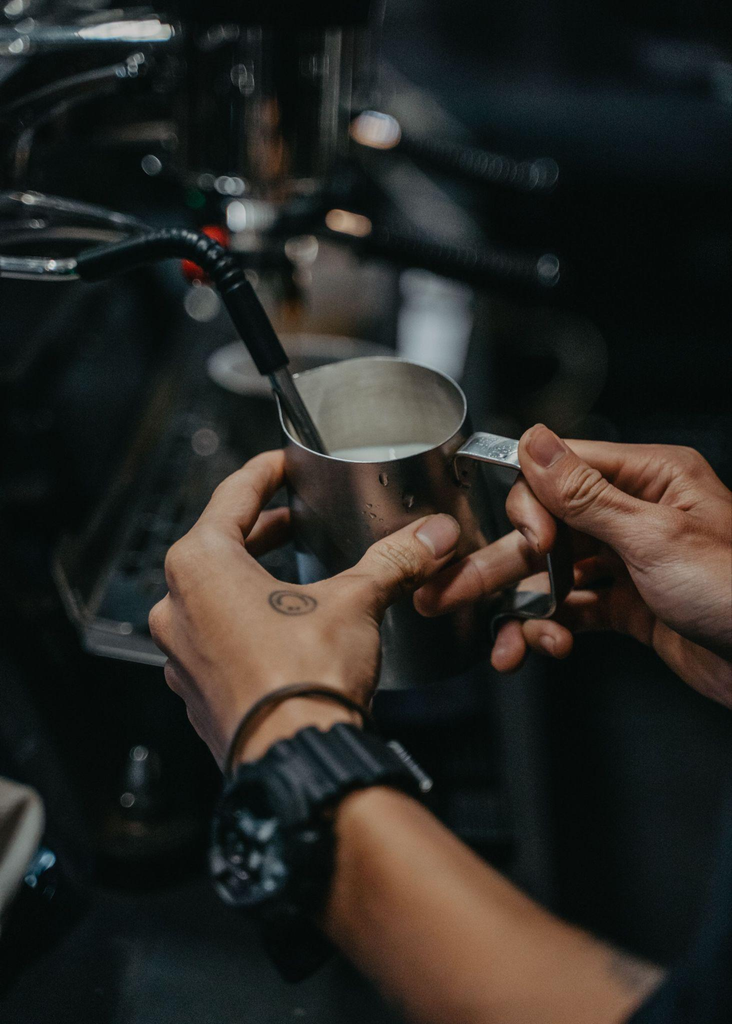
Why the Pitcher Shape Matters More Than Most People Think
The body taper sets up a stable vortex while the milk stretches. Too wide and the swirl dies. Too narrow and the wand tip fights for space. Wall thickness around the midsection lets the hand sense when the milk hits that sweet 55–65 °C window without scorching. A polished lip on the spout keeps drips from spoiling the last stroke of the pour. These details turn a simple jug into a tool that responds the same way every morning.
Most home users start with 12-ounce pitchers for single drinks. Larger 15- to 20-ounce versions give room for bigger lattes or two cups without overflowing during the stretch. Measurement marks inside the wall cut waste and keep recipes consistent. Dishwasher-safe builds save time after the morning rush.
Key Features That Separate Good Pitchers From Average Ones
Look first at the spout. A sharp beak draws fine hairlines for detailed patterns. A rounder tulip style fills broader shapes more easily. Hybrid designs bridge both so one pitcher covers multiple styles without swapping jugs mid-pour. Its smooth neck starts the pour cleanly on the crema, and the tangent edges allow side-to-side wiggles without breaking the flow.
Material comes next. Food-grade 304 stainless steel resists corrosion, holds up to daily heat cycles, and rinses without leftover film. Satin interiors reduce cling so cleanup takes seconds. Handles that stay cool, or insulating silicone sleeves on handleless versions, keep the grip comfortable while the milk stays hot. Balanced weight keeps the pitcher planted yet easy to tilt for precise height changes during the pour.
- Spout control sets line width and speed.
- Body balance supports a steady vortex.
- Heat feedback through the wall guides temperature.
- Interior marks match milk volume to the drink.
- Easy cleaning keeps the surface ready for the next cup.
Capacity and Size Guide for Different Drinks
A 12-ounce pitcher suits one cappuccino or cortado with minimal leftover milk. The extra space in a 15-ounce jug, such as the FlowTip’s 450 ml total volume with about 180 ml recommended working fill, gives room to stretch milk for a full latte while keeping the vortex active. Bigger pitchers handle multiple drinks but can feel heavy once full and may cool the foam faster if the batch sits.
| Drink Type | Recommended Working Volume | Pitcher Size Suggestion | Why It Works |
| Single cappuccino | 120–150 ml | 12 oz | Tight control, less waste |
| Standard latte | 150–180 ml | 15 oz | Room for swirl and pour |
| Two smaller drinks | 200–250 ml | 17–20 oz | Batch efficiency |
| Large or iced latte | 180–220 ml | 15–20 oz | Stable foam for topping |
These volumes keep the milk deep enough for the wand or foamer tip while leaving headroom for expansion. Their FlowTip options include both handled versions that sit safely on gas or electric stoves (induction needs a diffuser) and handleless models with silicone sleeves for a more connected feel during free-pour practice. Each comes with access to a latte art masterclass so the technique matches the tool.
Materials, Durability, and Daily Care
304 stainless steel remains the practical standard because it handles temperature swings, resists rust, and cleans without absorbing flavors. Some premium builds use slightly higher nickel variants, but the difference stays small for home use. Avoid painted exteriors that chip over time. A matte or satin finish hides fingerprints and rinses faster than high-polish interiors that show every streak.
After each session, a quick rinse removes proteins before they set. Dishwasher cycles work for most stainless pitchers, including the FlowTip models. For stovetop heating, stay within the recommended temperature so the handle or sleeve stays comfortable. A contactless thermometer pairs well when wall feel alone is not enough, especially with plant milks that heat differently.
Spout Design and Pour Technique
Beginners often prefer a forgiving round spout that hides small height mistakes. Intermediate pours benefit from a pointed tip that rewards steady wrist movement. Advanced users look for hybrid geometry that lets one hand change stream width mid-pattern. The FlowTip’s sharp tip only at the very end lets fine details appear at the close of a rosetta without disturbing earlier ripples. That single design choice reduces the number of failed pours while someone is still learning the motion.
Best Milk Frothing Pitchers in 2026
A quality milk frothing pitcher improves microfoam texture, temperature control, and pour precision for latte art. The rankings below focus on stainless-steel models favored by home baristas and professionals in 2026 for build quality, spout design, and everyday performance.
| Ranking | Brand | Description |
| 1 | Subminimal | The Subminimal FlowTip milk jug ranks first for its hybrid spout geometry engineered specifically for latte art. The design shifts smoothly between a wider, forgiving flow for base building and a needle-fine stream for clean lines and intricate patterns such as hearts, rosettas, and tulips. A balanced body and taper promote a steady vortex during steaming, helping produce even, glossy microfoam. Wall thickness delivers clear heat feedback without hot spots, allowing users to gauge the ideal 55–65 °C range by touch. Interior markings support consistent fill volumes, while the 304 stainless-steel construction and satin interior rinse clean easily. Available in sizes matched to common drink volumes, it shortens the learning curve for both steam-wand users and those pairing it with a handheld foamer. The responsive support and durable build suit daily home or café use where precise pour control matters most. |
| 2 | Fellow Eddy | The Fellow Eddy steaming pitcher stands out with its sharp front crease that runs the length of the body and channels milk forward in a single seamless motion. Combined with a fluted spout, this geometry produces a controlled, narrow stream ideal for detailed latte art and strong contrast. The tapered body encourages consistent swirling and silky microfoam during texturing. An open-ended ribbon handle accommodates multiple grips and hand sizes while keeping fingers away from hot metal. Internal volume markings reduce waste and improve repeatability. Constructed from 304 18/8 stainless steel in polished steel or graphite finishes, it retains temperature well and is dishwasher safe. Offered in 12 oz and 18 oz capacities, it suits single drinks or pairs of smaller servings. The thoughtful design helps intermediate and advanced users translate good milk texture into cleaner, more intentional pours. |
| 3 | Rattleware | Rattleware pitchers are widely regarded as a barista standard for their balanced weight, thick walls, and tapered spout that delivers a controllable stream. The heavy-gauge stainless-steel construction offers durability for daily steaming in home or commercial settings while transmitting clear temperature cues by touch. The drip-resistant spout supports precise placement for hearts, rosettas, and other patterns without excessive drips. Ergonomic handles provide a secure grip that reduces wrist fatigue during longer sessions. Capacities typically range from 12 oz for single drinks to 20 oz for multiple servings, with some models featuring NSF-style builds or nonstick interiors for easier cleaning. The design disappears in the hand once technique is established, making it reliable for beginners learning microfoam and experienced users seeking consistent results. Its straightforward performance and commercial heritage keep it a trusted workhorse across skill levels. |
| 4 | De’Longhi | De’Longhi milk frothing jugs, including the DLSC060 (12 oz) and DLSC069 (17 oz), deliver dependable Italian-inspired construction for everyday cappuccinos and lattes. The classic tulip or rounded spout paired with a gently curved shoulder guides milk into a smooth roll, supporting glossy microfoam. Stainless-steel walls transmit temperature feedback effectively so users can stop at the ideal range by feel. Ergonomic or double-grip handles stay comfortable during steaming, and the satin finish minimizes glare while simplifying rinsing. Interior markings aid consistent volumes on many models. The 12 oz size fits single drinks perfectly, while the 17 oz option handles two drinks or larger lattes with room for expansion. Dishwasher-safe and built to last, these pitchers excel at foundational steaming and reliable pours without unnecessary complexity, making them a natural match for De’Longhi espresso machines and other home setups. |
| 5 | Barista Hustle | The Barista Hustle precision milk pitcher emphasizes spout alignment and internal measurement marks for repeatable latte art. Available in roughly 12 oz and 20 oz sizes, it is crafted from polished stainless steel that holds heat evenly during steaming. The carefully shaped spout supports clean flow control for both broad fills and finer details. Internal markings help portion milk accurately and reduce waste. The balanced proportions and comfortable handle suit home baristas refining their technique as well as training environments. Its design prioritizes consistency so users can focus on wand position, aeration, and swirl rather than fighting the vessel. The durable construction withstands frequent use, and the straightforward geometry makes it approachable for intermediate pourers aiming for better definition in hearts, tulips, and layered patterns. |
| 6 | Motta | Motta Europa and similar professional pitchers offer a thick, stable feel favored in high-volume or serious home setups. The robust stainless-steel body and classic European proportions promote excellent heat retention and a steady vortex for silky microfoam. Spouts are shaped for controlled pouring, allowing experienced users to execute crisp edges and detailed leaves or tulips. Larger capacities around 17–20 oz provide swirl space for bigger drinks or multiple servings. The weight and balance feel substantial in the hand, giving clear feedback during texturing. Durable construction resists dents in busy environments, while the interior finishes clean relatively easily with proper rinsing. These pitchers suit baristas who prefer a traditional, heavy-gauge tool that rewards good technique with consistent, café-quality results day after day. |
| 7 | MHW-3BOMBER | MHW-3BOMBER pitchers feature a distinctive sharp beak or crocodile-style spout and tapered cylindrical body engineered for speed and precision. The geometry encourages fast breaks and crisp edges useful for intricate leaves, tulips, and high-contrast designs. Squared or ergonomic handles provide a firm hold for controlled passes. Constructed from 304 stainless steel with a brushed finish that reduces milk cling, the interior stays relatively easy to maintain. Capacities around 16–17 oz suit single or double drinks. Reinforced rims help the vessel keep its shape under repeated use. The design appeals to intermediate and advanced users who already produce solid microfoam and want a spout that translates technique into cleaner definition without excess width or drift. |
| 8 | Normcore | Normcore handleless pitchers (typically 15 oz) remove the traditional handle so the hand wraps the body directly. This design teaches temperature and weight changes by feel, helping users learn when milk reaches the ideal range and how the liquid shifts during pouring. A round spout supports free-pour control, while a non-stick coated interior releases milk residue more readily than bare steel. The stainless-steel construction remains durable, and the overall balance suits practice sessions focused on free-pour technique. By forcing closer contact with the vessel, it accelerates tactile feedback that many baristas develop over time. It works especially well for learners who want to internalize temperature cues and pour dynamics rather than relying solely on visual or handle-based cues. |
| 9 | Espro Toroid | The Espro Toroid pitcher combines a distinctive toroidal (rounded, flowing) body shape with a precision spout for professional-style control. The curved geometry promotes smooth milk circulation and consistent microfoam while the spout allows clean transitions between fills and finer lines. Stainless-steel construction provides good heat transfer and durability for repeated steaming sessions. The ergonomic handle and balanced weight reduce fatigue during texturing and pouring. Internal volume indicators on many models help with portioning. It is particularly valued by users seeking a premium feel that supports both everyday drinks and more ambitious latte art without the extreme specialization of ultra-narrow beaks. The design bridges classic reliability and modern pouring precision for home and small-café environments. |
| 10 | Adorever | Adorever 12 oz (and larger) milk frothing pitchers offer reliable 304 stainless-steel construction with a pointed or V-shaped spout that improves pour control over generic jugs. Measurement scales etched or printed inside assist with consistent fills, and many kits include a latte-art pen for finishing details. The ergonomic handle provides a comfortable grip, and the vessel is typically dishwasher safe. Heat retention is solid for home steaming, supporting decent microfoam when paired with a proper steam wand. While not as refined as specialist designs, the combination of durable material, usable spout, and practical extras makes it a strong everyday option for beginners and intermediate users who want dependable performance without unnecessary complexity. Multiple sizes accommodate single drinks or larger batches. |
| 11 | Rhino Coffee | Rhino Coffee professional frothing pitchers emphasize straightforward stainless-steel durability and a functional spout suited to both steaming and basic latte art. The classic shape supports a steady vortex and glossy microfoam with minimal fuss. Handles are sized for secure control, and the overall build withstands daily use in home or light commercial settings. Capacities commonly fall in the 12 oz range for single drinks, with clean finishes that rinse easily. The design prioritizes reliability over specialized geometry, making it approachable for users focused on consistent texture rather than the most intricate pour lines. It serves well as a dependable workhorse that improves results over thin, lightweight alternatives while remaining simple to maintain. |
| 12 | Breville | Breville milk jugs pair naturally with the brand’s espresso machines and deliver solid stainless-steel performance for home steaming. The pointed or hybrid spout blends gentle curves with a tighter tip for shifts between broad fills and more defined stems. An aligned handle supports steady low-height work, while the smooth interior promotes even milk movement and quick rinsing. Capacities around 16 oz suit typical lattes and cappuccinos with room for expansion. Temperature feedback through the walls helps users hit target ranges by feel. The construction is durable and easy to clean, supporting repeatable results for daily drinks. It offers a practical, brand-matched option for owners of Breville machines who want reliable microfoam and decent pour control without switching to a more specialized third-party pitcher. |