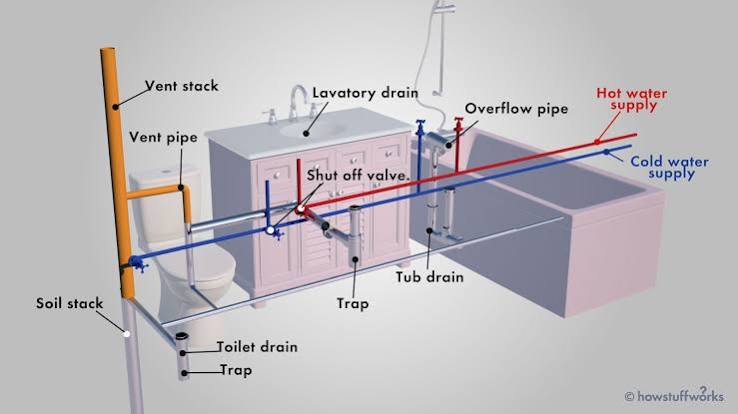
Most households have a place for appliance manuals and important receipts. Plumbing records are often less organised. A repair invoice remains in an email account, a product label is photographed but never filed, and the location of a shut-off is known to only one person. None of these gaps seems urgent until a problem occurs or someone else needs to manage the property.
A useful plumbing record does not need specialist software or an elaborate inspection schedule. It needs enough reliable information to help the next decision. That might be a planned repair, a fixture replacement, or a call about an unfamiliar symptom. The record should describe the home as it is, identify completed work, and make unresolved concerns easy to distinguish from old issues.
Start with a simple property overview
Create a short list of the main areas with plumbing fixtures. Use names that make sense to the household, such as upstairs bathroom or laundry room. Record known accessible shut-off locations and any equipment for which you have instructions. If you are unsure what a control serves, ask a qualified professional rather than labelling it from a guess.
Photographs can be helpful when they include enough context to identify the location. A close-up of a fitting may be difficult to place months later. Keep a wider image alongside it where useful. The purpose is to help someone recognise the area, not to encourage untrained work on the installation. Clear information and clear limits belong together.
Give each repair a short history
For every service visit, record the original symptom, the date, and the task completed. Attach the invoice and any relevant product details. If the plumber recommended further work, keep that recommendation separate from the completed task. Otherwise, a later reader may assume that everything discussed during the appointment was actually carried out.
When choosing a plumber company, ask how the work will be documented. A practical completion record should identify the relevant area and describe the task in understandable terms. You do not need a lengthy report for every small job. You do need enough detail to tell a later service provider what was addressed and what remained outside the scope.
Preserve uncertainty rather than filling the gaps
A homeowner’s observation and a confirmed finding should be recorded differently. If water appeared near a fixture but the source was not established, write exactly that. Avoid turning a suspected cause into a permanent label. Future decisions can become less reliable when an early guess is repeated as though it were the result of an assessment.
The same applies to dates and equipment details. If the installation date is unknown, leave it unknown until a reliable record is found. A model number copied incorrectly can create more confusion than no model number at all. The most useful household file is accurate enough to trust, even when it is incomplete.
Keep product information linked to the right fixture
When a toilet, faucet, or other component is replaced, retain its model details and the relevant instructions. Connect that information with the installation record. A manual stored without a location can become difficult to use in a home with several similar fixtures. A short note identifying the room usually solves the problem.
If you are planning a toilet replacement, the existing record can help explain why the change is being considered. Is the goal to address a confirmed fault, improve everyday use, or update the room? Those are different reasons. Knowing the purpose helps the discussion stay focused and prevents a cosmetic upgrade from being mistaken for a repair of an unresolved plumbing issue.
Make recurring symptoms easy to find
An issue that returns should have a short sequence of entries rather than scattered notes. Record when it happened, which fixture was affected, and what had changed since the previous visit. Keep the description factual. A pattern of dates and observations can be more useful to the next assessment than a long paragraph expressing frustration.
Do not create extra tests simply to add information. Observe normal use and follow professional instructions. A fixture that is overflowing or behaving unsafely should not be repeatedly operated for the sake of a more detailed record. The file supports the response; it should never become a reason to delay appropriate assistance or take unnecessary risks.
Add a clear urgent response page
Keep current contact information and a short list of facts to report during an urgent call. Include the address, access arrangements, and the person who can approve work. Make the page available to the household members who may need it. A perfectly organised file is of little use if only one person knows where it is stored.
For urgent plumbing concerns, retain the emergency plumbing service reference and confirm availability when contacting the provider. Record the symptoms and any safe action taken, without assuming a particular diagnosis or arrival time. Where another building contact must be notified, include that route too. The plan should reflect the property rather than a generic example found online.
Review the file when something changes
Update the record after a renovation, a fixture replacement, or a change in household responsibility. Remove duplicate copies from the quick-reference section while retaining the original records. Mark resolved concerns clearly. If the home is rented or jointly managed, keep the relevant people informed through an agreed process rather than relying on informal recollection.
A household plumbing record earns its place by making the next decision easier. It does not need to predict failures or contain technical advice. It should preserve what is known, show what has been completed, and identify what still needs attention. With that foundation, maintenance becomes easier to hand over and service conversations can begin with useful facts.