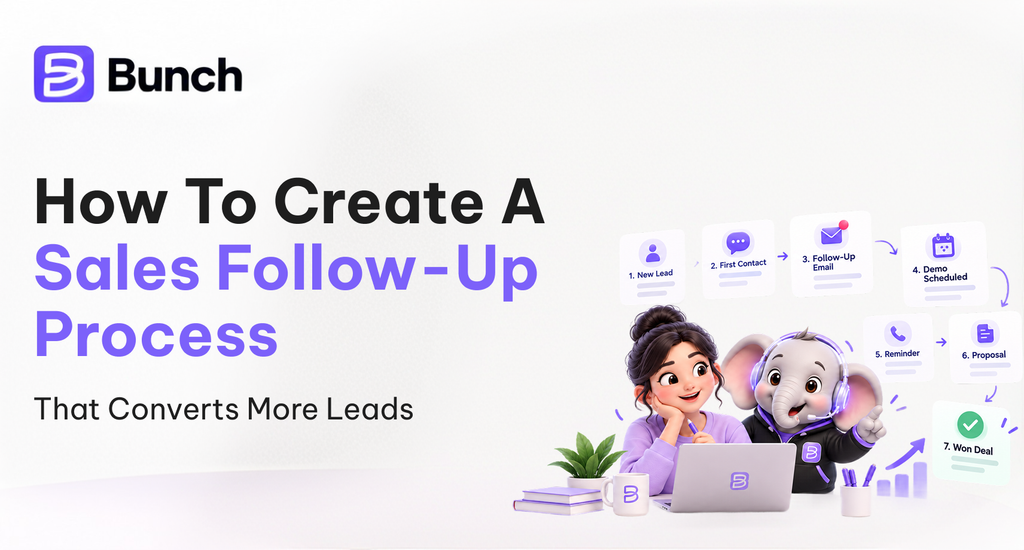
Generating leads is an important part of business growth, but not every enquiry turns into a sale immediately. Some prospects need more information, others compare multiple providers, and many are simply not ready to make a decision.
Without a structured follow-up process, sales teams can lose potential customers because of delayed responses, missed reminders, or inconsistent communication.
A sales follow-up process gives your team a clear method for contacting prospects, understanding their needs, addressing concerns, and guiding them toward the next step. Instead of relying on memory or scattered spreadsheets, employees can follow a consistent approach to managing opportunities.
Here is how businesses can build a sales follow-up process that supports better lead management and conversion rates.
1. Respond to New Leads Quickly
The first response can influence how a prospect views your business. When someone submits an enquiry, requests a quotation, or contacts your sales team, they usually expect a timely reply.
Delays can give competitors an opportunity to respond first, particularly when customers are comparing several providers.
Set an internal response-time target based on your team’s capacity and customer expectations. For example, a business might aim to respond to new enquiries within 15 to 30 minutes during working hours. This is an illustrative target, not a universal conversion benchmark.
Make sure someone is responsible for monitoring incoming leads and responding when the primary salesperson is unavailable.
For businesses receiving enquiries from websites, email, phone calls, and social media, a centralised lead management system can help ensure that new opportunities are not overlooked.
2. Segment Leads Based on Their Needs
Not every lead should receive the same follow-up message. A prospect who is ready to purchase needs a different conversation from someone who is still researching available options.
Segment leads using practical criteria such as:
- Purchase readiness: Is the prospect ready to buy, comparing options, or gathering information?
- Business requirements: What problem are they trying to solve?
- Budget: Does your offering fit their expected investment?
- Timeline: Do they need a solution immediately or in the coming months?
- Engagement: Have they replied, requested a demo, or reviewed your proposal?
This information helps sales representatives prioritise their efforts and make follow-ups more relevant.
For example, a prospect requesting a detailed quotation may need a call to discuss pricing and implementation. Someone who has only downloaded a guide may benefit more from educational content before receiving a sales pitch.
3. Build a Clear Follow-Up Schedule
One of the most common sales problems is inconsistent follow-up. Some leads receive repeated messages within a short period, while others are forgotten after the first conversation.
A defined schedule helps sales representatives maintain consistent communication without overwhelming prospects.
Here is an example of a follow-up sequence for a new business enquiry.
| Timing | Follow-up activity | Objective |
| Day 0 | Respond to the enquiry | Understand the prospect’s requirements |
| Day 1 | Send relevant information | Answer initial questions |
| Day 3 | Follow up by email or phone | Identify concerns or next steps |
| Day 5 to 7 | Share a relevant case study or solution | Demonstrate practical value |
| Day 10 to 14 | Check the prospect’s decision timeline | Establish whether the opportunity is active |
This schedule should be adapted to the industry, deal value, buying cycle, and prospect preferences. A high-value business purchase may require several detailed conversations, while a simple service enquiry may move faster.
If a prospect asks for more time or requests no further contact, respect that preference and adjust the follow-up accordingly.
4. Personalise Every Follow-Up Message
Generic messages such as “Just checking in” provide little reason for a prospect to respond. Effective follow-ups refer to the prospect’s actual requirements and offer something useful.
Before contacting a lead, review previous conversations, questions, objections, and agreed next steps.
For example, instead of writing:
“Hi, just following up on my previous email. Please let me know if you are interested.”
A more useful message might be:
“Hi Rahul, following our discussion about reducing manual reporting, I wanted to share how our solution could help your team simplify that process. Would you be available for a short call this week to discuss the requirements?”
The second message connects the follow-up to a specific business need and gives the prospect a clear next step.
Personalisation does not require writing an entirely new message every time. Sales teams can use templates for common situations while adapting the details to each prospect.
5. Use the Right Communication Channel
Different prospects prefer different communication methods. Some respond quickly to phone calls, while others prefer email or WhatsApp for business conversations.
Choose the channel based on how the lead contacted you, the nature of the enquiry, and the prospect’s stated preferences.
- Email: Useful for quotations, proposals, product details, and information that prospects may need to review later.
- Phone calls: Helpful for discussing complex requirements, answering objections, and clarifying decision-making timelines.
- WhatsApp: Useful for concise business updates when the prospect has agreed to communicate through that channel.
- Video meetings: Suitable for product demonstrations, consultations, and discussions involving multiple decision-makers.
Avoid sending the same message through several channels within a short period. Coordinated communication is more professional and reduces the risk of frustrating potential customers.
6. Track Every Interaction in One Place
A follow-up process becomes difficult to manage when customer information is scattered across spreadsheets, personal inboxes, and messaging applications.
A centralised CRM system helps sales teams record conversations, update lead status, assign ownership, and schedule the next action.
For example, when a salesperson completes a discovery call, they can record the prospect’s requirements, note any objections, and schedule a reminder for sending a proposal. Other team members can review the information if the lead needs to be reassigned.
Businesses can explore CRM and lead management software to understand how centralised customer records and sales workflows can support a more consistent follow-up process.
At a minimum, every active lead should have an assigned owner, a current status, a record of the last interaction, and a clearly defined next step.
7. Address Objections Instead of Repeating the Sales Pitch
A prospect who does not convert immediately may have a genuine concern. Common objections include pricing, implementation time, missing features, internal approvals, or uncertainty about the expected return on investment.
Repeating the same sales pitch is unlikely to resolve these concerns. Instead, ask questions to understand what is preventing the prospect from moving forward.
For example:
- If the concern is price, explain the value and available options without making unsupported promises.
- If the prospect needs approval, offer information they can share with the decision-maker.
- If they are unsure about implementation, explain the onboarding process and what support is available.
- If a required feature is missing, be transparent rather than promising functionality that does not exist.
Addressing objections directly helps build trust and allows sales representatives to determine whether the solution genuinely fits the prospect’s needs.
8. Automate Reminders Without Losing the Human Touch
Manual follow-ups become harder to manage as lead volume increases. Sales representatives may forget reminders, miss agreed contact dates, or spend too much time updating records.
Automation can help by scheduling reminders, assigning incoming leads, updating statuses, and notifying employees when an action is overdue.
For instance, a business can create a workflow that reminds a salesperson to follow up two days after sending a quotation. If the prospect replies or books a meeting, the next action can be updated accordingly.
However, automation should support communication rather than replace it completely. High-value prospects and complex enquiries often need personal conversations.
Review automated messages regularly to ensure they remain relevant, accurate, and appropriate for the recipient.
9. Measure the Performance of Your Follow-Up Process
A follow-up process should be evaluated using measurable results, not just the number of calls or emails sent.
Track these metrics to understand how effectively your team is managing leads:
| Metric | What it tells you |
| First response time | How quickly the team responds to new enquiries |
| Follow-up completion rate | Whether planned follow-ups are being completed |
| Lead-to-opportunity rate | How many leads become qualified sales opportunities |
| Lead conversion rate | How many leads eventually become customers |
| Sales cycle length | How long opportunities take to convert |
| Lost lead reasons | Why prospects decide not to purchase |
Review these metrics regularly to identify bottlenecks. For example, if the team responds quickly but few leads progress to qualified opportunities, the issue may be lead quality or the initial qualification process rather than follow-up frequency.
Compare results across time periods and lead sources, and avoid drawing conclusions from small sample sizes.
10. Know When to Nurture or Close a Lead
Not every prospect will purchase immediately. Some may have limited budgets, changing priorities, or longer approval processes.
Instead of following up indefinitely, establish clear rules for classifying leads as active, nurturing, unresponsive, or closed.
A lead may move into a nurturing sequence if the prospect expresses interest but has a later purchase timeline. The business can share relevant insights or product updates at reasonable intervals, provided the prospect has agreed to receive them.
If a prospect clearly declines or asks not to be contacted, stop sales follow-ups as appropriate. For unresponsive leads, use a reasonable final check-in before pausing outreach.
This approach helps sales representatives focus on active opportunities while maintaining a respectful relationship with prospects who may become relevant customers in the future.
Final Thoughts
A successful sales follow-up process combines timely responses, relevant communication, clear ownership, and consistent tracking. It helps businesses avoid missed opportunities while giving prospects the information they need to make informed decisions.
Start by defining response-time targets, creating a practical follow-up schedule, recording every interaction, and reviewing conversion metrics. Introduce automation where it saves time, but keep important conversations personal.
Most importantly, treat follow-up as a way to help prospects make the right decision rather than simply pushing them toward a purchase. A consistent and customer-focused approach can help sales teams manage opportunities more effectively and build stronger business relationships.