
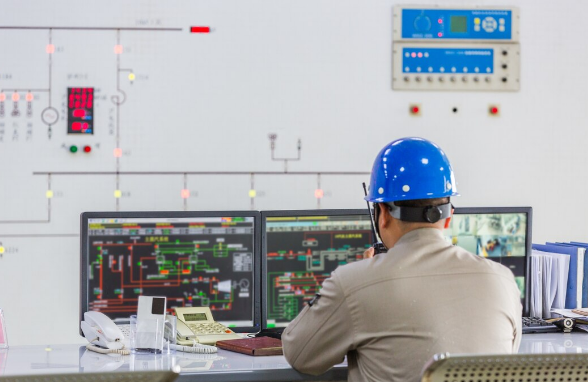
Periodic checks miss sudden dust spikes and noise exceedances, risking non-compliance and community conflict. Integrating continuous sensor monitoring with certified sampling provides real-time operational alerts, enabling immediate, same-shift controls to safeguard worker health and ensure audit-ready compliance
Key Takeaways
- Operational Early Warning: Continuous sensors deliver immediate alerts for dust and noise, complementing certified lab sampling needed for regulatory compliance
- Multi-Zone Acoustic Protection: Multi-zone tracking manages worker exposure, site boundary levels, and blast overpressure to prevent neighbour disputes and penalties
- Unified Environmental Data: Unifying real-time data into a single environmental dashboard enables same-shift mitigation and creates a defensible, audit-ready compliance narrative
Australian mining operations sit at the centre of production targets and environmental accountability. Regulators, host communities, and site neighbours usually expect the mining site’s airborne particulates and site noise to remain within approved limits at all times.
Environmental controls built around continuous sensing, rather than one-time or routine checks, are the only standard that will ensure your compliance. Read this blog to know how this continuous monitoring helps protect worker health across open-cut, underground, and quarry operations.
Why Continuous Environmental Controls Matter
Traditional environmental management depended on periodic gravimetric sampling and quarterly noise surveys. These were useful for long-term compliance records but blind to short-term spikes from haul road traffic, blasting, or shift changes.
This is why most mining regulators now consider continuous, sensor-based evidence that can flag an exceedance the moment it occurs, not weeks later in a lab report. It changes environmental management to an operational control loop from a reporting exercise. The live data informs same-shift decisions about water carts, blast timing, or equipment routing.
Dust Monitoring: From Spot Checks to Continuous Coverage
Effective dust monitoring on a mine site typically combines fixed-point optical sensors at site boundaries with mobile units on haul trucks and water carts, giving operators both perimeter and source-level visibility.
Real-time dust monitoring does not replace gravimetric sampling for regulatory compliance; the two remain complementary, with continuous sensors providing early warning and gravimetric analysis providing the certified figures used in statutory reporting.
| Attribute | Real-Time Sensor Monitoring | Gravimetric Sampling |
| Data availability | Continuous, near-real-time | Post-analysis, days to weeks |
| Primary use | Early warning, trend tracking, same-shift response | Statutory compliance certification |
| Regulatory status | Supplementary in most Australian jurisdictions | Required reference method (NATA-accredited labs) |
| Best suited for | Short-term spikes: haul roads, wind events, boundary tracking | Long-term exposure averages (TWA) |
| Typical deployment | Fixed boundary stations plus mobile haul-truck units | Personal or static air sampling pumps, lab analysis |
Table 1: Real-Time Sensor Monitoring vs Gravimetric Sampling
Caution
Real-time dust sensors flag trends and exceedances instantly, but most jurisdictions still require NATA-accredited gravimetric sampling for statutory compliance reporting. Treat continuous data as an operational trigger, not a substitute for certified laboratory results in regulatory submissions.
Acoustic Impact: Noise Monitoring and Blast Management
Noise monitoring on Australian mine sites covers three distinct zones:
- Worker exposure at the equipment level
- Boundary noise affecting neighbouring land
- Blast-specific airblast overpressure and ground vibration near sensitive receptors
Each zone carries its own measurement standard and threshold, which is why a single decibel reading rarely tells the full compliance story. Continuous noise monitoring at site boundaries builds a defensible record for community engagement, reducing disputes when nearby residents raise complaints.
On the other hand, blast monitoring equipment calibrated to recognised standards protects against costly non-compliance findings during peak blasting periods.
| Parameter | Threshold/Requirement |
| Worker noise exposure (national WHS guidance) | 85 dBA average over an 8-hour working day |
| Airblast overpressure at a sensitive site | ≤115 dB (Linear) peak for 9 of any 10 consecutive blasts |
| Ground-borne vibration at a sensitive site | ≤5 mm/s peak particle velocity for 9 of any 10 consecutive blasts |
| Blast monitoring equipment specification | Lower limiting frequency ≥2 Hz*; detector onset time ≤100 microseconds |
| Respirable dust exposure, quarry/mineral mine | 0.05 mg/m³ TWA applies specifically to Respirable Crystalline Silica (RCS)General respirable coal dust has a different standard (1.5mg/m³) in most states like QLD/NSW) |
* Applies to the low-frequency response of the microphone/transducer under Australian Standards.
Table 2: Australian Noise and Blast Compliance Thresholds
Integrating Monitoring Data into Site Environmental Management
Standalone sensor networks only deliver value when their outputs feed a unified environmental management system. Linking dust and acoustic data streams to a single dashboard lets site environmental teams correlate spikes with a specific activity.
It can be a haul route, a blast event, or a wind shift, but it responds within the same shift. This integration also strengthens the evidentiary base for annual environmental reporting and community liaison. This also turns raw sensor output into a defensible narrative of proactive management rather than reactive compliance.
Conclusion
As Australian regulators move toward continuous, evidence-based compliance expectations, mining operators who treat environmental sensing as an integrated operational system, not a set of disconnected instruments, will be better positioned for both regulatory scrutiny and community trust. Utilising an independent site assessment helps translate that sensor data.
Are You Conducting a Mining Project in Australia? Make Sure the Noise and Dust Levels Follow National Standards
Hire a trusted, accredited site testing and remediation agency that can check your mining project’s dust and noise levels and take the necessary steps to keep them below accepted levels.
