
Every marketing team hit the same wall at roughly the same time. AI tools made content production faster than it had ever been, and within a year or two, faster stopped being the bottleneck. The new bottleneck was making sure all that faster content still sounded like it came from one brand with one consistent voice, instead of reading like it was written by a different person, or a different company, every single week.
That is the specific problem pushing a growing number of marketing teams to add a dedicated refinement step to their content pipeline, not to replace AI drafting, but to close the gap between a fast first draft and something that actually reads like the brand.
This is not a hypothetical concern for most teams anymore. It is showing up in real feedback, a client asking why a recent campaign feels different, a social media manager noticing engagement quietly dipping on posts that read a little flatter than they used to, a longtime follower commenting that a brand’s voice feels less distinct than it did a year ago. None of these signals point to one obvious cause on their own. Together, they describe exactly the kind of slow drift a style guide alone was never built to catch.
The Numbers Behind Why This Became Urgent
A CoSchedule survey of over 1,000 marketing professionals found that 85 percent now use AI writing tools regularly. That adoption number alone is not surprising. What is more revealing is a separate Lucidpress survey of more than 400 brand management experts, which found that 81 percent of organizations still deal with off brand content despite having documented brand guidelines in place.
Put those two numbers together and the picture is clear. AI adoption in marketing content has outpaced the systems built to keep that content consistent, and a style guide alone has not been enough to close the gap. Teams have had to build something new into their process rather than assuming the old guardrails would hold.
Why brand guidelines alone were never going to solve this
A brand voice guide is a static document describing a target. It cannot actively correct a draft the way a person or a tool built for that specific purpose can. When five different writers, or an AI tool with five different prompts, are all producing content under the same brand name, relying on everyone to correctly interpret the same written guidelines under deadline pressure was always going to produce some drift.
What Adding This Step Actually Changes Day to Day
A few concrete shifts teams report after building a refinement step into their workflow:
- AI assisted first drafts get a consistent refinement round for rhythm and voice before an editor ever sees them
- New writers or freelancers ramp up on brand voice faster, since the tool provides a consistent baseline
- Editors spend less time fixing generic phrasing and more time on strategy and accuracy
- Content across different channels, blog, email, social, reads as more unified rather than fragmented
This is a voice problem, not a search ranking problem
It is worth being precise about what this step is actually solving, since a lot of marketing anxiety around AI content gets this backwards. Google’s own guidance states plainly that automation, including AI, is acceptable for research and drafting, and that what violates its spam policies is producing content at scale primarily to manipulate rankings, not the use of AI itself. A refinement step is not an attempt to satisfy a search algorithm. It is a genuine investment in brand voice, one that happens to also produce better, more readable content along the way.
That distinction is worth repeating to a team, or a client, worried about AI content specifically for SEO reasons. The actual risk was never using AI to draft. It has always been publishing thin, generic content at scale, something a refinement step actively works against rather than enables, since the entire point is producing writing with a genuine, recognizable point of view rather than interchangeable filler.
Building This Into an Actual Content Calendar
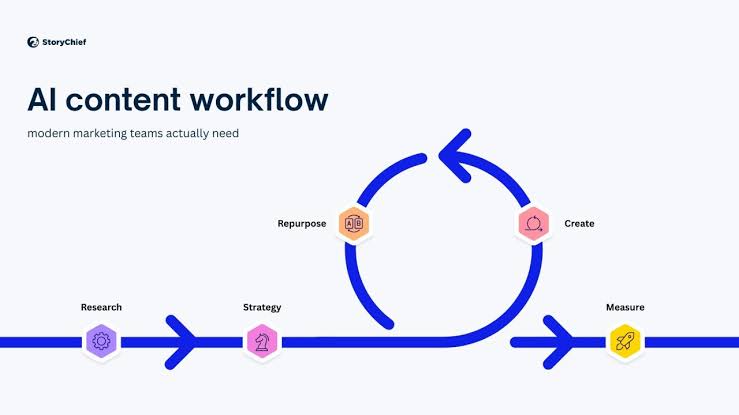
The teams seeing the most consistent results are not treating this as an occasional fix applied when something feels obviously off. They are building it in as a required step for every AI assisted draft, the same way a fact check or a legal review might already be required before anything publishes. That consistency is what actually closes the gap a style guide alone cannot.
For teams managing a high volume calendar, this step usually fits between the first draft and the editorial review, catching flat or generic phrasing before an editor’s time gets spent on it. That placement matters. Catching the problem earlier means less rework later, and it means editors can focus their attention on strategy and accuracy rather than repeatedly flagging the same rhythm issues draft after draft.
A quick way to audit whether your own content needs this
Pull five recent pieces from different writers or channels and read the opening two sentences of each back to back. If they could be shuffled between pieces without anyone noticing, that is a clear signal the brand voice has drifted further than the style guide alone is catching, and a dedicated refinement step is worth testing.
What This Actually Costs Versus What Drift Costs
Marketing leaders evaluating a new step in the workflow reasonably want to know what it costs against what it saves. A refinement step itself is fast, usually a few minutes per piece, which is a small addition against the hours already spent on strategy, research, and design for a single piece of content.
The cost of not doing it is harder to quantify but real. Brand voice drift does not show up as a single failed campaign. It shows up as a slow erosion in how memorable and recognizable a brand’s content feels over time, the kind of gradual decline that rarely gets traced back to its actual cause until someone audits a full quarter of output side by side.
Why this matters more for teams scaling content output
A team publishing four pieces a month can often maintain voice consistency through careful individual editing alone. A team publishing forty pieces a month across several writers and an AI drafting tool cannot rely on that same level of individual attention scaling proportionally. Volume is exactly where a repeatable, tool assisted step starts to outperform relying on any single editor’s judgment, no matter how skilled.
This is also where the math on hiring versus tooling starts to shift. Adding headcount to handle voice consistency at scale is expensive and slow to ramp up. A refinement step that any writer on the team can use consistently spreads that same quality control across the entire pipeline without requiring every new hire to internalize the brand voice perfectly on day one.
Teams looking to humanize AI text consistently, rather than relying on individual writers to catch drift case by case, are increasingly building a dedicated refinement tool directly into their content pipeline as a required step rather than an optional polish.
A brand voice guide will always describe the target better than it can enforce it. The marketing teams staying ahead of that gap in 2026 are not the ones writing longer style guides. They are the ones building a consistent, repeatable step into their actual production process that closes the distance between fast AI drafting and content that genuinely sounds like one brand, post after post, regardless of who or what produced the first draft.
That kind of step is one part of what Phrasly AI offers as a broader content workflow tool.
FAQs
Does adding a refinement step slow down content production?
For most teams, no. It typically replaces time an editor would otherwise spend manually fixing generic phrasing, so the overall pipeline does not necessarily get slower, it just shifts where that editing time goes.
Is this the same thing as trying to avoid an AI content penalty from Google?
No. Google does not penalize content for being AI assisted on its own. This step is about brand voice consistency and readability, which happens to align with what search engines already reward in genuinely useful content, but that is a side effect, not the actual goal.
Where does this step fit best in a content calendar?
Most teams place it right after the first draft and before editorial review, so an editor’s time goes toward strategy and accuracy rather than repeatedly catching the same rhythm and voice issues.
