
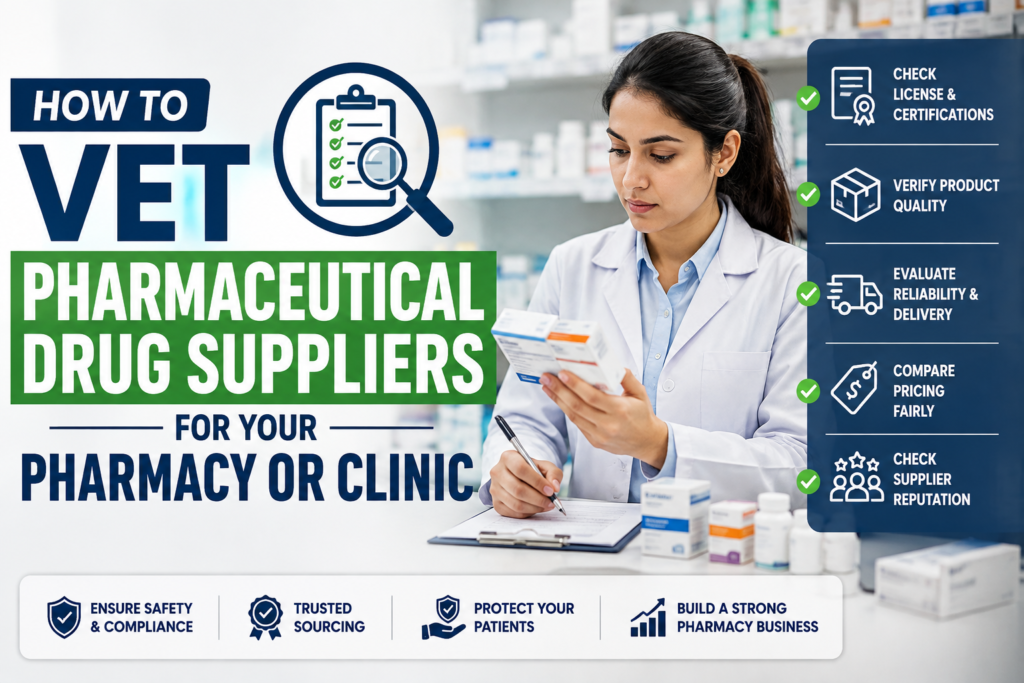
Your pharmaceutical drug suppliers have valid licenses. They’re NABP-accredited. Their Certificates of Analysis are clean. On paper, your supply chain looks airtight — and that’s exactly the problem.
Compliance credentials tell you what a distributor was at the time of their last audit. They tell you nothing about whether that distributor can fulfill your order when 140 active drug shortages are competing for the same constrained inventory. The pharmacies and clinics that weather shortage cycles with the least disruption aren’t simply working with safe suppliers. They’re working with resilient ones. There’s a meaningful difference — and most vetting frameworks never address it.
The Compliance Trap — Why a Licensed Supplier Can Still Leave You Empty-Handed
The whole standard vetting logic sort of runs like this; verify the licensing, confirm NABP accreditation, then request a Certificate of Analysis and check DSCSA transaction documentation. If a supplier clears those gates, they’re approved.
That framework screens out bad actors — counterfeit product, diversion, documentation fraud. It does that job reasonably well. What it cannot do is predict whether your supplier will have product on the shelf during the next shortage cycle.
DSCSA documentation verifies chain of custody for transactions that already occurred. It says nothing about sourcing depth, inventory buffers, or manufacturer relationships. The FDA’s drug shortage database tracked over 180 active shortages through much of 2024 and into 2025 — concentrated heavily in sterile injectables, generic oral medications, and oncology drugs. A distributor can be fully compliant on every regulatory dimension and still be a single-source buyer with no contingency position when those categories tighten.
Compliance credentials answer one question: is this supplier legitimate? They do not answer the question that actually matters: will this supplier serve me when it counts?
What Shortage-Resilient Vetting Actually Looks Like
Reframe your vetting process around one governing question: when the next shortage hits, will this drug supplier still fill my orders?
Four operational criteria answer that — none appear on a license verification or accreditation certificate:
Shortage response track record. Ask prospective distributors how they performed during the 2023–2025 sterile injectable and generic shortage periods. What was their average fulfillment rate for affected SKUs? A supplier who cannot answer with specifics is already telling you something important.
Allocation transparency. When a drug goes on allocation, does the distributor notify you proactively — with enough lead time to adjust — or do you find out when your order fails to ship? Communication behavior during scarcity is more revealing than any policy document.
Regulatory responsiveness. Does the supplier maintain a documented suspect-product protocol? How quickly do they issue recall notifications? A distributor slow to communicate a recall is equally slow to communicate a shortage.
Sourcing Depth and Manufacturer Relationships
This is the single most underasked question in pharmaceutical procurement: how many FDA-registered manufacturers does this distributor source a given drug from?
A broad catalog means nothing if every SKU in a high-risk category traces back to one manufacturer. Ask directly: “For your top shortage-risk categories, how many manufacturer relationships do you maintain per drug?”
Distributors with genuine sourcing depth answer this precisely. Those who deflect to catalog size or generic availability assurances almost certainly cannot — because they are single-sourced, and single-sourced drug suppliers are shortage-exposed suppliers.
Building Your Supplier Tier System
A single approved distributor — regardless of how well they perform under normal conditions — is a supply risk. No compliance credential changes that structural reality.
How to Structure Your Three-Tier Supplier Network
Tier 1 – Primary Distributor. Your principal wholesale partner, vetted on both compliance and shortage-resilience criteria. This supplier should cover 70–80% of routine procurement volume and must demonstrate sourcing depth, proactive allocation communication, and a documented shortage response history.
Tier 2 – Secondary Approved Distributor. A fully credentialed backup, onboarded and verified before you need them — not sourced reactively during a crisis. Use this tier to cover specialty categories or drug classes where your Tier 1 has shown historical gaps. The vetting standard is identical to Tier 1.
Tier 3 – Emergency Contingency Source. A pre-approved independent distributor or secondary wholesaler with active NABP accreditation, kept live through periodic small-volume orders. This maintains the relationship, validates fulfillment performance, and ensures the account is active when urgency demands it.
The tier system only functions if all three levels are vetted in advance. Assembling Tier 2 or Tier 3 during an active shortage — when every pharmacy in your market is simultaneously calling the same secondary distributors — eliminates the strategic advantage entirely.
Practical starting point: map your 20 highest-volume or highest-shortage-risk drugs to this structure. Identify which products currently have no Tier 2 or Tier 3 coverage. That gap list is your immediate procurement priority.
The Vetting Questions Your Pharmacy Should Be Asking Right Now
These questions are not a gotcha exercise. The right pharmaceutical drug suppliers will welcome them. The wrong ones will struggle to answer.
“How many FDA-registered manufacturers do you source [Drug X] from?”
Tests sourcing depth directly. A confident, specific answer signals genuine supply chain visibility. Vague reassurances about “broad access” do not.
“What is your shortage notification protocol and average lead time on communication?”
Distinguishes proactive suppliers from reactive ones. You want a documented process, not a promise.
“During the 2023–2025 sterile injectable shortage period, what was your average fulfillment rate for affected SKUs?”
Forces a historical accountability conversation. Past shortage performance is the closest available proxy for future shortage behavior.
“Do you maintain safety stock or buffer inventory for high-shortage-risk drug categories?”
Determines whether the distributor absorbs supply chain risk on your behalf or passes it to your dispensing counter.
“Can you provide references from independent pharmacies or clinics you currently supply?”
Filters distributors optimized for enterprise accounts but operationally thin on independent customer service. An enterprise-focused distributor may deprioritize your account precisely when allocation decisions matter most.
Why Independent, Nationally Licensed Distributors Deserve a Place in Your Tier Structure
The assumption that bigger distributors mean safer supply breaks down during shortage allocation periods. When McKesson, Cencora or Cardinal Health start operating under constrained allocation their prioritization models usually lean toward high volume enterprise clients: big hospital systems, large pharmacy chains, and GPO members with real clout. Meanwhile independent pharmacies and clinics, they often get pushed toward the end, like it’s just the way the order sorts itself out.
Nationally licensed independent distributors with NABP accreditation and multi-manufacturer sourcing relationships operate differently. Their account base is smaller, client relationships are direct, and allocation decisions are not filtered through enterprise prioritization tiers. For an independent pharmacy or clinic building a resilient tier structure, a qualified independent distributor is not a fallback — it is a strategic asset.
Partner With a Distributor Built for Supply Chain Resilience
Supplier vetting isn’t really a simple compliance thing anymore it’s more like a strategic call that ends up affecting how your pharmacy or clinic handles real pressure. Drugzone Pharmaceuticals Inc. is a nationally licensed and NABP-accredited independent distributor , authorized across every one of the 50 states, and it’s backed by partnerships with 75+ FDA-registered manufacturers. They also run a catalog of 2,000+ generic SKUs, which is honestly where a lot of resilience starts. The company was founded by a New York-licensed pharmacist and it’s been guided by a team with over 80 years of combined leadership experience. So there’s regulatory rigor, yes, but also a sourcing depth thing, plus personalized service that resilient supply chains tend to need, especially when the timeline gets tight. If you’re a pharmacy or clinic building a tier structure, the kind that stays stable when shortages do come, Drugzone is set up to be that partner.
Frequently Asked Questions
- If my primary distributor is NABP-accredited and DSCSA-compliant, why do I still need a Tier 2 or Tier 3 supplier?
Accreditation and DSCSA compliance verify that a distributor operates legally and maintains proper documentation — they do not guarantee product availability during active shortage periods. When a drug category goes on allocation, even a fully compliant primary distributor prioritizes its highest-volume accounts first. A pre-approved Tier 2 or Tier 3 supplier gives your pharmacy a vetted, relationship-ready alternative before the shortage forces you to find one under pressure.
- How often should a pharmacy or clinic re-evaluate its approved supplier list?
At minimum, conduct a formal re-evaluation of all approved suppliers annually — and trigger an immediate review whenever a supplier misses a critical fulfillment, issues a delayed recall notification, or undergoes ownership or operational changes. A supplier’s sourcing relationships, inventory depth, and financial stability can shift significantly within a single calendar year. Your approved supplier list should be a live document, not a credential archive.
- What is the single most predictive indicator of how a distributor will perform during a drug shortage?
Their documented behavior during the last shortage cycle. How a distributor managed allocation communication, maintained fulfillment rates, and supported independent pharmacy clients during the 2023–2025 shortage period is far more predictive than any certification they currently hold. Always request shortage-period fulfillment references from current independent pharmacy clients — not enterprise accounts — before finalizing your approved tier structure.
