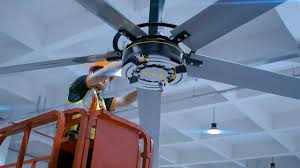
Industrial ventilation problems are rarely random; they follow predictable patterns that experienced engineers recognize and resolve systematically. OSHA estimates that poor industrial air quality contributes to over 190,000 illnesses and 37,000 deaths annually in U.S. workplaces, with inadequate ventilation as a primary contributing factor. Beyond health impact, unresolved factory air flow solutions problems cost facilities an average of $42,000 per year in energy waste, increased filter costs, and regulatory compliance expenses, according to a 2022 ASHRAE industrial facilities survey.
Understanding the five most frequent industrial ventilation problems — and their targeted engineering fixes — gives plant managers a roadmap for systematic air quality improvement without expensive trial-and-error troubleshooting.
Problem 1: Insufficient Capture Velocity at Dust Sources
The most common industrial ventilation problem is source capture failure: the hood or extraction point is positioned too far from the dust generation source, or the airflow volume is insufficient to generate the required capture velocity. ACGIH standards require capture velocities of 100–200 FPM for low-toxicity dusts and 500–2,000 FPM for heavy metallic particulate or toxic fumes. When capture velocity falls below specification, a visible dust cloud forms in the work zone — a clear compliance violation under OSHA 1910.1000.
Fix: Perform a pitot tube traverse at each hood to measure actual face velocity. If actual capture velocity is more than 20% below specification, increase fan speed (via VFD adjustment), reduce hood-to-source distance, or add supplementary extraction points. Workshop ventilation troubleshooting data shows that repositioning hoods within 12 inches of the source resolves 60–70% of capture failures without any fan modifications.
Problem 2: Duct System Pressure Imbalance
Multi-branch ventilation systems develop pressure imbalances over time as filters load, dampers shift, and system modifications are made without rebalancing analysis. The result: some branches receive excessive airflow (wasting energy and causing high duct velocities that erode fittings) while others are starved and fail to achieve minimum transport velocities. Dust settling in low-velocity duct sections creates fire and explosion risks in combustible dust applications.
• Symptom: visible dust deposits at inspection ports in lower duct branches
• Symptom: filter bags in certain rows wearing significantly faster than others
• Fix: Conduct a full duct balance study using pitot tube traverses at each branch. Install or adjust blast gates to equalize branch pressures. For permanent correction, size branch ducts during design using the equal-pressure-loss method.
Problem 3: Negative Pressure Causing Backdraft
When exhaust ventilation removes more air from a building than makeup air systems supply, the building operates under negative pressure. Doors become hard to open, exhaust stacks backdraft combustion gases from furnaces and boilers, and cold outside air infiltrates through every gap — creating uncomfortable, potentially dangerous working conditions. A building pressure differential of just −0.05 in. w.c. can cause 30,000 CFM of uncontrolled infiltration through typical industrial building leakage paths.
Fix: Measure building pressure with a precision manometer at multiple locations. If negative pressure exceeds −0.02 in. w.c., add mechanically supplied makeup air equal to 90–95% of total exhaust volume. Tempered makeup air units cost $8,000–$35,000 installed but recover their cost in energy savings and reduced HVAC load within 18–30 months in cold climates.
| Ventilation Problem | Diagnostic Method | Fix | Typical Repair Cost |
| Low capture velocity | Pitot tube at hood face | Reposition hood; increase fan speed via VFD | $500–$3,000 |
| Duct pressure imbalance | Pitot traverse, branch by branch | Blast gate rebalancing + duct resizing | $1,500–$8,000 |
| Building negative pressure | Magnehelic gauge, multiple points | Add tempered makeup air unit | $8,000–$35,000 |
| High filter ΔP (blinding) | Differential pressure gauge at collector | Improve cleaning cycle; check inlet loading | $200–$2,000 |
| Excessive noise (> 85 dBA) | Sound level meter at operator stations | Fan silencer, duct lagging, vibration isolation | $3,000–$15,000 |
Problem 4: Premature Filter Blinding
When a dust collector’s differential pressure rises faster than expected — requiring cleaning or filter replacement at 2–3× the design frequency — the root cause is almost always one of three factors: inlet dust loading higher than the system was designed for, moisture in the airstream causing dust to cake on filter media, or incorrect filter media for the dust type. A food processing plant in Indiana reduced filter replacement frequency from monthly to every 8 months simply by switching from standard polyester felt to PTFE membrane cartridges — a $3,200 upgrade that saved $28,000 per year in filter costs.
Problem 5: High Noise Levels Exceeding OSHA Limits
Industrial ventilation fans running above their design point — a common consequence of duct restrictions or system modifications — generate excessive turbulence noise. At 90 dBA measured at operator workstations, OSHA requires a hearing conservation program. At 95 dBA, engineering controls become mandatory.
• Fix 1: Verify the fan is operating at or near its best efficiency point (BEP) — fans running > 15% right of BEP generate significant turbulence noise
• Fix 2: Install inlet silencers ($800–$2,500) and duct acoustic lagging on sections nearest the fan
• Fix 3: Add vibration isolation mounts between the fan base and structure — structure-borne vibration often contributes 5–10 dBA to measured noise at workstations
| OSHA Noise Level | Permissible Exposure (hrs/day) | Required Action | Priority Level |
| < 85 dBA | Unlimited | No action required | Low |
| 85–90 dBA | 8 hrs | Hearing conservation program | Medium |
| 90–95 dBA | 4 hrs | Engineering controls required | High |
| > 100 dBA | 2 hrs | Immediate engineering control | Critical |