
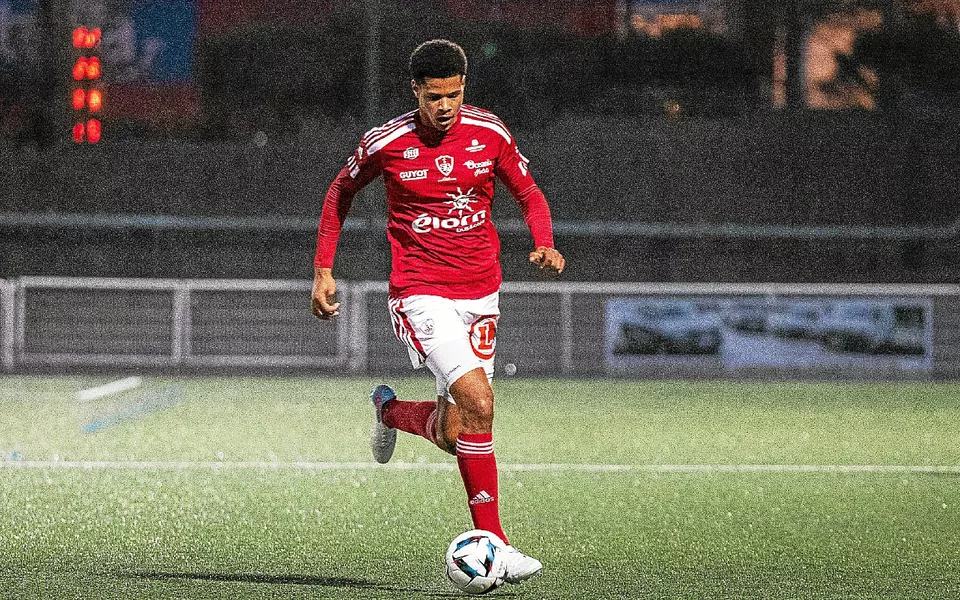
Raphael Le Guen presents a comprehensive look at the development, achievements, and football identity of a disciplined European defender. The following is a summary of information from Mitom about “Raphael Le Guen Biography”, highlighting his early background, competitive mindset, and professional progress. His steady evolution reflects tactical awareness, commitment to improvement, and adaptability across demanding leagues.
Raphael Le Guen Biography defensive action portrait
Early Life And Personal Background
Understanding a player’s foundation helps clarify the trajectory of his professional growth and competitive mentality. Below is an overview of key personal details that shaped his character and discipline before entering top-level football environments.
- Full Name: Raphael Le Guen.
- Date of Birth: March 12, 1995.
- Place of Birth: Rennes, France.
- Nationality: French.
- Height: 1.85 meters.
- Primary Position: Centre-back.
- Preferred Foot: Right.
Youth Development And Academy Years
Raphael Le Guen began his football education in structured regional academies that emphasized tactical discipline and technical balance. Coaches quickly noticed his composure, spatial awareness, and physical coordination. During these formative seasons, qualities that later defined Raphael Le Guen started to emerge through consistent defensive training and competitive youth tournaments.
Influences That Shaped His Discipline
Strong family guidance and professional mentorship shaped his mindset during crucial developmental stages. Rather than depending solely on natural talent, he focused on repetition, conditioning, and tactical study. These disciplined habits became the structural core often referenced in Raphael Le Guen Biography, supporting his smooth transition into senior-level competition.
Professional Career Progression In Europe
After completing academy training, Raphael Le Guen secured his first professional contract in Ligue 2. His debut season required tactical patience, as competition for starting positions remained intense. Gradually, he earned consistent appearances due to reliable performances.
His defensive contributions included precise interceptions, composed build-up play, and disciplined marking. As seasons progressed, his influence expanded beyond pure defensive duties. Coaches entrusted him with leadership responsibilities during high-pressure fixtures.
Read more on Mitom TV https://www.tingschak.com/lich-thi-dau-bong-da/
Breakthrough Season And Recognition
A decisive season elevated his profile in national competitions. Statistical improvements in duel success rate and pass accuracy highlighted technical growth. Media coverage began acknowledging his tactical intelligence rather than focusing solely on physical presence.
Adaptation To Tactical Systems
Modern football demands versatility. Raphael Le Guen demonstrated comfort within both back-four and back-three formations. His awareness of spacing allowed teammates to maintain compact defensive lines.
He also developed calm distribution under pressing situations. These qualities reinforced the analytical depth frequently emphasized when reviewing Raphael Le Guen in professional football discussions.
Playing Style And Defensive Identity
Raphael Le Guen’s playing style reflects balance between physical strength and intelligent anticipation. Rather than engaging recklessly, he prioritizes positioning that reduces risk. His defensive timing limits fouls while maintaining control in critical zones.
Tactical Awareness And Positioning
One of his strongest attributes lies in spatial judgment. He anticipates attacking runs before they fully develop. This foresight often disrupts opposition rhythm. Such awareness strengthens his reputation as a dependable defender. Analysts reviewing Raphael Le Guen Biography often underline how positioning, rather than aggression, defines his effectiveness.
Leadership And Communication
As experience accumulated, Raphael Le Guen grew into a vocal presence within defensive structures. Clear communication enhances team coordination during transitions. His composure contributes to collective stability under pressure.
Achievements And Career Highlights
Throughout his professional journey, Raphael Le Guen has collected several milestones that underline consistent performance. These achievements reflect steady progress rather than sudden breakthroughs.
He contributed to promotion campaigns and cup competitions that demanded strategic concentration. Recognition from coaching staff frequently cited reliability as his primary strength. Over time, his name appeared in discussions concerning defensive depth for higher-tier squads.
The broader evaluation of Raphael Le Guen Biography therefore highlights sustainability. Instead of brief flashes of brilliance, his career illustrates structured development supported by discipline and tactical education.
Challenges And Professional Growth
Every professional athlete faces competitive obstacles. Raphael Le Guen encountered injuries and rotational phases that required mental resilience. Rather than losing momentum, he used these periods to refine technical skills and physical conditioning.
Rehabilitation phases strengthened core balance and match readiness. Upon returning, he demonstrated improved mobility and sharper anticipation. This response to adversity adds depth to the interpretation of Raphael Le Guen, presenting a narrative built on perseverance.
Future Prospects And Long-Term Impact
At this stage of his career, Raphael Le Guen continues refining consistency within demanding competitions. His tactical reliability ensures sustained interest from clubs valuing defensive stability. Development remains ongoing, particularly regarding distribution under advanced pressing systems.
If progress continues at its current pace, his professional legacy will emphasize longevity and discipline. Analysts reviewing the long-term significance of Raphael Le Guen note how structured growth often surpasses short-lived prominence.
Conclusion
Raphael Le Guen Biography reflects the journey of a disciplined defender shaped by academy structure, tactical awareness, and steady professional improvement. His career illustrates how patience, positioning, and leadership contribute to sustained performance in European football. As development continues, his profile stands as an example of structured growth built on consistency and resilience.
