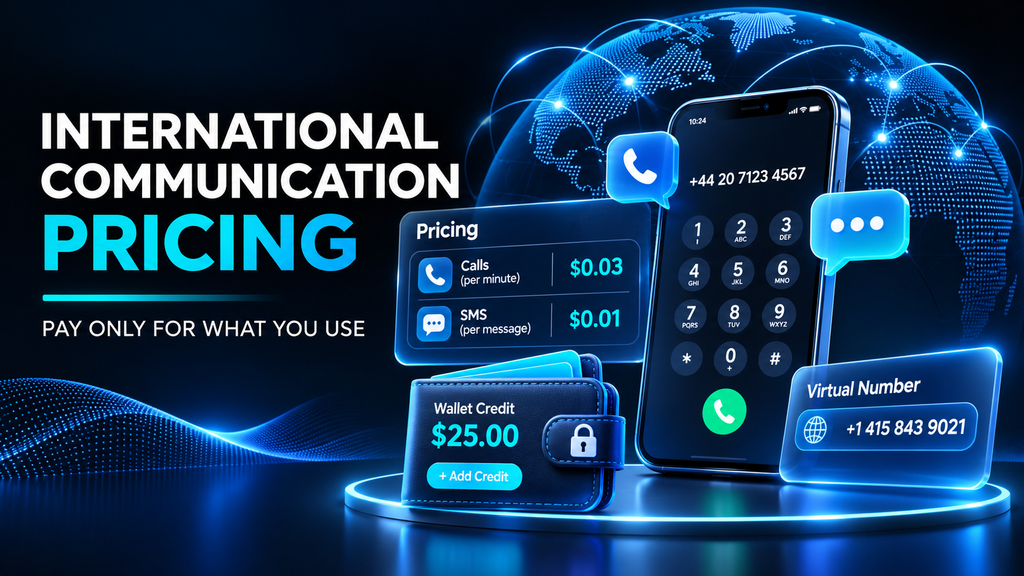
International communication is easier than ever, but pricing can still be confusing. One provider may advertise a monthly subscription, another may show per-minute rates, and a third may combine virtual numbers, SMS, and calling credit in one wallet. The cheapest-looking option is not always the best value.
Before choosing a service, it helps to understand what you are actually paying for. A communication bill may include a number rental, calls, SMS messages, top-ups, taxes, renewal charges, or team seats. A clear pricing model lets you compare services fairly and avoid paying for features you will not use.
For a current example, Callmins pricing separates virtual number rental, pay-as-you-go calls, SMS rates, and optional team plans. This approach is useful for people and businesses that want to see the cost of each communication activity instead of accepting one large bundle.
Why international communication pricing is difficult to compare
Phone services do not all charge in the same way. Some plans include unlimited domestic calling but charge separately for international destinations. Others offer a low monthly line price and add per-minute fees. Some services advertise a cheap number but apply a setup fee, minimum spend, or contract requirement.
The destination also affects the cost. Calling a mobile phone may cost more than calling a landline. A message to one country may cost a few cents, while another destination may cost considerably more. Special numbers, short codes, and premium routes may have separate rules.
This is why a simple “starting at” price is not enough. You need to understand the complete cost for your own calling pattern.
How Callmins Makes Communication Pricing Easier to Understand
Callmins keeps the main communication costs visible in one place: virtual number rental, international calling, SMS, wallet credit, and optional team features. This makes it easier for individuals and small businesses to start with pay-as-you-go service and expand only when their communication needs increase.
The benefit of a clear pricing structure is control. Users can choose a number, check destination rates, add a small amount of credit, and review their usage without committing to an unnecessary contract. Businesses can also compare individual usage with a team plan before deciding which model fits their budget.
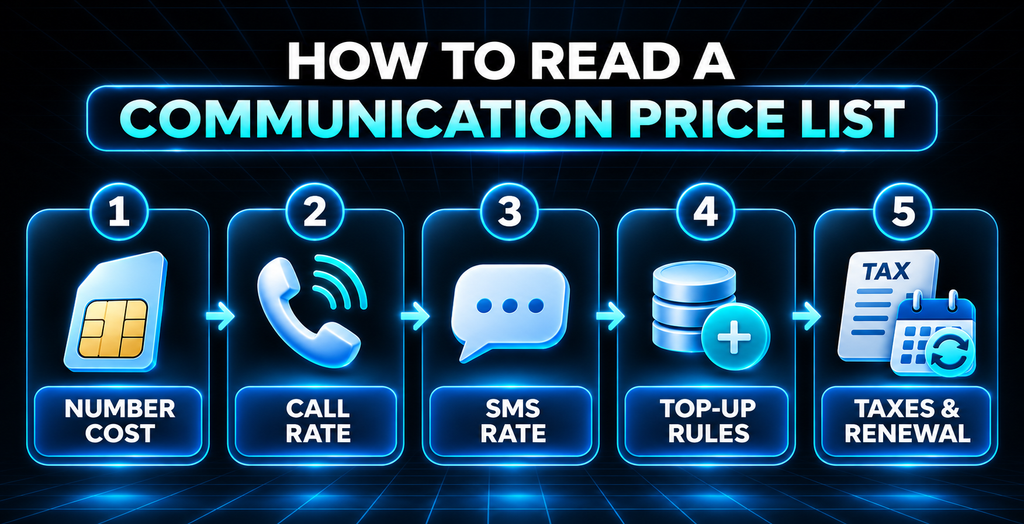
The five parts of a communication price list
Most international communication services can be understood through five main charges:
- The cost of the virtual number
- The per-minute call rate
- The per-message SMS rate
- Wallet top-up and expiry rules
- Taxes, renewal, and optional features
Reviewing these categories makes a price list easier to read and gives you a better estimate of your monthly spending.
1. Virtual number cost
A virtual number is a phone number that works through a browser or app rather than a traditional SIM card. It can provide a local identity for calls and texts while allowing you to work from almost anywhere.
Virtual numbers are normally rented monthly or yearly. The price may depend on the country, number type, availability, incoming features, and whether the number supports SMS or calls.
When comparing number prices, ask:
- Is there a setup fee?
- Is the number rented monthly or purchased permanently?
- Can you receive calls and SMS without paying extra?
- Is renewal automatic?
- What happens if payment fails?
- Can you keep the number when traveling or changing devices?
A low monthly price can be useful for a second number, but number retention is equally important. If the number is released after a missed renewal, you may lose access to calls, messages, or account recovery codes connected to it.
2. Per-minute international call rates
Pay-as-you-go calling charges you for the minutes you actually use. This model can be practical for people who make international calls occasionally or contact several different countries.
The important detail is that every country has its own rate. Some services also separate mobile and landline prices. Before calling, check the destination and the type of number you are dialing.
Pay-as-you-go can be more transparent than an unlimited package when your call volume changes each month. However, businesses with predictable high usage may benefit from a bundle or team plan.
A useful comparison should include:
- Cost per minute
- Minimum billing increment
- Connection fee, if any
- Mobile versus landline pricing
- Whether unanswered calls are charged
- Whether call rates are displayed before dialing
Even a small rounding difference can affect the total when a company makes hundreds of calls. Always check how the provider measures a minute.
3. Per-message SMS rates
SMS pricing is usually based on the destination country and the length of the message. Some providers charge per message segment, so a long message may count as two or more SMS messages.
Businesses should also check whether the price covers outgoing SMS only or includes receiving texts. Verification messages, replies, and business alerts may be handled differently from ordinary person-to-person messages.
SMS costs are often low for common destinations, but international routes vary. A message sent to the United States, United Kingdom, Canada, or another frequently used market may have a different rate from a message sent to a less common destination.
Before sending large campaigns, test delivery and confirm local messaging requirements. A low price is not useful if messages are delayed, filtered, or rejected by the destination network.
Pay-as-you-go vs. monthly subscription plans
Pay-as-you-go plans are suitable when usage is irregular. You add credit and spend it on calls or texts. There is usually no monthly software subscription, although a rented phone number may still have a recurring charge.
Monthly plans are more predictable. They may include a fixed number of minutes, seats, features, or destinations. Businesses may prefer this model because it makes budgeting easier.
The right choice depends on your usage:
| Usage pattern | Likely better option |
| Occasional international calls | Pay-as-you-go |
| One personal or travel number | Monthly number rental |
| Regular sales calling | Team or seat plan |
| High predictable call volume | Bundle or unlimited plan |
| Variable destinations | Pay-as-you-go with country rates |
| Multiple employees | Team plan with shared administration |
Do not choose an unlimited plan simply because it sounds convenient. If your team makes only a few calls each month, a usage-based service may cost less.
Understanding wallet top-ups
Many pay-as-you-go platforms use a prepaid wallet. You add credit with a card, then the balance is used for calls, SMS, or number renewals.
Before adding money, check:
- Minimum top-up amount
- Whether the balance expires
- Whether unused credit is refundable
- Whether number renewals use wallet credit automatically
- How low-balance notifications work
- Whether payment cards can be saved for renewal
A long balance-validity period is useful for occasional users. It prevents small deposits from expiring before they are used. Automatic renewal can protect a number, but it should be visible and easy to turn off.
Taxes and other final charges
Many online pricing pages show pre-tax prices. VAT, sales tax, or other charges may be added at checkout based on the billing address.
When calculating the real cost, include taxes and payment fees. Also check whether a provider charges extra for call recording, transcripts, API access, number changes, or additional users.
Some services offer a low base price and make advanced features available only in higher tiers. Others include useful features such as browser calling, mobile apps, recording, and transcripts in the main price.
Transparency matters. A good pricing page should make it possible to estimate the total before you create a large account or sign a contract.
How to calculate your monthly communication cost
Use a simple formula:
Monthly cost = number rental + call minutes × destination rate + SMS messages × destination rate + plan fees + taxes
For example, imagine a freelancer rents one number, makes 100 international minutes, and sends 50 SMS messages. The cost will depend on the country rates, but the formula makes the estimate clear.
Businesses should create separate estimates for each market. A company calling customers in the United States, India, Germany, and Australia should not use one average international rate. The destinations may have very different prices.
Track actual usage for one or two months. Compare the estimate with the invoice and look for unanswered calls, unused seats, automatic renewals, and high-cost routes.
Pricing for individuals and small teams
Individuals usually need a simple setup: one number, occasional calls, and a few messages. A pay-as-you-go account can prevent them from paying for features they do not need.
Small teams have different needs. They may require separate logins, shared credit, call recording, transcripts, caller ID options, and basic reporting. A team plan can make administration easier while keeping international calling costs separate from the seat fee.
When comparing team plans, ask whether minutes are shared, whether unused minutes roll over, how many users are required, and whether you can cancel monthly. Also check whether international destinations are included or charged separately
How to compare providers fairly
Create a short comparison table with the same questions for every provider:
- Monthly number cost
- Countries supported
- Mobile and landline rates
- SMS price per segment
- Minimum top-up
- Credit expiry
- Taxes and fees
- Browser and mobile access
- Call recording and transcripts
- Team administration
- Contract and cancellation terms
Do not compare an unlimited domestic plan with a pay-as-you-go international service as if they are identical products. They solve different problems.
It is also important to compare usability. A cheaper service may take longer to set up or make it difficult to find a rate before a call. A clear dashboard can save staff time and reduce billing mistakes.
Common pricing mistakes
One mistake is looking only at the monthly plan price. A $10 plan may seem cheap until you add expensive international minutes, extra numbers, taxes, and setup charges.
Another mistake is ignoring destination type. Mobile calls, landline calls, toll-free numbers, and premium numbers may not share the same rate.
Some users also forget number renewal. A number can stop working when a wallet is empty or a payment card fails. Set a reminder or enable clear low-balance alerts.
Businesses should avoid buying too many seats too early. Start with the users who need the service, then add seats when actual demand is clear.
Finally, do not assume that a price list remains unchanged forever. International carrier costs, taxes, and regulations can change. Review the provider’s current rates before launching a campaign or forecasting a large project.
When a team plan makes sense
A team plan can be useful when several people call customers, suppliers, or leads. It creates a central account instead of forcing every employee to manage separate credit or phone numbers.
Look for shared usage, individual logins, call history, recording, transcripts, and an administrator role. These features help managers monitor quality and understand spending without reading personal messages.
However, a team plan should still be compared with pay-as-you-go usage. If only one employee makes international calls, an individual account may be more efficient.
A practical checklist before you buy
Before selecting a service, answer these questions:
- Which countries will we call or message?
- How many minutes and SMS messages do we expect each month?
- Do we need a virtual number, or only outbound calling?
- Are calls mostly to mobiles or landlines?
- Do we need separate users and team reporting?
- How long must unused credit remain valid?
- What happens if a payment fails?
- Are prices shown before or after tax?
- Can we see the exact rate before sending or dialing?
- Can we cancel or change the plan without a long contract?
If the answers are clear, it becomes much easier to select the right pricing model.
Conclusion
International communication pricing does not need to be confusing. Separate the cost of the number, calls, SMS, wallet credit, taxes, renewal, and team features. Then compare those costs with your real usage instead of choosing based on a headline price.
Pay-as-you-go is often practical for occasional callers and businesses with changing destinations. Monthly or team plans may be better for predictable usage and several employees. In both cases, transparent rates, flexible cancellation, reliable delivery, and clear billing are more valuable than a low advertised price alone.
By reviewing the complete price structure before signing up, you can reduce unexpected charges and build a communication setup that fits your personal or business needs.