
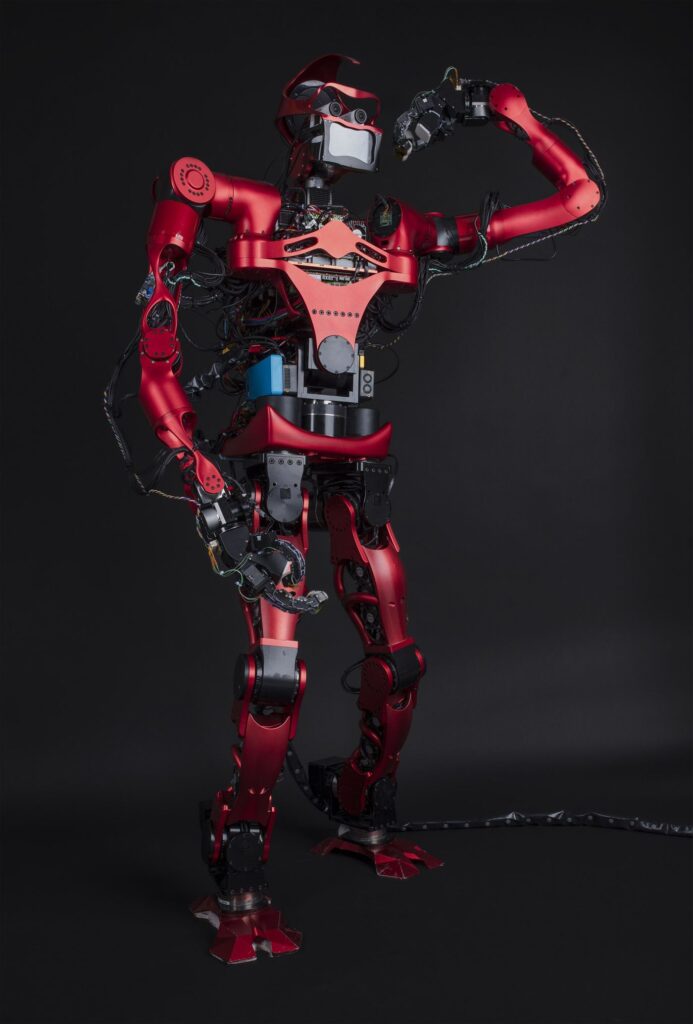
In January 2024, a humanoid robot went to work in a real car factory. Figure AI’s Figure 02 robot began a pilot at BMW’s plant in Spartanburg, South Carolina, moving parts and performing tasks on the production line, the first time a general-purpose humanoid had been tested in a commercial factory. The robot, about 168 centimetres tall and weighing 70 kilograms, uses cameras and AI to see its surroundings and hands with sixteen degrees of freedom to grip objects. Figure raised 675 million dollars in February 2024 from investors including OpenAI, Nvidia and Microsoft, and in February 2025 it unveiled Helix, a new AI model that lets its robots understand spoken commands and handle unfamiliar objects. Tesla’s Optimus, Mercedes’s partner Apptronik and Hyundai’s Boston Dynamics are all racing toward the same goal: a robot that can do the jobs people do, in the workplaces people built.
What the Evidence Shows
The factories are only the first step, and the industry is honest about how far there is to go. Today’s humanoids are slow, expensive and need constant supervision, and a single-purpose machine still does most factory jobs better and cheaper. But the bet is that a general-purpose body, one that can walk through a door, climb stairs and use human tools, will eventually be more useful than a machine built for one task. The companies say the first customers will be warehouses and factories, where labour shortages are acute and the work is repetitive, before the robots move into homes and care work. Safety rules, costs and public acceptance will decide how fast that happens. For now, the sight of a robot clocking in at a car plant is a sign of how quickly science fiction is becoming a shift pattern. Reporting and analysis from sources such as Wired track the same developments, and specialists following humanoid robots in factories say the direction is now consistent across independent lines of evidence.
The Wider Context
The wider context is an industry learning to ship capability and restraint together. Products built around humanoid robots in factories now launch with safety evaluations, usage data and rollback plans as standard, because enterprise buyers and regulators ask for them in the first meeting. Companies that treated those questions as friction are discovering they have become the purchase criteria.
What Happens Next
What happens next for humanoid robots in factories depends less on another breakthrough than on the unglamorous work of reliability, pricing and support. The buyers evaluating it now are not enthusiasts; they are operators with budgets and auditors, and their checklists will decide the timeline. On the evidence of the current pilots, the technology has earned the right to be judged by them. You can follow related developments in our coverage of technology.
None of this will be settled by a single announcement, study or product launch. The pattern to watch is accumulation: independent confirmations, honest reporting of failures and steady improvement in the underlying numbers. Readers who follow those signals, rather than the loudest claim of the week, will understand this subject better than most of the commentary surrounding it suggests is possible.
