
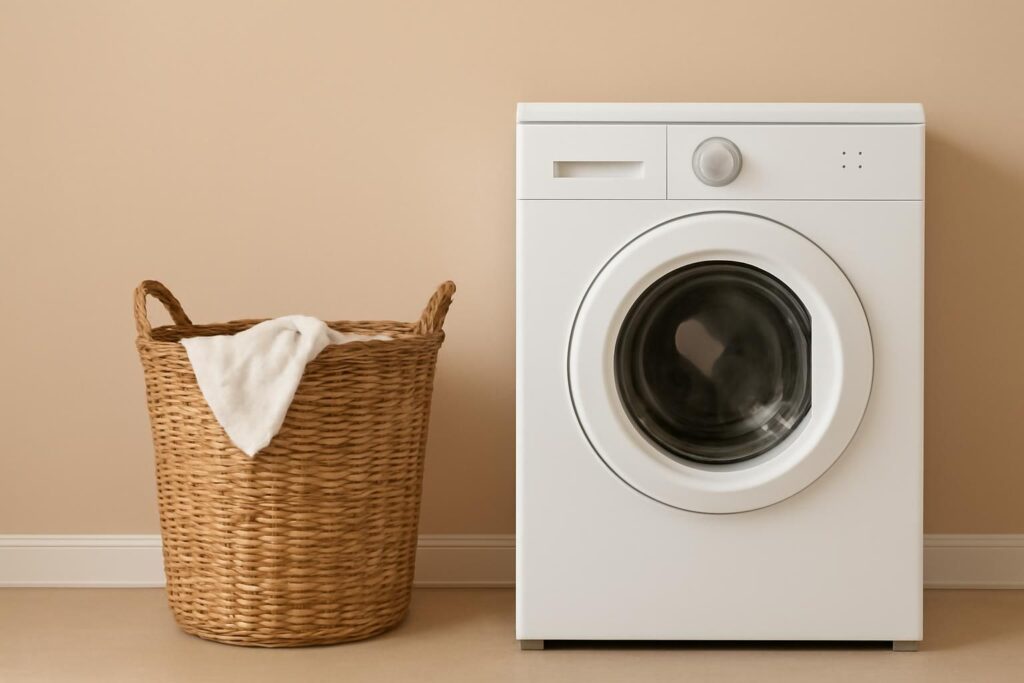
In many Finnish apartments there is no separate utility room, so the washing machine lives in the bathroom. Combining laundry with showering and sometimes a sauna makes the bathroom one of the busiest rooms in the home. A well-planned laundry area keeps machines safe, saves space and prevents moisture problems, while a poorly planned one leads to cramped corners, leaks and constantly damp towels. If you are renovating, this guide explains how to design a practical laundry solution inside your bathroom.
Start With Your Laundry Habits
Before deciding on the layout, think about how your household does laundry:
- How many loads do you wash per week?
- Do you need a tumble dryer, or do you dry clothes on racks?
- Where will you store detergents, baskets and ironing equipment?
- Do you use the building’s shared laundry room for large items?
A family with small children has very different needs from a single person, and the answers determine how much space the laundry area deserves.
Layout Options
Side-by-Side Under a Countertop
Placing the washer and dryer side by side under a countertop creates a useful work surface for folding clothes. This solution requires about 120 centimetres of wall length.
Stacked in a Tall Cabinet
Stacking the dryer on top of the washer with a stacking kit saves floor space. Built into a tall cabinet with doors, the machines disappear from view and the bathroom looks calmer.
Combination Washer-Dryer
In very small bathrooms, a single washer-dryer combination may be the best compromise, although drying capacity is smaller and cycles take longer.
Plumbing and Drainage
The washing machine needs a cold water connection with a shut-off valve and a drain connection. Many modern renovations include a dedicated machine valve that is easy to close when the machine is not in use. The drain hose should be connected to a proper drain, not simply hooked over the edge of the sink.
Place the machines on a floor area that slopes towards the drain, or install a drip tray with its own drain connection. If a hose bursts, the water must flow safely to the drain rather than spreading across the floor or into the structure. Many insurers expect these safety measures, and water damage from washing machines is one of the most common household claims.
Electrical Safety
Washing machines and dryers need properly earthed sockets protected by a residual current device, placed outside the wettest zones of the bathroom. In Finland, new sockets must be installed by a licensed electrician. The Finnish Safety and Chemicals Agency Tukes explains the safety requirements for electrical work and why it must be left to professionals.
Managing Moisture
Laundry adds moisture to a room that is already humid. Tumble dryers either vent humid air or, in the case of condenser and heat-pump dryers, collect water in a tank or drain it away. Heat-pump dryers are the best choice for bathrooms because they are energy-efficient and do not release large amounts of moisture into the room. Never vent a dryer into the bathroom air.
If you dry laundry on racks in the bathroom, make sure ventilation runs efficiently and consider a drying cabinet. Persistent humidity encourages mould, and the US Environmental Protection Agency notes that moisture control is the key to preventing it.
Smart Storage
- A shelf or cabinet above the machines for detergent and softener
- Pull-out baskets for sorting dark, light and delicate items
- A fold-down drying rack on the wall
- A slim cabinet for the ironing board and steamer
- Hooks for laundry bags
Keep detergents out of reach of children, ideally in a closed cabinet.
Noise and Vibration
Washing machines vibrate during the spin cycle, which can be disturbing for neighbours in apartment buildings. Make sure the machine is level and stands on a solid floor. Anti-vibration feet can reduce noise. Follow the house rules on quiet hours and avoid running the machine late at night.
Energy and Water Efficiency
When buying new machines, check the energy label. Efficient washing machines use less water and electricity, and heat-pump dryers use far less energy than conventional models. Washing full loads at lower temperatures also saves energy.
Plan It as Part of the Renovation
The laundry area affects the floor slope, drain position, electrical points and storage, so it must be planned before demolition begins. Professional renovators can design a layout that fits your machines and protects the structures. Homeowners can contact Kylpyhuoneremontti Vantaa professionals to plan a bathroom that combines comfortable showering with a practical laundry corner.
Frequently Asked Questions
Can a dryer be stacked on any washing machine?
Only if both machines are compatible and a suitable stacking kit is used.
Should the washing machine valve be closed after each wash?
It is a good habit, especially when you are away from home, as it reduces the risk of leaks.
Conclusion
A bathroom laundry area works well when it is planned carefully. Choose the right layout, install proper water, drain and electrical connections, manage moisture and add smart storage. With a professional renovation, your bathroom can handle both daily showers and weekly laundry without compromise.
